
Last updated September 22, 2026
Full 25-point door and opener safety check with every visit - springs, cables, rollers, tracks, and your LiftMaster or Chamberlain opener included
You get a price before we start. It does not change when the truck arrives.

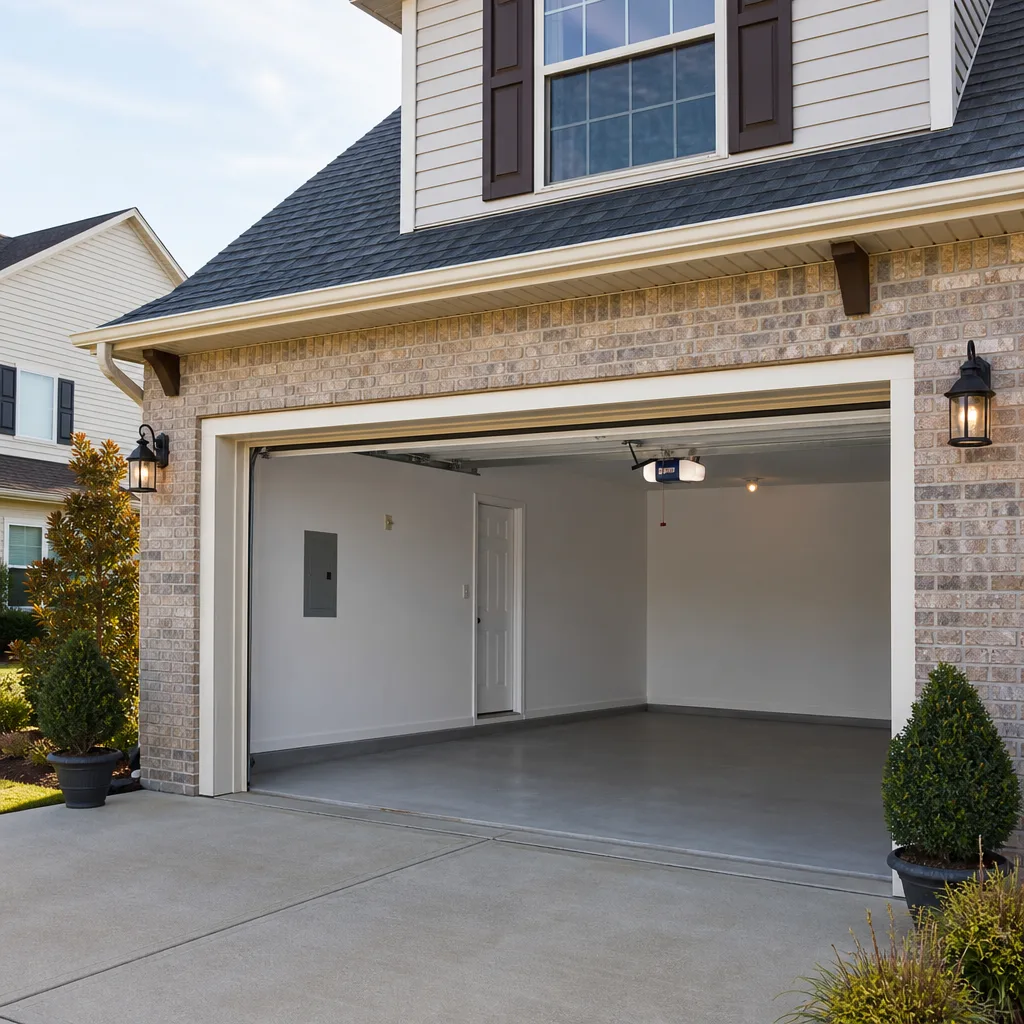
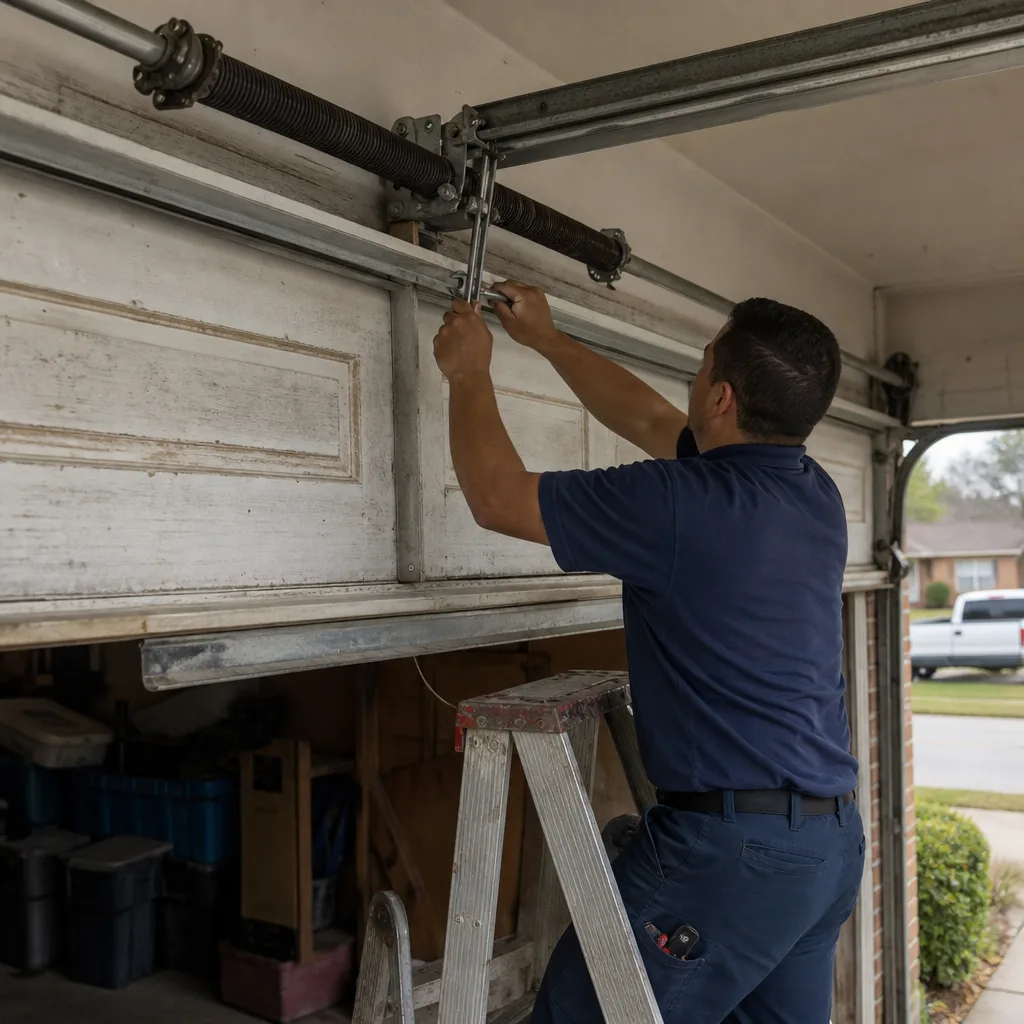 Before
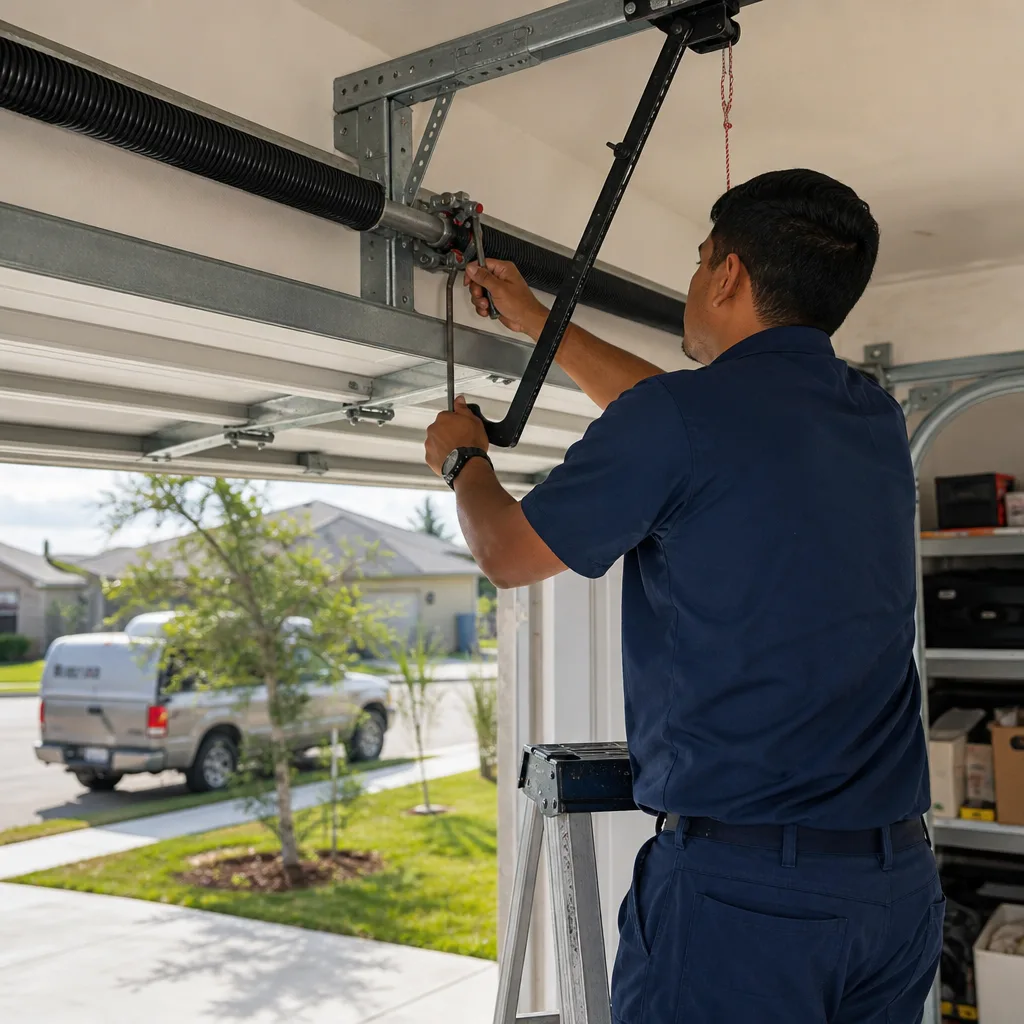 After
After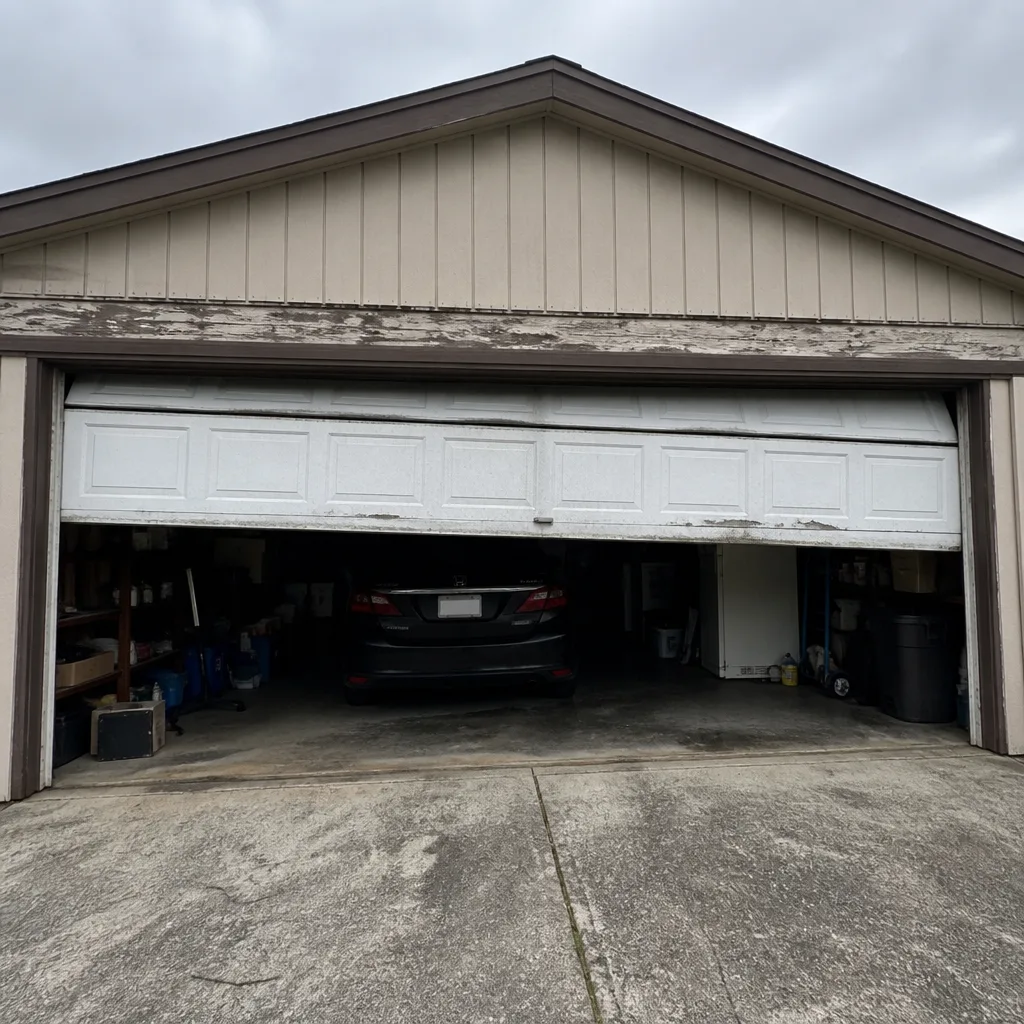 Before
 After
After Before
 After
AfterGarage Door Permits, Codes & Inspections in TX: What You Need to Know
Texas has no statewide garage door permit requirement. That single fact leads most homeowners to assume no paperwork is needed for any garage door work. But Texas City sits inside Galveston County’s wind-borne debris region, where a garage door installed without proper wind-load documentation can void your homeowner’s insurance claim after the next named storm. The door is treated as a structural opening under coastal construction rules. In this guide, we’ll show you how to determine if your address triggers these requirements, which jobs need permits and which don’t, how to verify your contractor pulled the right paperwork, and what a compliant installation inspection actually looks like. For garage door warning signs every Texas City homeowner should know, see our dedicated reference.
Quick Answer
Most garage door repairs in Texas City - spring replacements, opener repairs, roller swaps - require no permit. Most garage door installations and replacements do require a permit through Texas City’s Building Department, plus TDI wind-storm certification if your property lies within Galveston County’s wind-borne debris region. The permit protects the homeowner’s insurance coverage, not the contractor’s convenience.
Table of Contents
- Why Texas Has No Statewide Garage Door Permit - and Why That Misleads Texas City Homeowners
- How to Determine If Your Texas City Address Falls Under Galveston County’s Wind-Borne Debris Rules
- New Door Installation vs. Spring or Opener Replacement: What Requires Paperwork
- What TDI Wind-Storm Certification Requires and How It Connects to Your Homeowner’s Policy
- How to Pull Your Own Permit Record from Texas City’s Building Department
- What a Compliant Installation Inspection Actually Looks Like
- Why Contractor-Pulled Permits Protect You - and What to Do If They Say ‘We Don’t Need One’
- Permit Costs and Timelines in Texas City
 Before
 After
AfterWhy Texas Has No Statewide Garage Door Permit - and Why That Misleads Texas City Homeowners
Texas operates under a home-rule framework for building codes. The state legislature does not mandate garage door permits at the state level. Instead, authority passes to municipalities and counties, which adopt the International Residential Code (IRC) or International Building Code (IBC) with local amendments. Most homeowners hear “no state permit” and stop asking questions. That’s the costly mistake.
Texas City adopted the 2021 IRC with local amendments, including wind-load provisions tied to ASCE 7-16 standards. The city also enforces Galveston County’s participation in the Texas Department of Insurance (TDI) wind-storm certification program for coastal construction. This means two overlapping jurisdictions can affect your garage door project: the city building department and the county wind-storm inspector.
We’ve seen this confusion directly. A homeowner in the Bayou Vista area of Texas City had a new Clopay garage door installed by an out-of-county contractor who correctly noted that “Texas doesn’t require garage door permits.” The contractor was half right. The door went in without city inspection or TDI documentation. Six months later, after a tropical storm, the homeowner filed an insurance claim for water intrusion through the garage. The adjuster denied the claim, citing lack of wind-load certification for the structural opening. The homeowner paid for the door twice.
The paperwork is load-bearing. Here’s what actually governs your project:
- Texas City Building Department: Issues permits for new installations, structural modifications, and electrical work on openers. Enforces IRC with local wind-load amendments.
- Galveston County / TDI: Requires wind-storm certification for garage doors in the wind-borne debris region. Certification must be performed by a TDI-licensed inspector or engineer.
- Your insurance policy: Most Texas coastal policies include a clause requiring WPI-8 or equivalent certification for structural openings in designated wind zones. No certificate, no coverage for wind-related damage to that opening.
The key point: absence of a state rule does not mean absence of rules. It means you must check local and county layers separately.
How to Determine If Your Texas City Address Falls Under Galveston County’s Wind-Borne Debris Rules
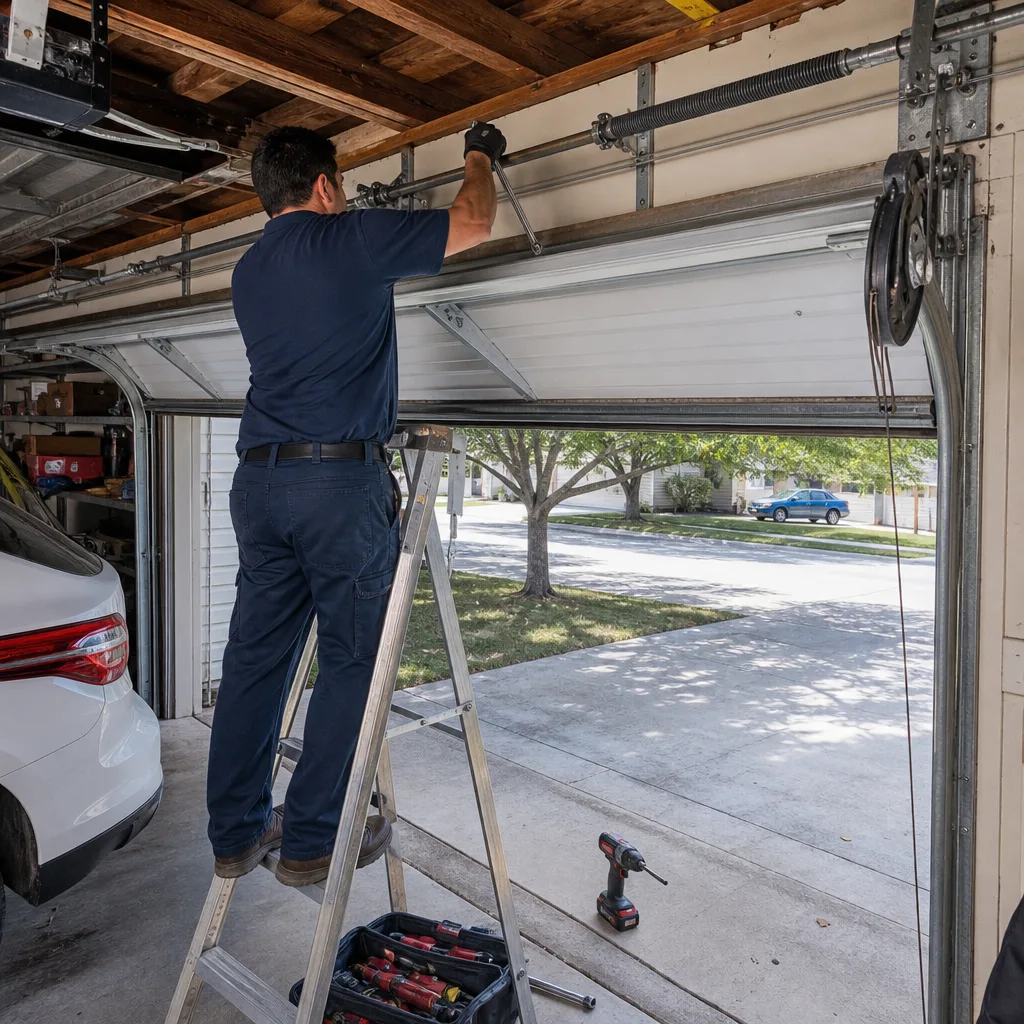
Not every address in Texas City triggers wind-borne debris requirements. The boundary follows FEMA flood zones and ASCE 7-16 wind-speed contours, not city limits. Some neighborhoods near Moses Lake and off FM 1765 sit outside the strictest zone. Properties closer to Galveston Bay and the Texas City Dike typically fall inside.
Here’s how to check your specific address in under ten minutes:
- Start with the TDI wind-storm map: Visit the Texas Department of Insurance wind-storm zone lookup tool. Enter your street address. The system returns a zone designation: inland I, inland II, or coastal (seaward of the intracoastal waterway). Coastal and some inland II designations trigger certification requirements.
- Cross-check FEMA Flood Map Service Center: Enter your address at msc.fema.gov. If your property sits in AE, VE, or V zones, wind-borne debris rules almost certainly apply. X zones may still require certification depending on exact ASCE 7-16 wind speed.
- Call Texas City Building Department directly: At (409) 797-6585, ask for the wind-load determination for your parcel. They maintain a GIS layer that overlays the TDI zones on city parcels. This is the authoritative answer for permitting purposes.
- Check your homeowner’s policy declarations page: Many coastal policies explicitly list WPI-8 or wind-storm certification requirements. If your policy mentions it, your address is in the zone regardless of what a contractor tells you.
In our experience serving Texas City since 2015, properties in these areas most commonly need full certification: the Bayou Vista peninsula, neighborhoods along Texas City Dike Road, and newer construction east of 25th Avenue North toward the industrial canal. The La Marque border area and sections west of I-45 often fall into less restrictive zones, but we’ve still seen individual lots flagged due to elevation or specific subdivision covenants.
Never take a contractor’s word on zone status. Verify independently. The certificate they skip today becomes the exclusion your insurer cites tomorrow.
New Door Installation vs. Spring or Opener Replacement: What Requires Paperwork
This distinction confuses nearly every homeowner we speak with in Texas City. The building department cares about structural changes and electrical work. It does not regulate maintenance or like-for-like component replacement on existing approved structures.
No Permit Required
- Spring replacement: Torsion spring or extension spring swap on an existing door. The door assembly itself was already permitted and inspected. We’re replacing a wear part, not altering the structure.
- Opener repair: Logic board replacement, trolley carriage adjustment, limit switch programming, gear and sprocket service. No electrical circuit modification.
- Roller, hinge, or cable replacement: Hardware maintenance on approved door assembly.
- Weatherstripping and seal replacement: No structural or wind-load implications.
- Panel replacement (single panel, same model, same wind-load rating): Like-for-like repair of damaged section.
Permit Required
- New garage door installation: Any door not previously approved at that opening. Includes new construction and full replacement of existing door with different model or size.
- Door replacement with different wind-load rating: Even if dimensions match, a lower or unverified rating changes the structural performance.
- Structural modification to opening: Widening, height changes, header alterations.
- New electrical circuit for opener: Dedicated 120V circuit installation requires electrical permit separate from building permit.
- Conversion to wind-rated door in wind-borne debris zone: Special TDI inspection triggered even if city permit is minimal.
The nuance that trips people: replacing a non-wind-rated door with a wind-rated door in the coastal zone. The city permit may be straightforward, but the TDI certification is a separate, mandatory layer. We’ve handled this for Texas City homeowners with Amarr and Clopay wind-rated models. The manufacturer provides the design pressure (DP) rating and Miami-Dade or Florida Building Code approval documentation. Our job is ensuring that paperwork reaches the TDI inspector, not just the city plan reviewer.
One more detail on openers: if you’re swapping a Genie for a Chamberlain on the existing outlet and bracket, no permit. If you’re adding an opener where none existed, or running new Romex from the panel, that’s electrical work requiring inspection.
What TDI Wind-Storm Certification Requires and How It Connects to Your Homeowner’s Policy
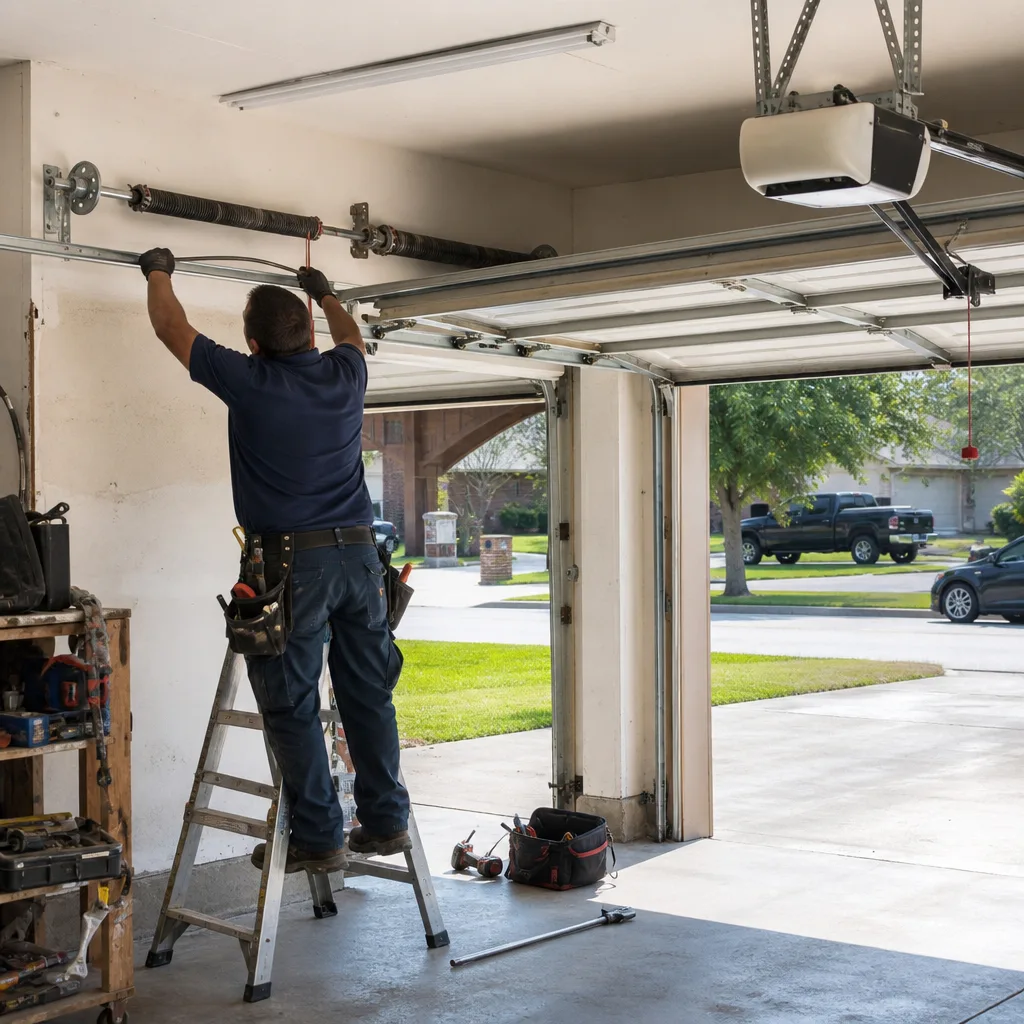
TDI wind-storm certification exists because standard building permits don’t verify wind resistance. A city inspector checks that the door is installed to manufacturer’s instructions and code. A TDI inspector verifies that the door, track, and hardware assembly can withstand the wind pressures calculated for that specific address.
The process has three stages:
- Product approval documentation: The garage door manufacturer must have TDI-approved product evaluation for the specific model and size. This is not generic. A Clopay Coachman Collection 9×7 may be approved; the same line’s 16×8 may not be, or may carry a different design pressure rating. We verify this before quoting any wind-zone installation.
- Installation inspection: A TDI-licensed inspector examines the installed assembly. They check track gauge, fastener type and spacing, jamb attachment, reinforcement struts, and operator bracket connection. They measure actual versus specified components. We’ve seen inspectors reject jobs where the contractor substituted standard track for the heavy-duty track specified in the approval documents.
- WPI-8 or WPI-8-E certificate issuance: Upon passing inspection, the homeowner receives a WPI-8 (for new construction) or WPI-8-E (for existing structures) certificate. This document is filed with TDI and should be provided to your insurance agent. It remains with the property, transferring to subsequent owners.
The insurance connection is direct and financial. Texas coastal homeowner’s policies, including Texas City policies underwritten through TWIA (Texas Windstorm Insurance Association), contain a standard exclusion for wind damage to structural openings lacking current WPI-8 certification. The exclusion reads something like: “We do not cover loss to doors, windows, or other openings unless the opening is protected by an opening protective system meeting the requirements of the Texas Windstorm Insurance Act.”
After Hurricane Ike in 2008, TDI data showed thousands of denied garage-door claims in Galveston County due to missing or expired certification. The door failed, water entered, structural damage followed, and the insurer pointed to the uncertified opening. Homeowners who had paid for installation but not certification absorbed the full loss.
If you’re buying a home in Texas City, request the WPI-8-E from the seller during disclosure. If they can’t produce it, assume the door is uncertified and budget for inspection or replacement. We’ve provided Garage Door Installation in Texas City specifically to bring older homes into compliance before sale or renewal.
How to Pull Your Own Permit Record from Texas City’s Building Department
Homeowners rarely think to check permit history until something goes wrong. The record tells you what was approved, when, and by whom. It’s public information, and Texas City makes it accessible.
Here’s the exact process:
- Visit the Texas City Building Department: 1801 9th Avenue North, Suite 100, or start online at texascitytx.gov under “Building Permits & Inspections.”
- Request a permit history search: Provide your property address or parcel ID. Staff can pull all permits issued for that property, not just garage door work. There’s no fee for a basic history printout.
- Review for garage door-specific permits: Look for permit types labeled “Building – Residential Accessory,” “Building – Residential Alteration,” or “Electrical – Residential.” The description field should specify “garage door” or “overhead door.”
- Check for TDI documentation: City permits won’t show TDI certification. For that, contact TDI directly at (409) 797-6585 or use the WPI-8 lookup at tdi.texas.gov. You’ll need the property address and approximate installation date.
- Request copies of inspection records: If a permit exists, ask for the inspection sign-off sheet. This shows whether the job passed, failed, or required re-inspection. Failed inspections with no re-inspection mean the permit was never closed. That’s functionally the same as no permit.
What we’ve found checking records for Texas City homeowners: permits pulled by reputable contractors typically close within 30 days. Permits pulled by owners as “owner-builder” sometimes sit open for months because the owner didn’t schedule final inspection. And permits for garage door work are sometimes missing entirely, with the homeowner discovering only when they try to sell that the disclosure requires permit verification.
If you’re in a neighborhood like Hobart Taylor or the older sections near 6th Street North, permit records may predate digital systems. Texas City has microfilm records back to the 1970s. Staff can research these, but plan for a few days’ wait.
What a Compliant Installation Inspection Actually Looks Like
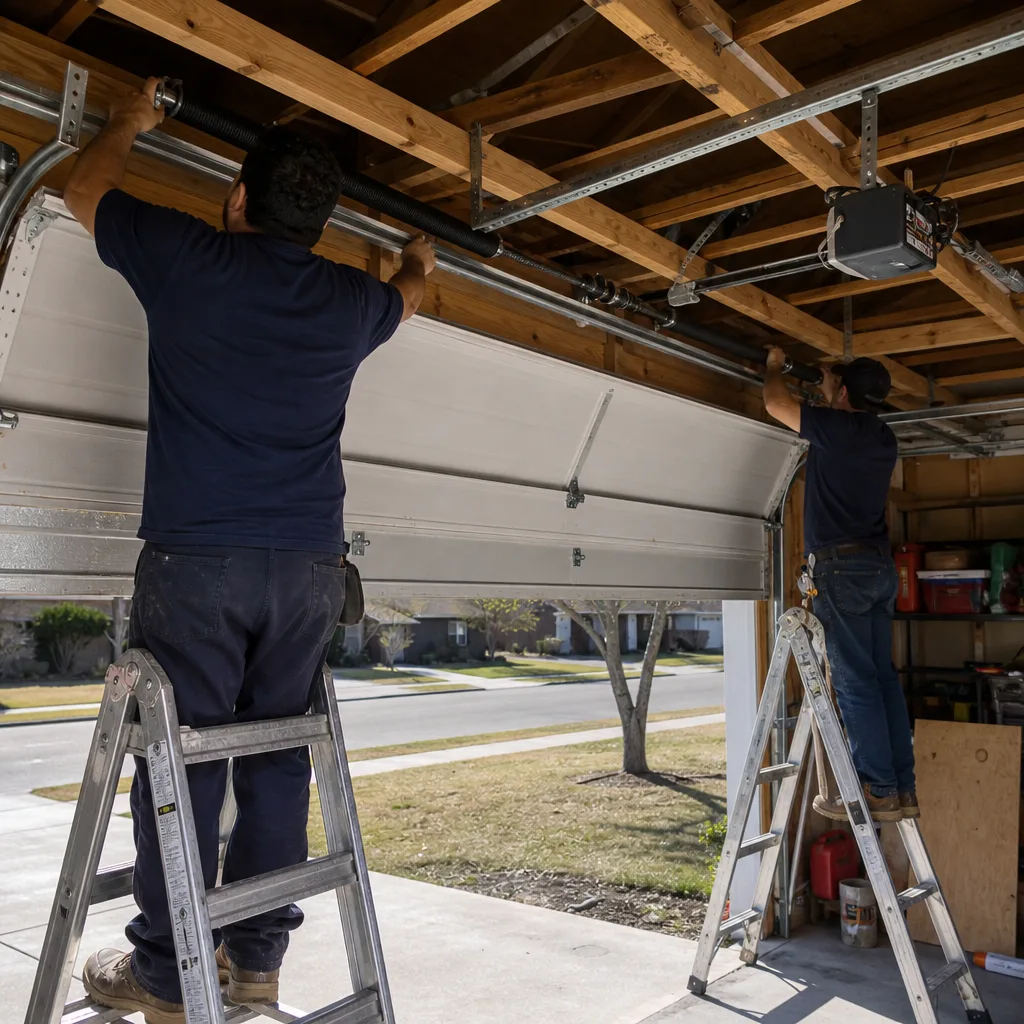
Knowing what inspectors check helps you verify your contractor’s work and spot red flags before the inspector arrives. We’ve accompanied TDI inspectors on hundreds of Texas City jobs. Here’s what they actually do, in order.
City building inspection (typically same-day or next-day after installation):
- Verify permit matches work: door size, type, and location align with approved plans.
- Check header and jambs for structural integrity. Rot, termite damage, or inadequate header size fails immediately.
- Confirm track is level, plumb, and securely fastened to framing with lag screws or through-bolts, not drywall screws or nails.
- Verify spring system matches door weight. An under-sprung door is a safety hazard and code violation.
- Test safety reverse on opener: photo-eye interruption and contact-reverse function.
- Check electrical connection for new openers: GFCI protection, proper gauge wire, secure junction boxes.
TDI wind-storm inspection (scheduled separately, typically 3-10 days after installation):
- Compare installed door to approved product evaluation: model, size, design pressure rating, and approval number must match exactly.
- Measure track gauge with calipers. Common substitution: 0.053-inch track where 0.075-inch is specified.
- Count and verify fasteners at each jamb bracket. Spacing matters: typically 5/16-inch diameter lag screws at 16 inches on center, minimum.
- Inspect reinforcement struts: number, placement, and attachment per manufacturer’s wind-load detail drawing.
- Check operator drawbar bracket: must attach to structural member, not just door panel, in wind-rated assemblies.
- Photograph all critical connections for TDI file.
- Test door operation under load: open, close, and emergency release function.
The inspection that surprises most homeowners: TDI inspectors carry the manufacturer’s installation manual for that exact door model and check against it. Substitutions they catch regularly include wrong track gauge, missing struts, and standard rollers where wind-load rollers with longer stems are required. These aren’t aesthetic preferences. A door that passes city inspection can fail TDI inspection if the contractor treated it as a standard inland installation.
We document every installation with photographs of these same connection points before the inspector arrives. Clause 4 of The Haven Standard requires it. The customer receives the photo record, and we have verification that our work matches what the inspector will see.
Why Contractor-Pulled Permits Protect You - and What to Do If They Say ‘We Don’t Need One’
Texas allows homeowners to pull their own permits as “owner-builder.” This sounds like savings. It’s usually a mistake. When the contractor pulls the permit, their license and insurance back the application. The permit creates a direct contractual chain: city to contractor to workmanship. If the work fails inspection, the contractor must return and correct it at their cost to close the permit. If you pulled the permit, the city holds you responsible for compliance, and your recourse against a disappearing contractor is civil court.
Contractor-pulled permits also carry workers’ compensation and liability verification. Texas City requires proof of insurance with the permit application. Owner-builder permits don’t trigger this check. If an uninsured worker is injured on your property, your homeowner’s policy may be the primary coverage.
The red-flag phrases we hear from Texas City homeowners:
- “We don’t need a permit for this.” (Ask: “Will you put that in writing, with your license number?”)
- “Permits just raise the price - we can skip it.” (The price difference is typically $150-400. An uncovered storm claim is $15,000-80,000.)
- “We’re doing this as a repair, not replacement.” (A full door swap is never a repair. This is permit fraud.)
- “You pull the permit, we’ll do the work cheaper.” (See owner-builder risks above.)
- “We’ve done hundreds of these without permits.” (Hundreds of unpermitted jobs is not a credential.)
What to do: Get the contractor’s license number and verify it with Texas City Building Department. Request a written scope that specifies who pulls permits and which permits. For wind-zone work, require TDI certification in the contract with a deadline. Never pay final installment until permits are closed and certificates are in hand. Our step-by-step guide to hiring a garage door contractor in Texas City walks through vetting questions in detail.
At Servo Garage Doors Texas City, we pull all required permits as standard practice. The permit number appears on your written scope under Clause 1. The WPI-8-E certificate is delivered with your final documentation. No exceptions, no shortcuts.
Permit Costs and Timelines in Texas City
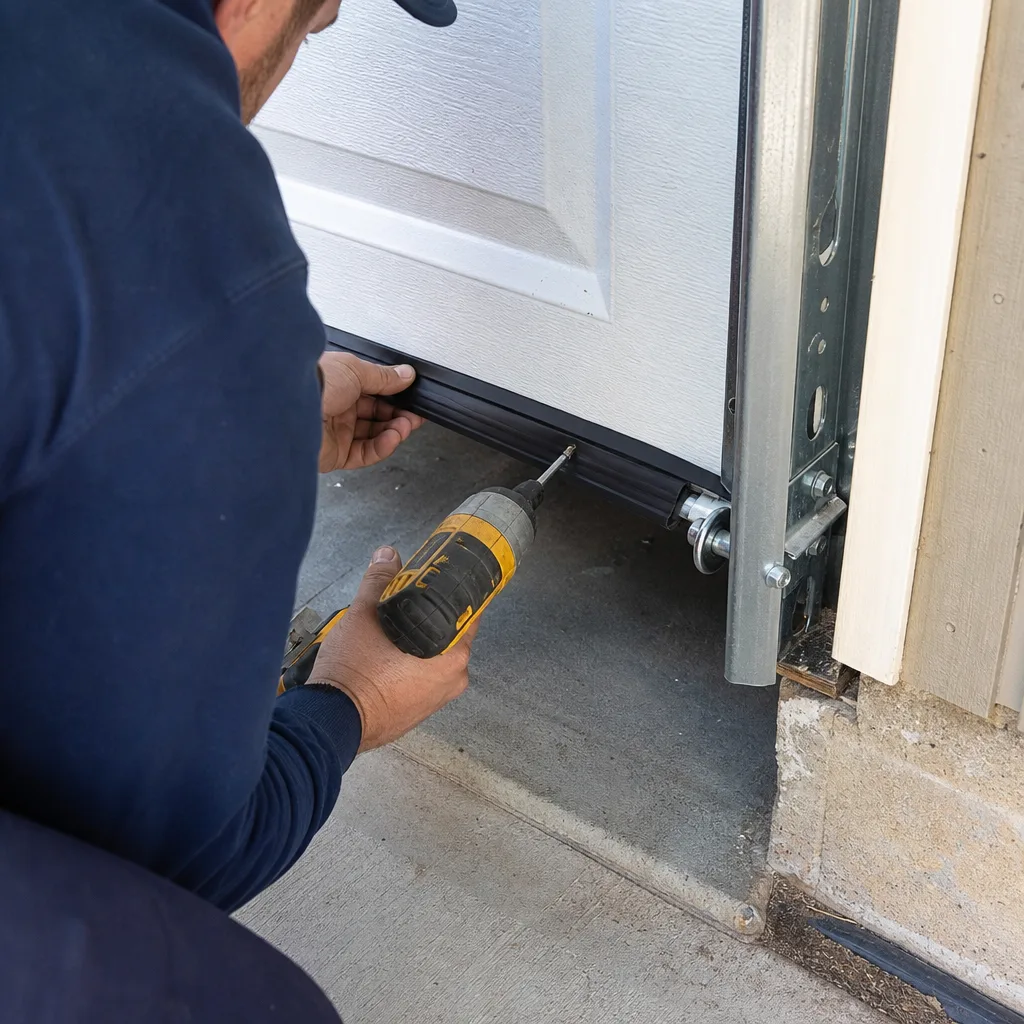
Permit costs in Texas City follow a structured fee schedule based on project valuation. For garage door work, the relevant ranges:
| Project Type | Estimated Valuation | Permit Fee | Timeline |
|---|---|---|---|
| Garage door replacement (residential) | $1,500 – $4,000 | $85 – $175 | 1-3 days review; inspection same or next day |
| New door installation (new construction) | $2,500 – $5,500 | $125 – $240 | 3-5 days review; inspection scheduled after framing |
| Electrical permit (new opener circuit) | $500 – $1,200 | $55 – $95 | 1-2 days review; inspection after rough-in and after final |
| TDI wind-storm inspection | N/A (inspection fee only) | $150 – $300 | 3-10 days scheduling; certificate 5-10 days after pass |
These are city and TDI fee ranges, not our pricing. Our Garage Door Repair in Texas City and Garage Door Installation in Texas City quotes include permit costs where required, itemized on the written scope. No surprise additions after work starts.
Timeline factors that delay projects: TDI inspector availability spikes after storm seasons. Plan installations for spring or early fall if possible. City plan review slows during peak construction months (March-May). Historic district or flood-zone properties require additional clearance that adds 5-10 days.
Common Mistakes to Avoid
- Assuming no state permit means no local permit. Texas City’s IRC adoption with wind amendments creates requirements that don’t exist 50 miles inland. Always check municipal code, not state law.
- Accepting verbal assurance that your address is “outside the wind zone.” Zone boundaries follow FEMA contours and ASCE calculations, not neighborhood generalizations. Verify with TDI’s own lookup tool.
- Treating TDI certification as optional or “later.” WPI-8-E certificates cannot be backdated. If the door is installed before inspection, you may need partial disassembly for access. Do it during installation.
- Pulling an owner-builder permit to save money. You assume liability for code compliance, lose contractor accountability, and may void your homeowner’s policy for work not performed by a licensed contractor.
- Not requesting the WPI-8-E at closing. We’ve seen Texas City homeowners pay for certified doors but never receive the certificate from the contractor. Without the document, the certification doesn’t exist.
- Ignoring permit status when buying a home. Title insurance doesn’t cover unpermitted work. Request permit history and WPI-8 certificates during due diligence.
- Hiring based on lowest bid without permit verification. A bid that excludes permit costs isn’t cheaper - it’s incomplete. The permit cost doesn’t disappear; it shifts to you as risk.
When to Call a Professional
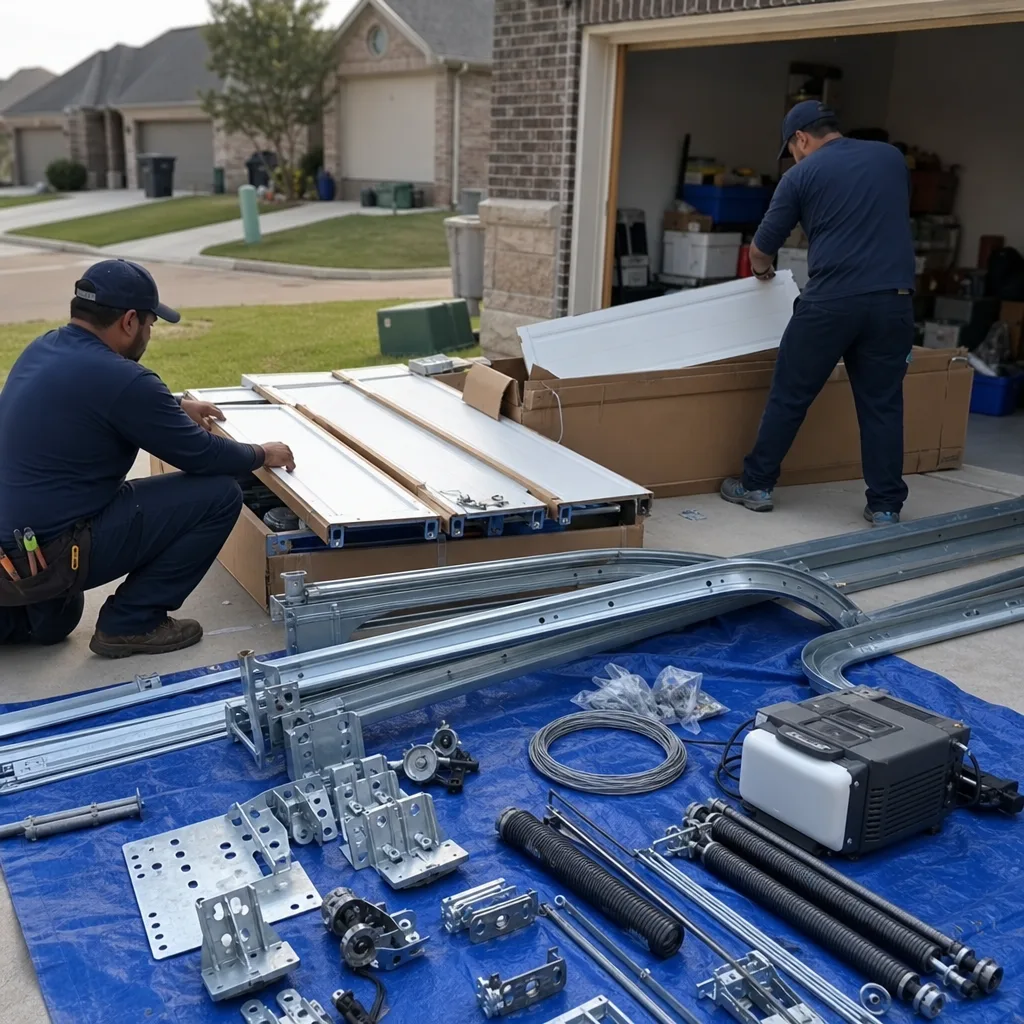
Call a licensed garage door contractor when your project involves new installation, full replacement, any structural modification, or any work within Galveston County’s wind-borne debris region. The documentation requirements exceed what a homeowner can reasonably verify alone. For repair work - springs, openers, hardware - a qualified technician ensures safety without unnecessary permits, but still documents the work. See our Garage Door Repair Maintenance Checklist for Texas City Homeowners to stay ahead of issues.
Servo Garage Doors Texas City offers free estimates in Texas City. We verify your wind-zone status before quoting, pull all required permits as standard, and deliver TDI certification with every qualifying installation. Call (409) 797-6585 for a written scope that includes permit handling, or bring any competing written estimate for our Free Second Opinion.
Frequently Asked Questions
Yes, a full garage door replacement typically requires a building permit from Texas City Building Department, plus TDI wind-storm certification if your address falls within the wind-borne debris region. A permit is not required for spring, opener, or hardware repairs on an existing approved door. Call (409) 797-6585 and we’ll verify your zone status before scheduling.
Check the TDI wind-storm zone lookup tool at tdi.texas.gov with your exact address, or call Texas City Building Department at (409) 797-6585 for the GIS parcel overlay. Properties near Galveston Bay, the Texas City Dike, and Bayou Vista typically require certification; areas west of I-45 may not. Cross-check your homeowner’s policy declarations page for WPI-8 requirements.
A city permit verifies code-compliant installation - structural, electrical, and safety standards. TDI certification verifies wind-load resistance specifically, with a WPI-8 or WPI-8-E certificate filed for insurance purposes. You need both for a compliant installation in the coastal zone; neither replaces the other.
Texas City allows owner-builder permits, but we don’t recommend it for garage doors in wind zones. TDI inspectors require manufacturer-specific installation expertise, and incorrect work must be redone at your cost. More critically, owner-builder work may void insurance coverage if not performed by a licensed contractor. Professional installation with contractor-pulled permits protects your coverage.
Standard garage door permits review in 1-3 business days. New construction or electrical permits take 3-5 days. TDI wind-storm inspection scheduling ranges from 3-10 days depending on inspector availability. Plan for 2-3 weeks total from quote to final certificate for coastal-zone installations.
Unpermitted installations may be flagged at sale, trigger insurance claim denials after storms, or require retroactive permitting with potential disassembly for inspection. Texas City can issue a correction notice requiring permit application. For wind-zone properties, uncertified doors cannot receive WPI-8-E retroactively without TDI evaluation of the installed assembly, which often fails due to inaccessible connections or substituted components. We assess existing installations for compliance and provide replacement quotes where needed.
The Bottom Line
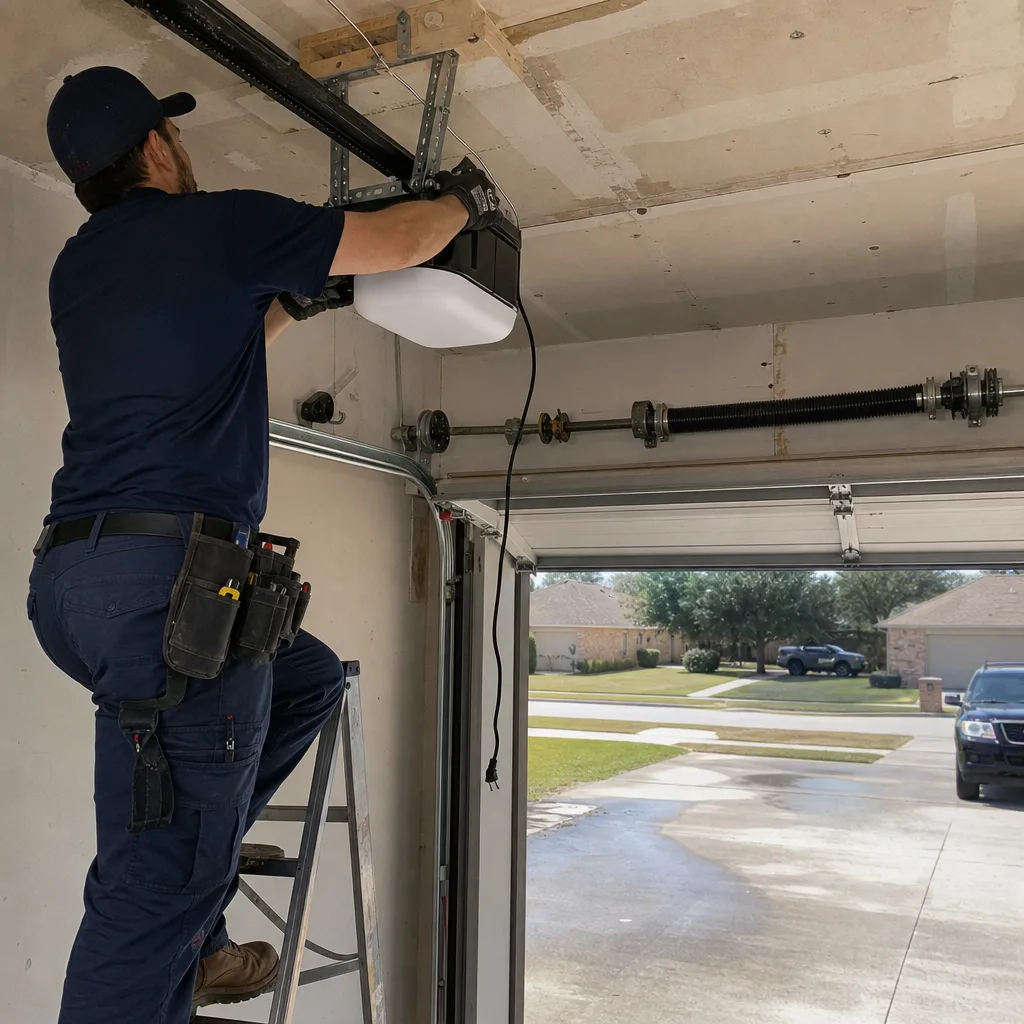
Texas City’s position in Galveston County’s wind-borne debris region makes garage door permits and TDI certification load-bearing paperwork, not bureaucratic decoration. The right documentation protects your insurance coverage, your property value, and your legal standing. Repairs typically need no permit; installations and replacements do. Verify your zone status independently, demand contractor-pulled permits with written scope, and never accept “no permit needed” as a final answer without checking city and TDI sources. Browse our more guides & resources for Texas City homeowners. The storm that tests your door will also test your paperwork. Only one of those can be fixed in advance.
Written by Marcus Deller, Owner at Servo Garage Doors Texas City, serving Texas City since 2015.