
Last updated September 22, 2026
Full 25-point door and opener safety check with every visit - springs, cables, rollers, tracks, and your LiftMaster or Chamberlain opener included
You get a price before we start. It does not change when the truck arrives.

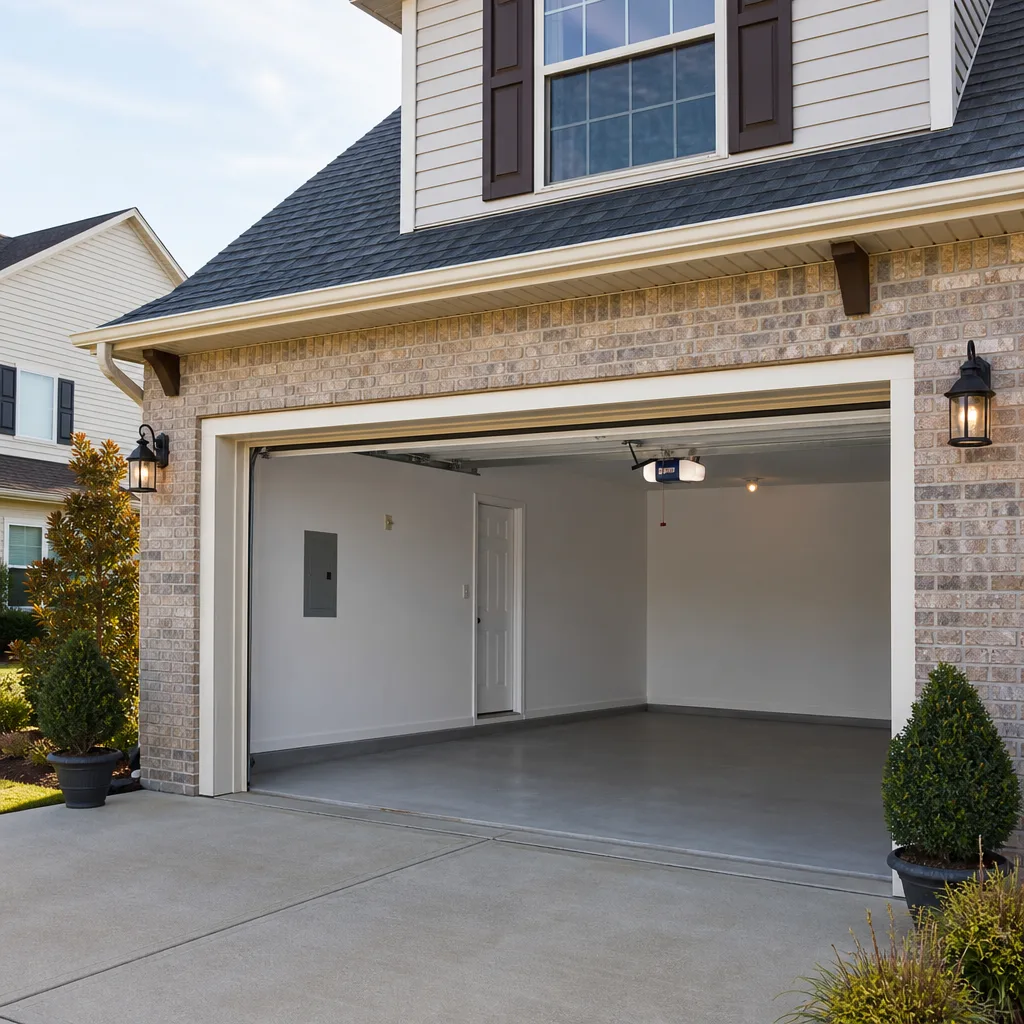
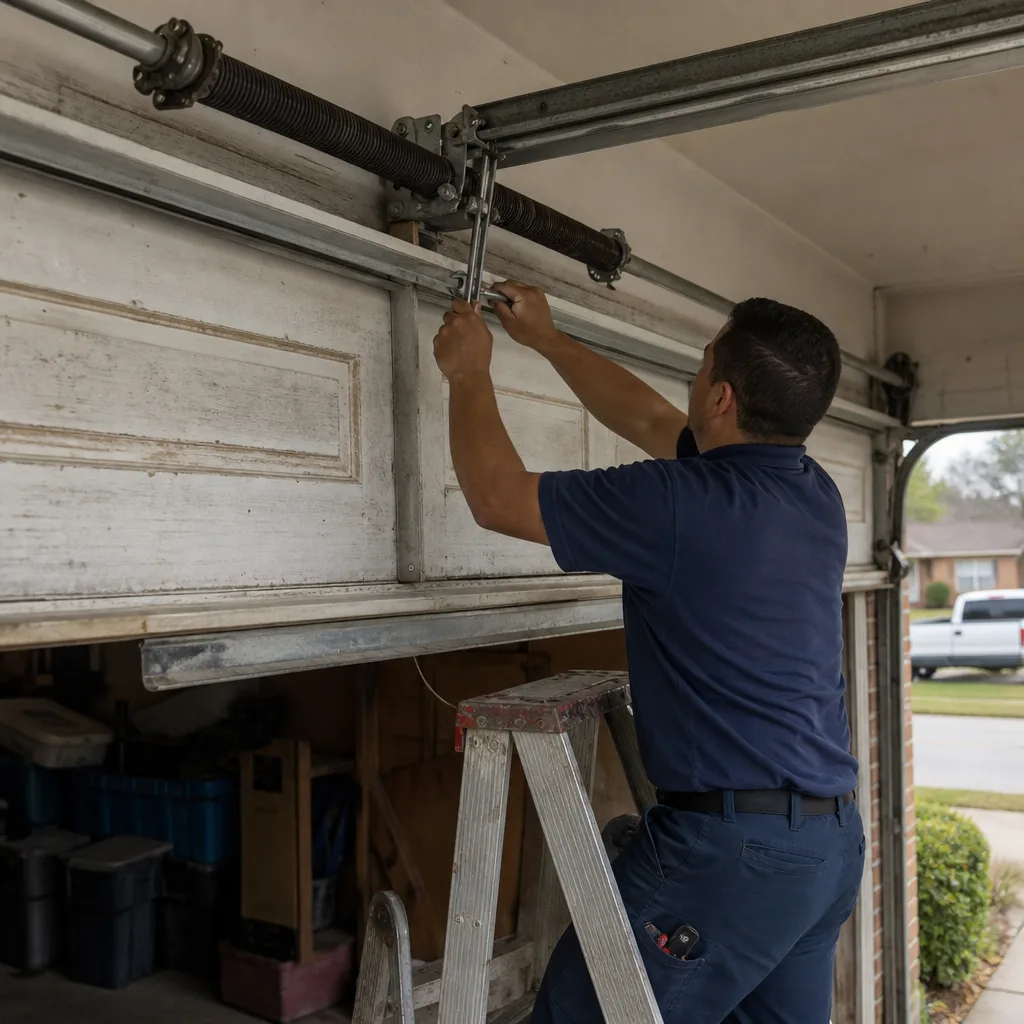 Before
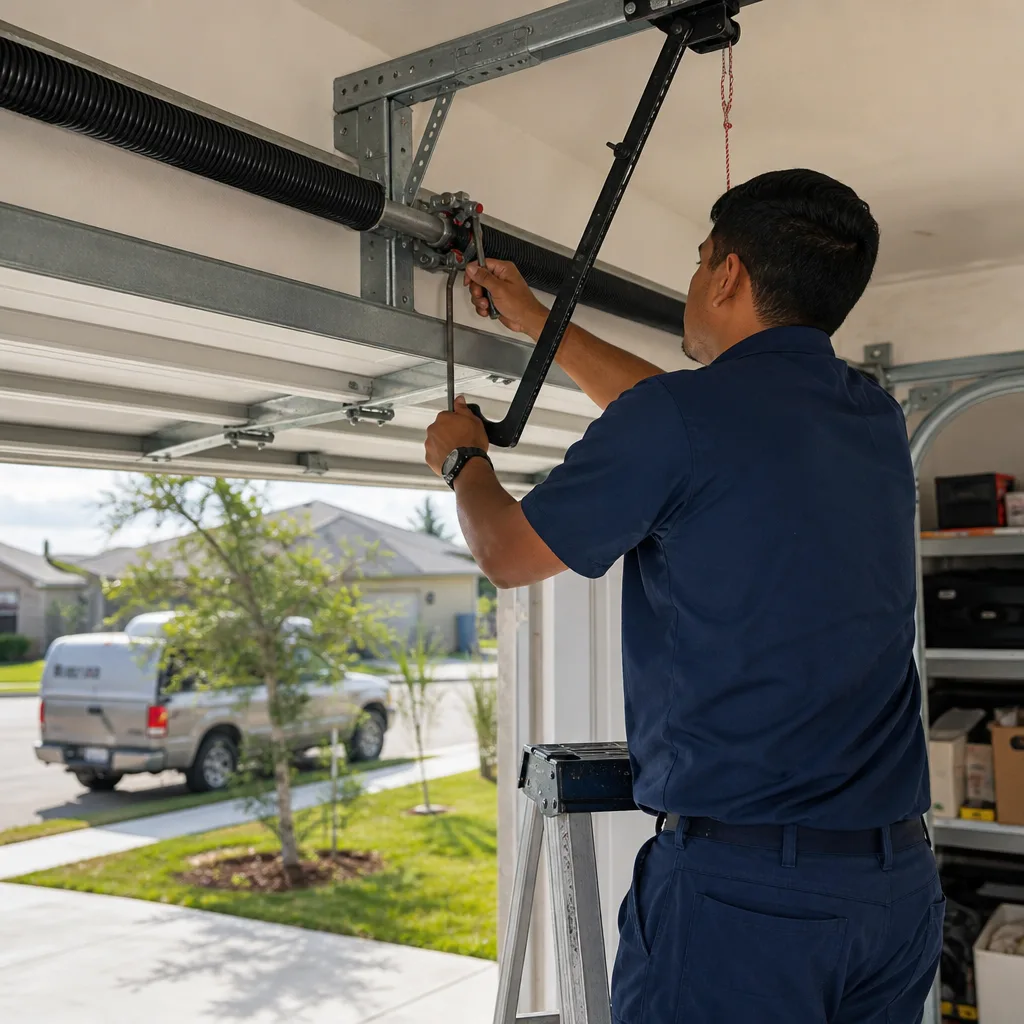 After
After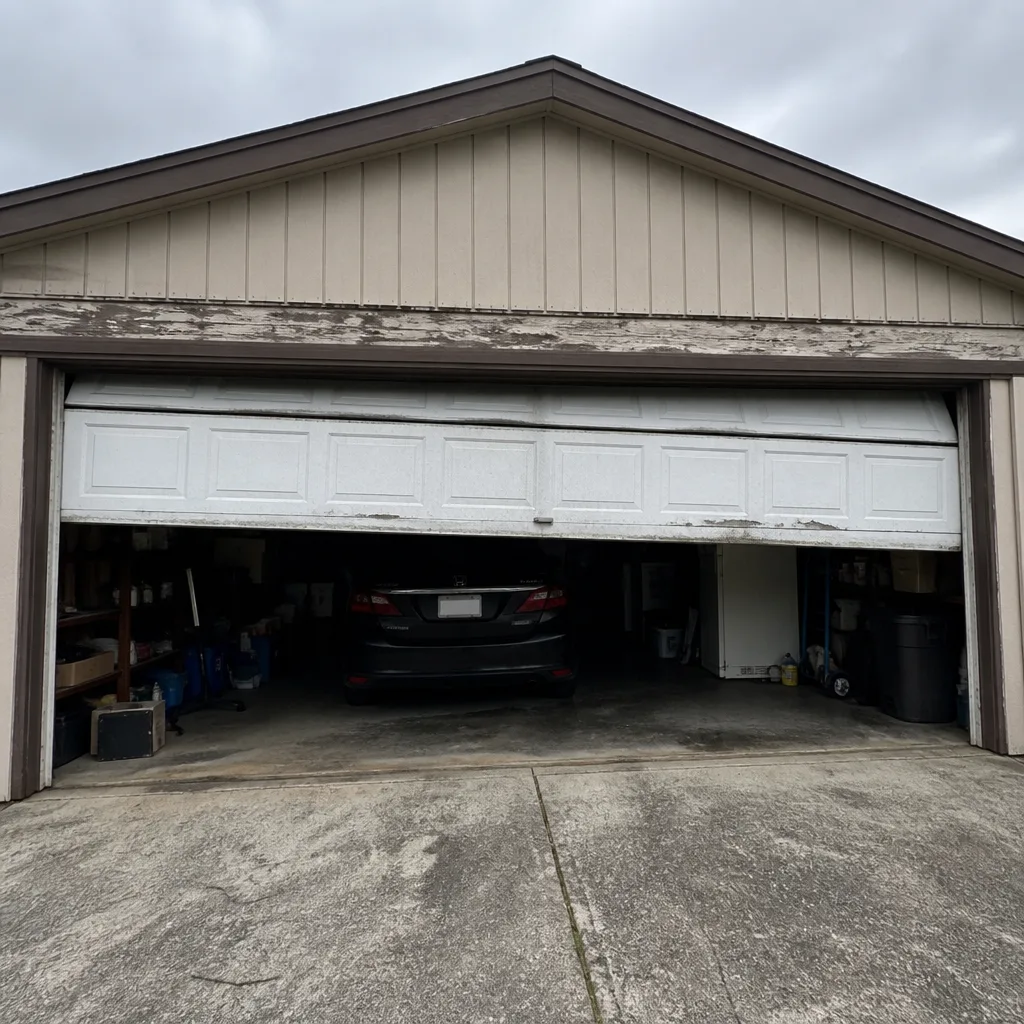 Before
 After
After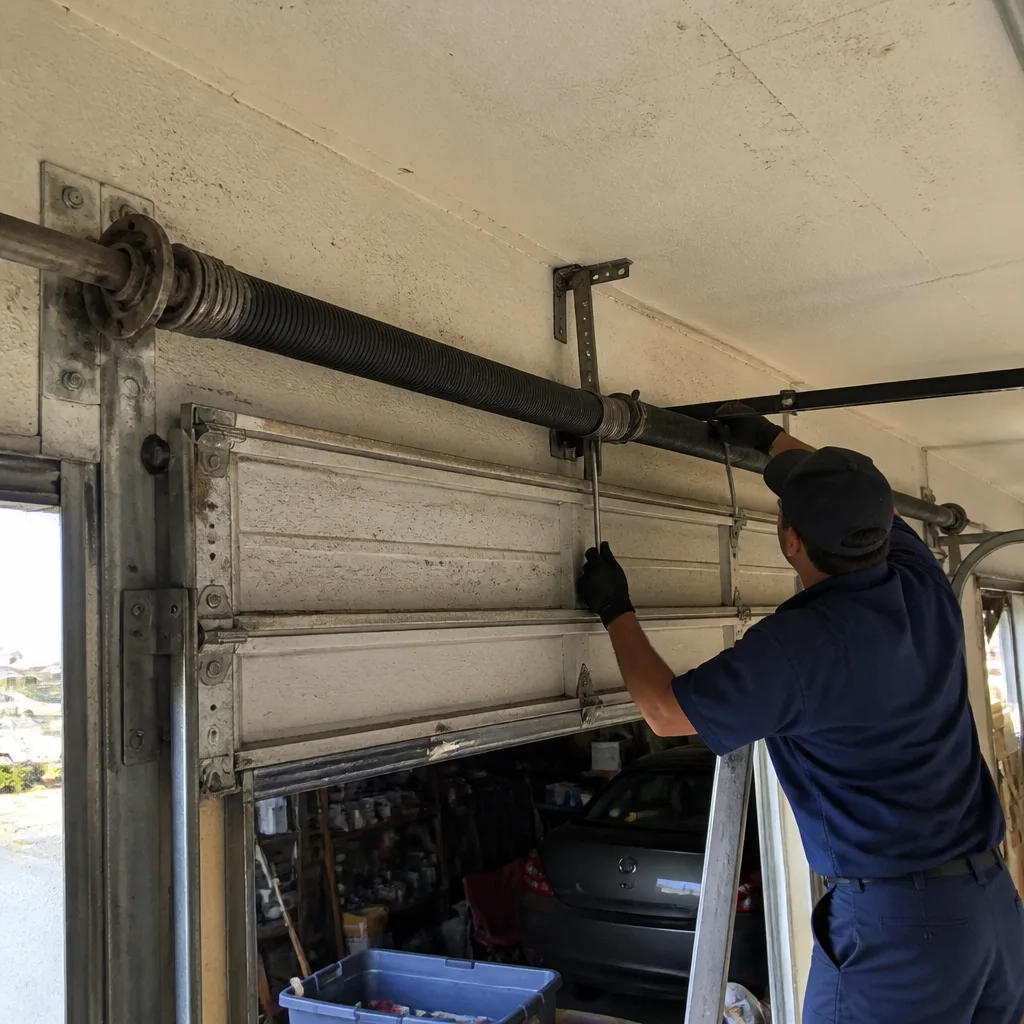 Before
 After
AfterHow to Hire a Garage Door Contractor in Texas City: A Step-by-Step Guide
A five-star review tells you the job finished well. It tells you nothing about whether the price quoted on the phone matched the invoice. In Texas City, we’ve found that gap is where most homeowners get surprised, not by the quality of the work but by the number on the final bill. This guide - alongside our more guides & resources - walks you through a hiring process built around documentation at every handoff, not just at the end. You’ll learn the specific questions that expose verbal-estimate contractors, how to read a license and insurance certificate yourself, what a legitimate photo-documentation process looks like, and the red flags that multiply after every Gulf storm when out-of-area crews flood Galveston County.
Quick Answer
To hire a garage door contractor in Texas City, verify active TDLR licensing and general liability insurance in your own name, demand a written scope and flat price before any work begins, and confirm the company documents findings with photos you receive. The best contractors in this market answer calls live 24/7, carry parts for all major brands on their trucks, and warranty their work in writing.
Table of Contents
- Why the Standard Advice Fails in Texas City
- Step 1: Verify License and Insurance Yourself
- Step 2: Phone Screening - The Questions That Separate Documented from Verbal
- Step 3: What Every Written Garage Door Quote Must Include
- Step 4: Photo Documentation - What to Ask For and What to Expect
- Step 5: Storm-Chaser Red Flags in Galveston County
- Step 6: Brands, Parts Availability, and Warranty Structure
- Common Mistakes to Avoid
- When to Call a Professional
- Frequently Asked Questions
- The Bottom Line
 Before
 After
AfterWhy the Standard Advice Fails in Texas City
The internet repeats the same hiring checklist: get three quotes, check reviews, ask about warranties. This sounds reasonable until you understand how garage door repair actually works in a coastal Texas market, a topic we cover in depth in The Complete Guide to Garage Door in Texas City.
Most Texas City homes built between 1995 and 2010 carry builder-grade steel doors with 10,000-cycle torsion springs. The salt air from Galveston Bay accelerates corrosion at the bottom fixtures and end bearing plates. A spring that might last 12 years inland often fails in 8 here. When it breaks, the door is dead weight, and the homeowner is suddenly shopping under pressure. That’s when the “get three quotes” advice breaks down. The first company that answers the phone gets the job, and the quote given in that stressed moment rarely survives contact with the actual repair.
Here’s what we’ve observed across 18,000+ jobs since 2015: the problem isn’t finding a contractor who can fix the door. It’s finding one who fixes it at the price you agreed to before the work started. The standard advice doesn’t address this because it treats the hiring decision as a single event. In reality, it’s a chain of handoffs - phone call, dispatch, diagnosis, quote, repair, billing - and every handoff is an opportunity for the scope or price to shift.
Our approach, codified as The Haven Standard, treats documentation as the product, not an afterthought. Clause 1 requires a flat, written price and written scope before any work begins. Clause 4 requires the technician to photograph the failed component before quoting a replacement. The customer receives that photo record. This isn’t trust-building theater. It’s evidence that makes “trust us” unnecessary.
The sections below apply this documentation-first lens to every step of the hiring process. Use them as a filter, and you’ll eliminate most of the contractors who create invoice surprises.
Step 1: Verify License and Insurance Yourself
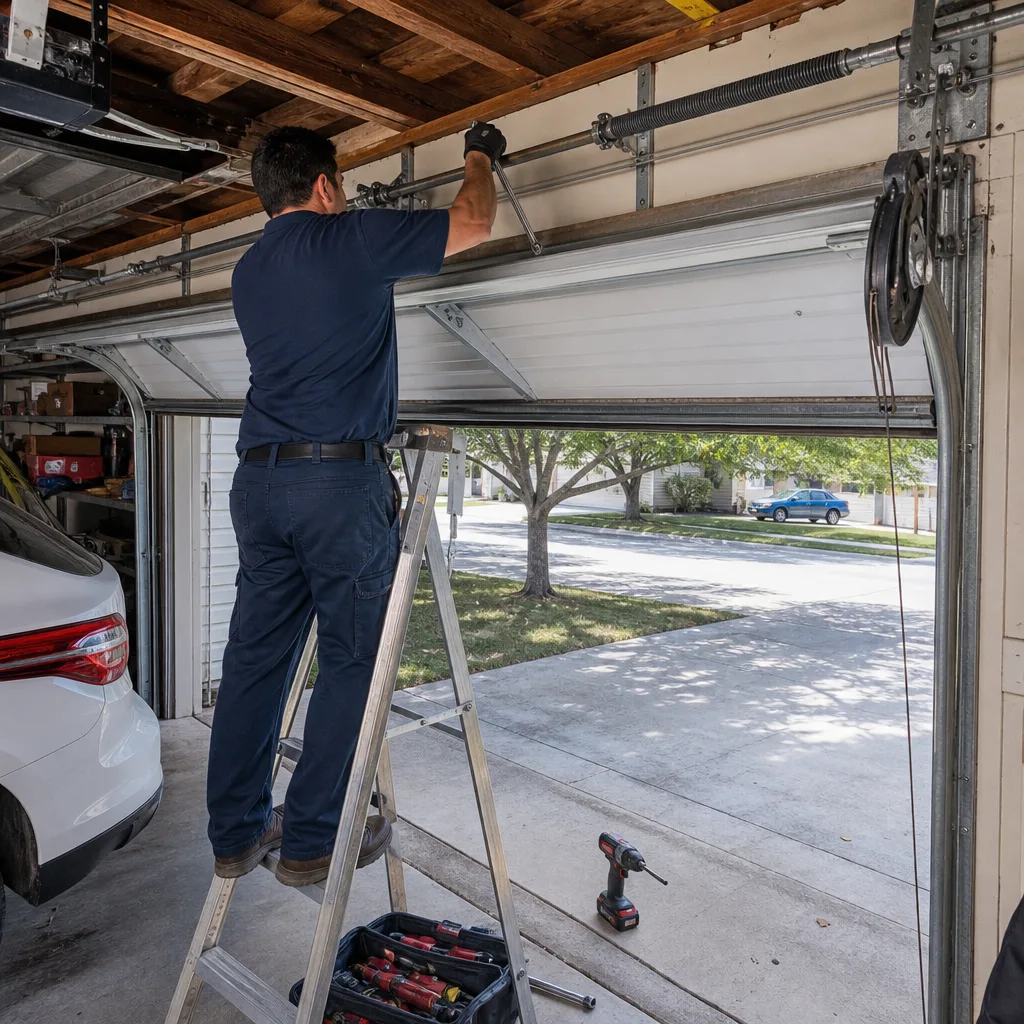
Every garage door contractor in Texas must hold an active license from the Texas Department of Licensing and Regulation (TDLR). This is not optional, and it’s not something you should take someone’s word for.
How to Check TDLR Status
- Go to the TDLR license search page at tdlr.texas.gov.
- Select “Air Conditioning and Refrigeration Contractors” from the dropdown - garage door contractors fall under this category in Texas.
- Enter the company name or the individual’s name.
- Verify the status reads “Active” and the expiration date is in the future.
- Note whether the license is held by the company or an individual technician. If it’s an individual, confirm that person will be on your job.
We display our license number on every page, not buried in fine print. If a contractor hesitates to give you theirs, that’s information. A valid TDLR license means the holder has passed a state exam, carries required insurance, and is subject to disciplinary action if they violate consumer protection rules.
Insurance: What to Request and Read
Ask for a certificate of insurance (COI) with your name and address in the “Certificate Holder” box. This is different from a generic certificate they show everyone. When you’re named, the insurer notifies you if the policy cancels.
Verify two coverages:
- General liability: Minimum $300,000 per occurrence for residential work. This covers property damage if a spring breaks loose or a door falls during service.
- Workers’ compensation: Required if the company has employees. In Texas, this isn’t mandated by state law, but a contractor without it exposes you to liability if a technician is injured on your property.
Check the policy dates. After Hurricane Nicholas in 2021 and every major storm since, we’ve seen out-of-area contractors present expired certificates or policies written for a different state entirely. An active TDLR license and a current COI in your name are the minimum price of admission. Everything else in this guide assumes you’ve cleared this bar.
Step 2: Phone Screening - The Questions That Separate Documented from Verbal
The phone call is where most hiring mistakes begin. You’re describing a problem you don’t fully understand to someone who may or may not be a technician. The goal of this call isn’t to get a price. It’s to determine whether this company operates on written documentation or verbal improvisation.
The Six Questions to Ask Before Scheduling
- “Will the technician provide a written scope and flat price before starting any work?” If the answer is “we’ll quote it on site” or “the tech will explain it to you,” you’re looking at a verbal estimate that can expand. A flat, written price with a written scope is the only format that protects you. At Servo, this is Clause 1 of The Haven Standard - no exceptions, not once in 18,000+ jobs.
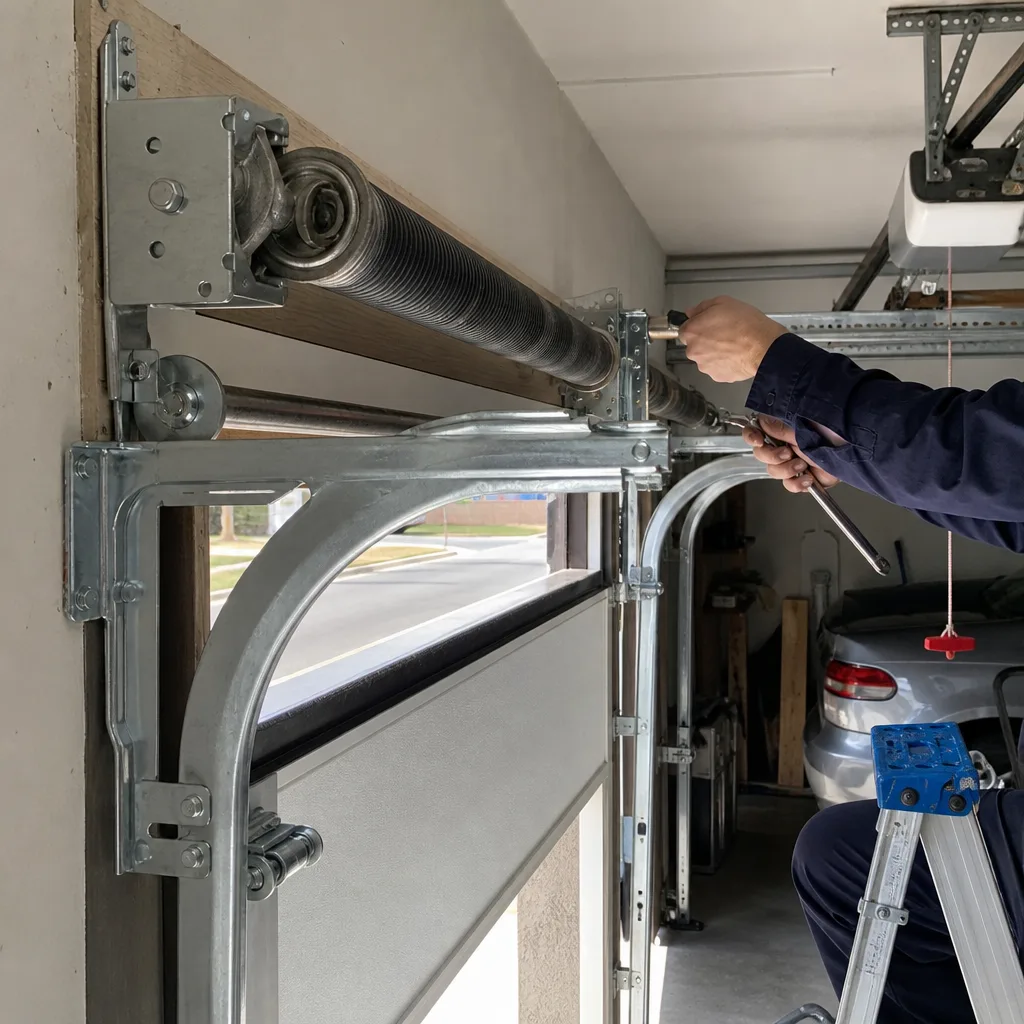
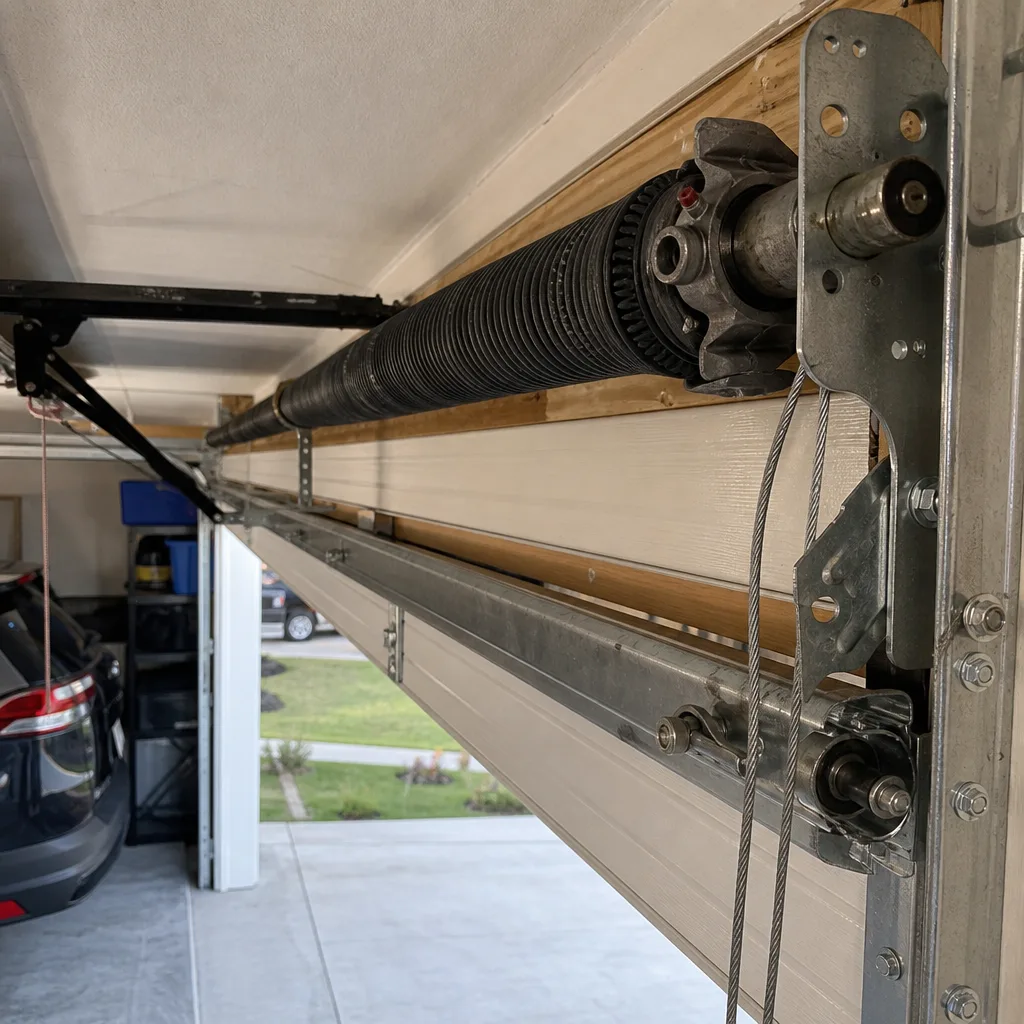
- “What does your technician carry on the truck for [your specific problem]?” For a broken torsion spring, the answer should include springs in multiple wire diameters and inner diameters, plus winding bars and cables. For an opener issue, mention brands like LiftMaster, Chamberlain, or Genie and ask if they stock logic boards and trolley carriages. If they “have to check the warehouse,” you’re paying for a second trip or accepting whatever they have.
- “Who answers your phone after hours and on weekends?” A recording that promises a callback within 24 hours is not 24/7 service. In Texas City, a garage door stuck open overnight is a security issue, not a scheduling preference. We answer live, including holidays, and the person who answers can dispatch a named technician with an on-the-way text.
- “Will I receive photos of what the technician finds?” This question often causes hesitation, which is useful information. A contractor who documents nothing has nothing to show you. The correct answer describes a specific process: photos of the failed component, photos of the completed work, delivered to you by text or email before the technician leaves. At Servo, this traces to our founding rule in 2015, now Clause 4 of The Haven Standard.
- “What’s your warranty, and is it written?” Verbal warranties evaporate. A written warranty with a terms page, not a handshake, is what you can enforce. Our 365-Day Done Right Promise means if it’s not right, we make it right - backed by terms you can read, not a friendly voice on the phone.
- “Do you offer a second opinion on another company’s estimate?” This reveals confidence and pricing transparency. We offer free second opinions on any written estimate from another company - bring the paperwork, no coupon required. A contractor who won’t review a competitor’s quote in writing may not want their own pricing scrutinized.
The answers to these six questions sort contractors into two categories: those who document everything and those who document nothing. The former group is smaller. That’s the point.
Step 3: What Every Written Garage Door Quote Must Include
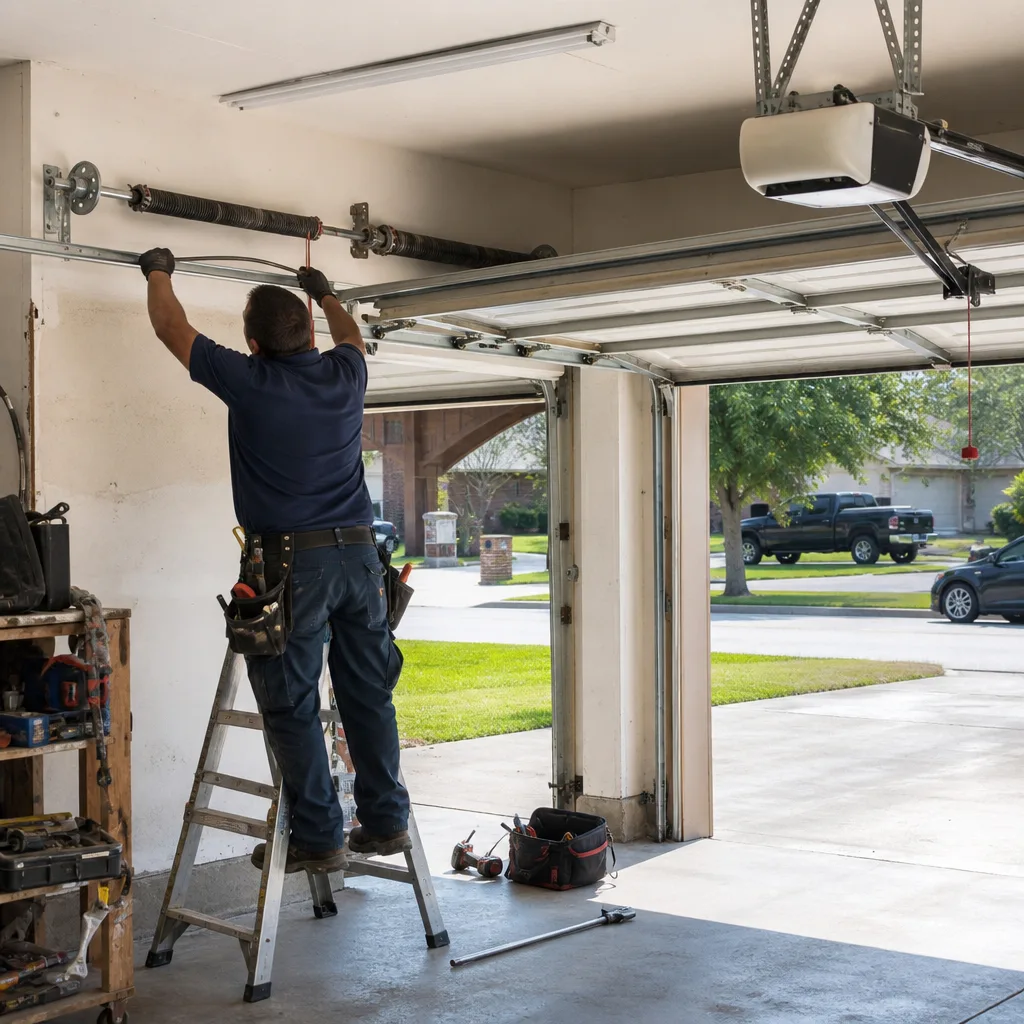
A legitimate written quote is not a total on a napkin or a text message saying “$285 plus tax.” It’s a structured document that lets you compare apples to apples and holds the contractor to a defined scope. Here’s what must be present, and what it means when one line is missing.
The Five Required Line Items
| Line Item | What It Covers | Red Flag If Missing |
|---|---|---|
| 1. Labor description | Specific tasks: “Replace pair of torsion springs, reset cables, balance door, test safety reverse” | Vague language like “fix door” leaves scope undefined and billable hours open-ended |
| 2. Parts specification | Brand, model, or grade of every component; for springs, wire diameter, inner diameter, and cycle rating | No specs means no way to verify what was installed; generic “high cycle” claims are unenforceable |
| 3. Flat price | Single number covering all labor and parts, with tax calculated | Hourly rates or “time and materials” estimates that balloon; “plus parts” with no parts ceiling |
| 4. Warranty terms | Duration, what’s covered, who honors it (company or manufacturer), and process for claims | “Lifetime warranty” with no definition of lifetime or no written terms page |
| 5. Authorization signature line | Space for customer signature before work begins, with date and technician name | Work starts before you sign, or no signature required - meaning no mutual agreement to enforce |
In Texas City, we’ve seen quotes that list only a total with no parts breakdown. We’ve seen “warranty” described as “call us if anything goes wrong.” These aren’t oversights. They’re structural choices that protect the contractor, not the customer.
Our written quotes include all five line items, every time, per Clause 1. The customer signs before work starts. The technician signs. Both parties hold a copy. This isn’t bureaucracy. It’s the documentation that makes a 365-Day Done Right Promise enforceable.
Pricing Context for Texas City
While every job varies, here are the ranges we see in this market for common repairs:
- Broken torsion spring replacement (pair): $180-$340, depending on wire diameter and door weight
- Cable replacement (pair): $120-$220
- Garage door opener repair (logic board, limit switch, or trolley carriage): $150-$350
- Full garage door opener installation: $400-$750, including rail assembly and safety sensors
- Panel replacement (single section, standard steel): $250-$500, not including color matching
These ranges are specific to Galveston County’s market conditions: parts availability from Houston distributors, travel time for specialized components, and the salt-air corrosion patterns that affect what fails and how often. A quote significantly below these ranges often indicates recycled parts, uninsured labor, or a bait-and-switch structure where the low number gets the visit and the real price emerges after disassembly.
Step 4: Photo Documentation - What to Ask For and What to Expect
The photo record is where most hiring guides go silent. They’ll tell you to check reviews and compare prices, but they won’t tell you how to verify that the work you paid for matches the problem that existed. Photo documentation closes that loop.
What a Legitimate Process Looks Like
A documented photo record should include, at minimum:
- Pre-repair photos of the failed component: The torsion spring with the clean break visible, the frayed cable, the cracked logic board. These should be timestamped and show the part in place, not just a generic stock image.
- Post-repair photos of the installed components: The new spring with wire diameter visible, the balanced door at rest, the safety sensors aligned and tested.
- Delivery to the customer before departure: Not “we’ll email them later.” Not available on request. Received by text or email while the technician is still on site, with a clear link or attachment you can forward to anyone.
This process traces to our founding rule in 2015: the customer sees the failed part before anyone quotes a replacement. Not because we’re generous, but because it eliminates the “you need more than we thought” conversation that happens after disassembly. When you can see the broken spring yourself, the quote for replacement is obvious. When you can’t, you’re dependent on someone’s description.
How to Ask Without Sounding Adversarial
The question isn’t “Can I see proof you’re not ripping me off?” It’s “Will I receive photos of what you find and what you install, and how are those delivered?” A contractor with a real process will describe it in detail, because it’s routine. A contractor without one will deflect to “we’ve been in business X years” or “our techs are honest.” Honesty is not a process. Documentation is.
In Texas City’s older neighborhoods like The Heights and Bayou Vista, we regularly see doors with non-standard hardware from regional manufacturers no longer in business. A photo of the existing track, spring anchor bracket, or hinge pattern lets us verify parts compatibility before dispatching, saving a return trip and a second scheduling window. The photo record isn’t just consumer protection. It’s operational efficiency that benefits both parties.
Step 5: Storm-Chaser Red Flags in Galveston County
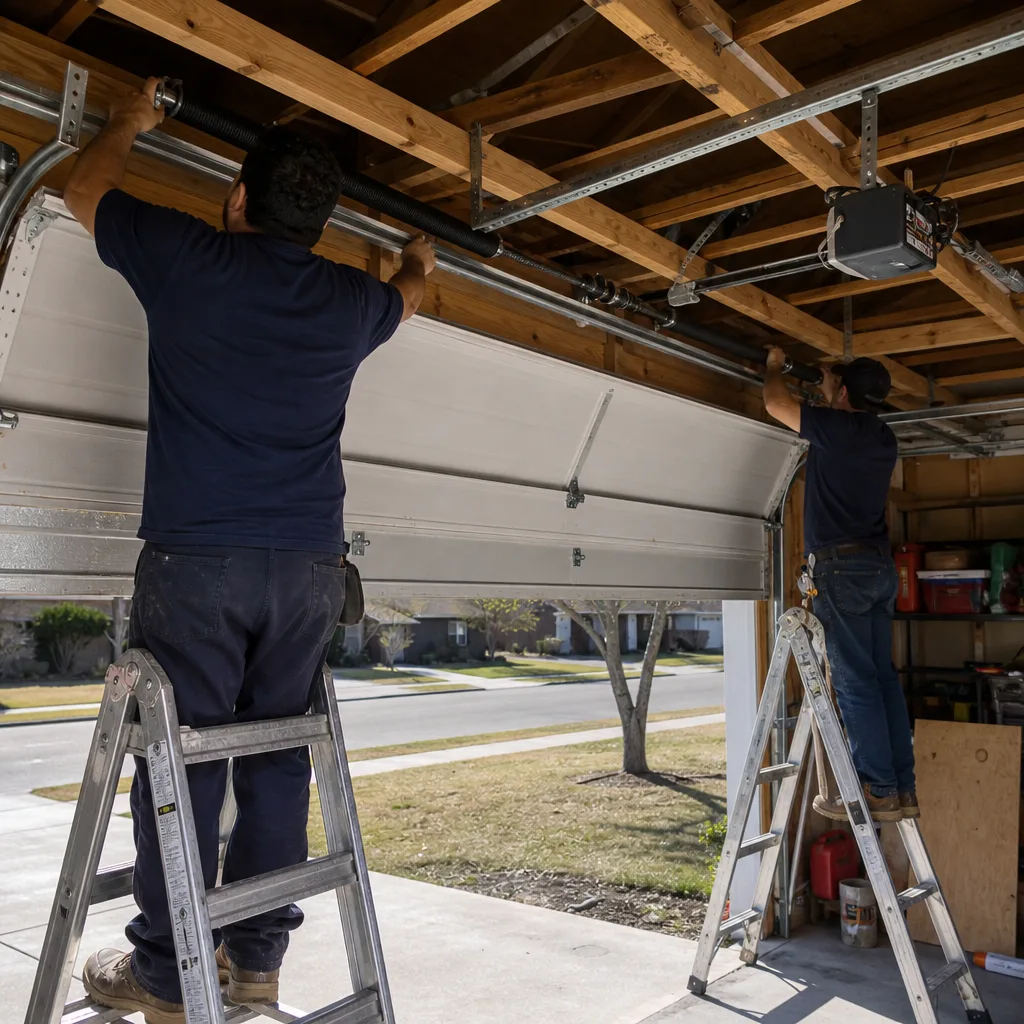
Every hurricane or major tropical storm that brushes the Texas coast triggers a predictable migration. Contractors from Dallas, Oklahoma, and states north and east descend on Galveston County with fresh magnetic truck signs, temporary local phone numbers, and aggressive door-to-door sales. They know homeowners are stressed, insurance checks are circulating, and demand exceeds local capacity.
Specific Red Flags to Watch For
- Out-of-state license plates on work vehicles: Not disqualifying by itself, but combined with other factors, it indicates a crew following the storm map, not serving a local territory.
- Demand for large upfront deposits: Standard practice is payment upon completion, or a modest deposit for custom-ordered doors. A demand for 50% or more before work begins, especially for repair work, is a warning.
- Pressure to sign today for “storm pricing”: There is no storm pricing. Materials cost what they cost. Urgency language contradicts the documentation-first approach that protects you.
- No local address or TDLR license: Ask where their office is. Ask for the TDLR number and verify it yourself. Storm chasers often use expired or borrowed credentials.
- Verbal-only estimates with “we’ll bill insurance”: Insurance billing requires documentation. A contractor who won’t document scope and price for you is unlikely to document it properly for an adjuster.
- Generic contracts with no company letterhead: The document should name the specific entity doing the work, with a physical address, phone number, and license number. A plain form with a signature line and no identifying information is unenforceable.
After Hurricane Nicholas in 2021, we responded to multiple Texas City homes where a storm-chaser contractor had started work, collected payment, and left the job incomplete when the crew moved to the next storm zone. The homeowners had verbal agreements, no photos, and no written warranty. The TDLR complaints we assisted with took months to resolve.
The protection against this isn’t complicated. It’s the same documentation discipline applied throughout this guide: written scope, flat price, photo record, verified license, and insurance in your name. A storm chaser cannot produce these quickly or consistently. A local contractor operating under The Haven Standard does it on every job, weather event or not.
Step 6: Brands, Parts Availability, and Warranty Structure
Texas City’s housing stock spans decades and multiple builder preferences, which means the garage door hardware in any given home could come from any of eight major manufacturers. A contractor who stocks parts for only one or two brands, or who must order everything, extends your downtime and may push you toward a full replacement when a repair would suffice.
What Full Brand Coverage Looks Like
We service and carry parts for all eight major brands: LiftMaster, Chamberlain, Genie, Clopay, Amarr, Wayne Dalton, Craftsman, and Raynor. This means:
- For opener repairs: logic boards, trolley carriages, limit switches, safety sensors, and remote programming capability across all major drive types (chain, belt, screw, and direct drive)
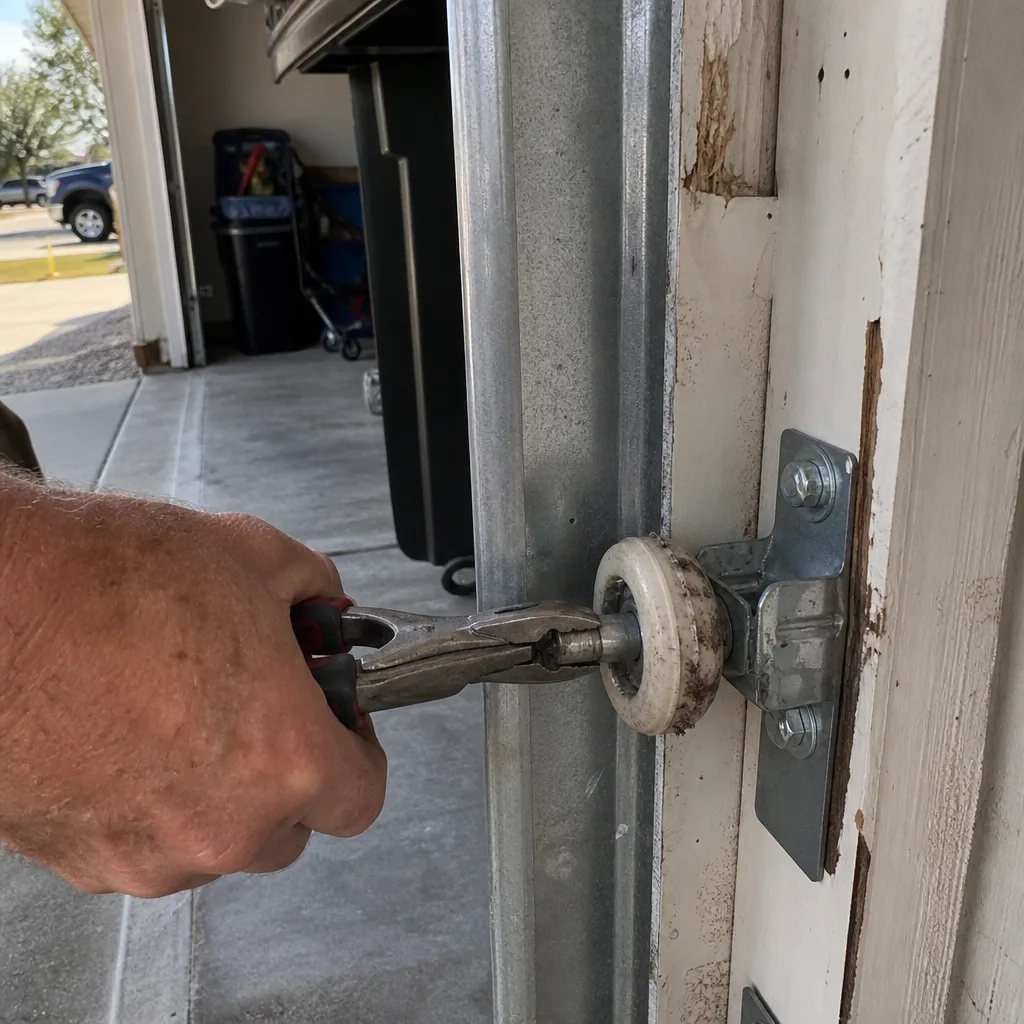
- For door repairs: springs, cables, rollers, hinges, and weather seal matched to the original manufacturer’s specifications
- For installation: full product lines available, not just the one brand a contractor has a volume deal with
A contractor who pushes a single brand for every application may have a financial arrangement, not a service rationale. In Texas City’s humid climate, for example, an Amarr steel door with a WeatherSeal bottom seal performs differently than a Wayne Dalton aluminum model. The right choice depends on exposure, budget, and whether the door faces Galveston Bay’s salt air directly. A technician with access to multiple lines can recommend based on conditions, not inventory.
Warranty Structure: What “Lifetime” Actually Means
Warranty language is where contractors often hide limitations. Ask these specific questions:
- Is the warranty on parts, labor, or both?
- Who honors it - the installing contractor, or the manufacturer? If the contractor, what happens if they go out of business?
- What voids it? Customer adjustments, lack of maintenance, or weather damage are common exclusions.
- Is there a written terms page, or only a verbal description?
Our 365-Day Done Right Promise covers both parts and labor for repairs, and installation warranties are documented with manufacturer terms plus our labor guarantee. The terms page is accessible, not locked in a file. This matters because the average homeowner in Texas City stays in their home 7-10 years, and a “lifetime” spring warranty that covers only the part (not the labor to replace it) leaves you paying $150-$200 for installation when the spring fails again.
Common Mistakes to Avoid
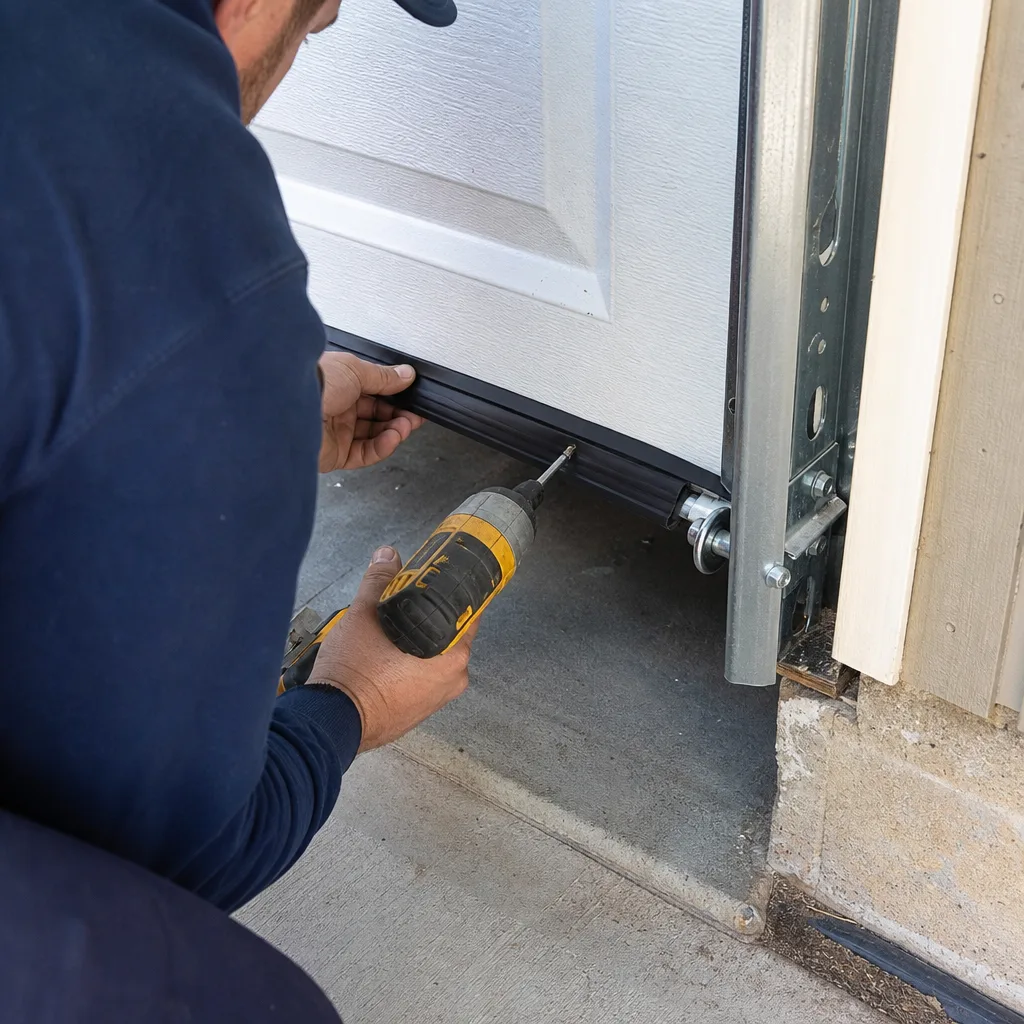
- Accepting a phone estimate as binding. A contractor who quotes $200 over the phone for a “spring replacement” without seeing the door weight, spring size, or cable condition is either guessing or planning to escalate on site. The written price comes after inspection, not before.
- Ignoring the salt-air factor in coastal Texas. A standard 10,000-cycle spring may fail in 6-8 years near the Bay instead of 12. A contractor who doesn’t ask about your home’s exposure or recommend a higher-cycle spring for coastal conditions is selling a part, not solving a problem.
- Hiring based on lowest quote without comparing line items. A $180 quote with no parts specification and no warranty is not cheaper than a $280 quote with named components, written warranty, and photo documentation. It’s just less defined.
- Not verifying insurance in your own name. A certificate of insurance with the contractor as the only named insured protects them, not you. Request to be named as certificate holder.
- Skipping the photo documentation ask because it feels awkward. This is your largest moving equipment, and the repair often costs several hundred dollars. Asking for evidence of what was found and what was done is standard due diligence, not suspicion.
- Assuming 5-star reviews protect against invoice surprises. Reviews measure satisfaction with outcomes, not accuracy of initial quotes. A contractor with perfect reviews and no written pricing process can still produce a bill 40% higher than the phone estimate.
- Waiting until after a storm to establish a contractor relationship. The time to verify license, insurance, and documentation practices is when you don’t need service. After a spring breaks or a storm damages the door, you’re selecting under pressure.
When to Call a Professional
Some garage door issues are maintenance items a homeowner can handle: lubricating rollers, clearing photo-eye obstructions, or replacing remote batteries. Others involve genuinely dangerous components and should never be DIY projects. For help deciding which is which, see DIY vs Professional Garage Door: The Texas City Homeowner’s Decision Guide.
Call a professional immediately if:
- A torsion spring is broken or visibly separated - these are under extreme tension and can cause serious injury or death if handled improperly
- The door is off its tracks or hanging unevenly - the weight distribution is unpredictable and the door may fall
- Cables are frayed or detached - they work in tension with the springs and release stored energy unpredictably
- The opener motor runs but the door doesn’t move - this often indicates a stripped gear or broken trolley carriage, and continued operation damages additional components
- There’s visible damage after a storm - structural compromise affects safety systems and wind-load ratings
For any of these scenarios, garage door repair in Texas City should be performed by a state-licensed technician with proper tools and insurance. Servo Garage Doors Texas City offers free estimates in Texas City - call (409) 797-6585. We’ll provide a written scope and flat price before any work begins, with a documented photo record of everything we find.
Frequently Asked Questions
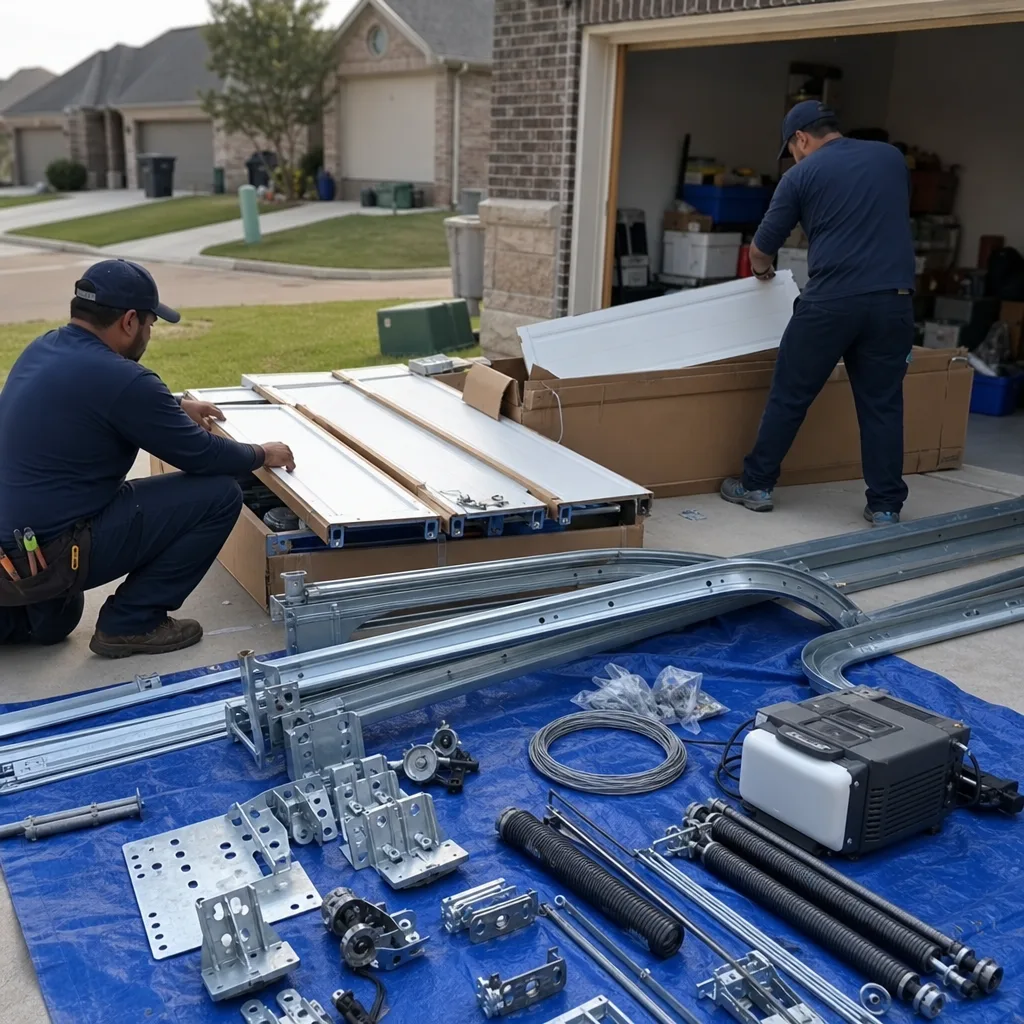
Most common repairs in Texas City fall between $120 and $750, depending on the scope. A broken torsion spring replacement typically runs $180-$340, cable replacement $120-$220, and opener repairs $150-$350. Full opener installation ranges $400-$750. The exact price depends on door weight, spring specifications, and brand compatibility. Call (409) 797-6585 for a free estimate with a written, flat price before any work starts.
No. Torsion springs store lethal amounts of energy and require specialized winding bars and training to release safely. Every year, homeowners are seriously injured attempting DIY spring replacement. This is not a maintenance task. It’s a repair for a trained, equipped professional. If your spring is broken, call a licensed technician.
Verify through the TDLR license search at tdlr.texas.gov. Select “Air Conditioning and Refrigeration Contractors” from the license type dropdown, enter the company or individual name, and confirm active status with a future expiration date. Ask for a certificate of insurance with you named as certificate holder. These two steps take five minutes and eliminate most unqualified operators.
A legitimate quote includes five elements: detailed labor description, specific parts with brand or grade, a flat total price with tax, written warranty terms with duration and coverage, and a mutual signature line before work begins. Missing any of these creates ambiguity that typically favors the contractor. Our quotes include all five per Clause 1 of The Haven Standard.
For emergency repairs - door stuck open, broken spring with vehicle trapped, security compromise - same-day service is available from contractors with live 24/7 answering and stocked trucks. For garage door installation in Texas City or scheduled replacement work, expect a free measure visit within 1-2 business days, with installation scheduled after materials are confirmed. Installation is measured, ordered, and scheduled; repair is dispatched.
It shouldn’t. A flat, written price agreed before work starts is the only format that protects you. The price changes only if you request additional work not in the original scope. At Servo, we photograph the failed component, quote the repair with a flat price, and obtain your signature before touching tools. If we find something unexpected, we document it, quote it separately, and get authorization. The original scope and price remain fixed unless you change them.
Yes. Our trucks are stocked for repairs across LiftMaster, Chamberlain, Genie, Clopay, Amarr, Wayne Dalton, Craftsman, and Raynor. This includes common failure items: torsion springs in multiple wire diameters, cables, rollers, hinges, logic boards, trolley carriages, limit switches, and safety sensors. For garage door opener repair and installation in Texas City, brand-specific parts availability means we complete most jobs in a single visit.
The Bottom Line
Hiring a garage door contractor in Texas City comes down to one principle: every handoff should be documented, not trusted. Verify the license yourself. Demand written scope and flat price before work begins. Ask for photo documentation of findings and completed work. Confirm parts availability for your specific brand. And recognize that the standard advice - get three quotes, check reviews - protects you from bad outcomes, not from invoice surprises.
The contractors who operate this way are less common because documentation requires discipline. But they’re the ones who can offer a real warranty, a real price guarantee, and a real paper trail when something goes wrong. In a coastal market with salt-air corrosion, storm-chaser cycles, and hardware spanning multiple decades, that documentation isn’t overhead. It’s the service.
Servo Garage Doors Texas City has operated this way since 2015: independently owned and operated under The Haven Standard, with 18,000+ jobs completed, every one with a written price before work started and a documented photo record when the technician left. If you’re evaluating contractors, bring us any competing written estimate for a free second opinion - no coupon required. Call (409) 797-6585 for a free estimate, or visit our Servo Garage Doors Texas City home page to learn more about our repair and installation services.
Written by Marcus Deller, Owner at Servo Garage Doors Texas City, serving Texas City since 2015.