
Last updated September 22, 2026
Full 25-point door and opener safety check with every visit - springs, cables, rollers, tracks, and your LiftMaster or Chamberlain opener included
You get a price before we start. It does not change when the truck arrives.
 Before
 After
After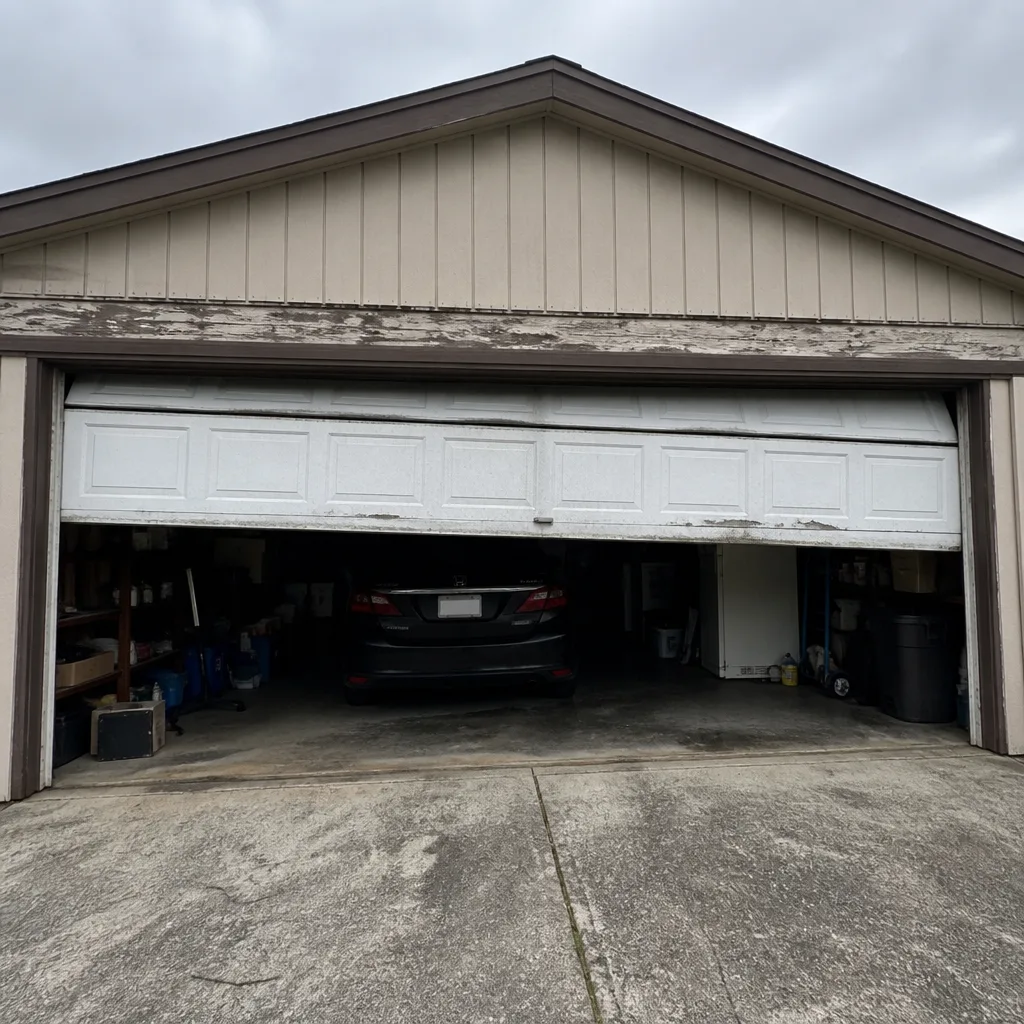 Before
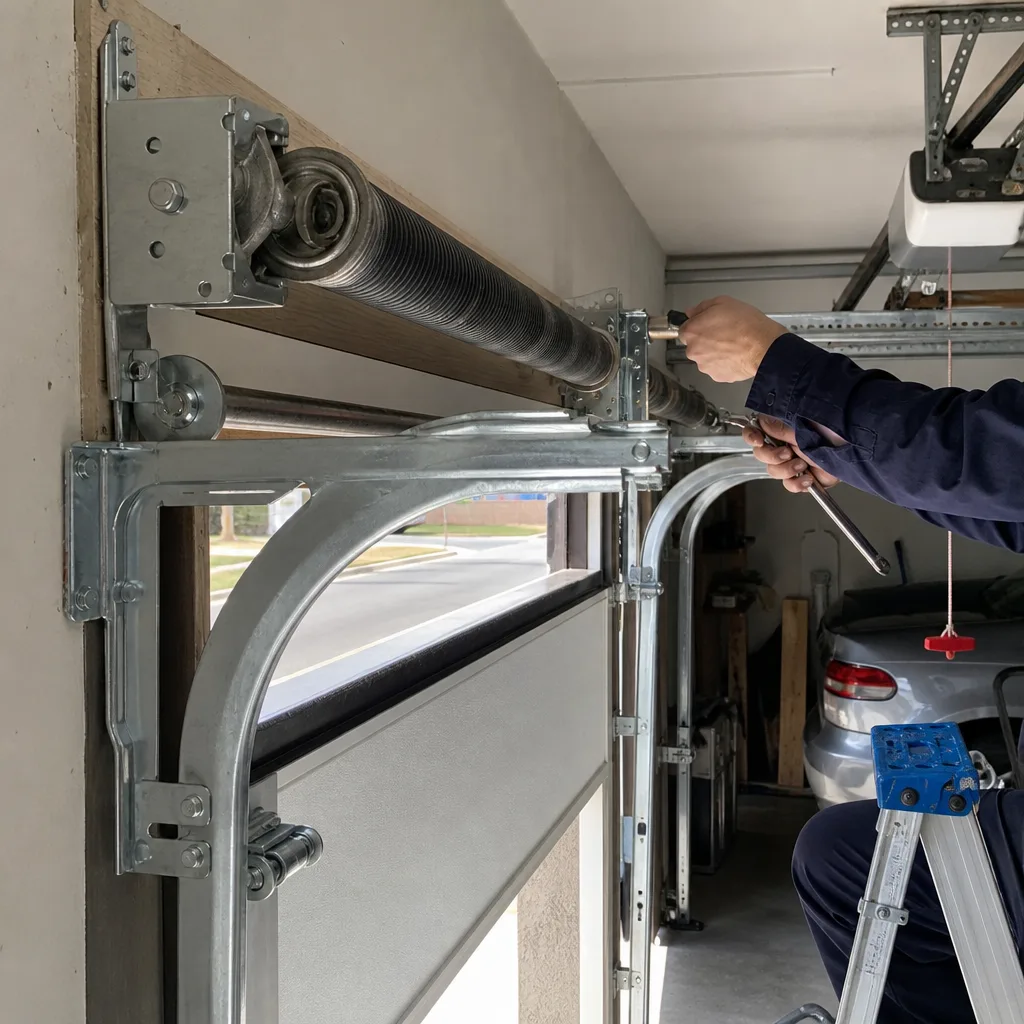 After
After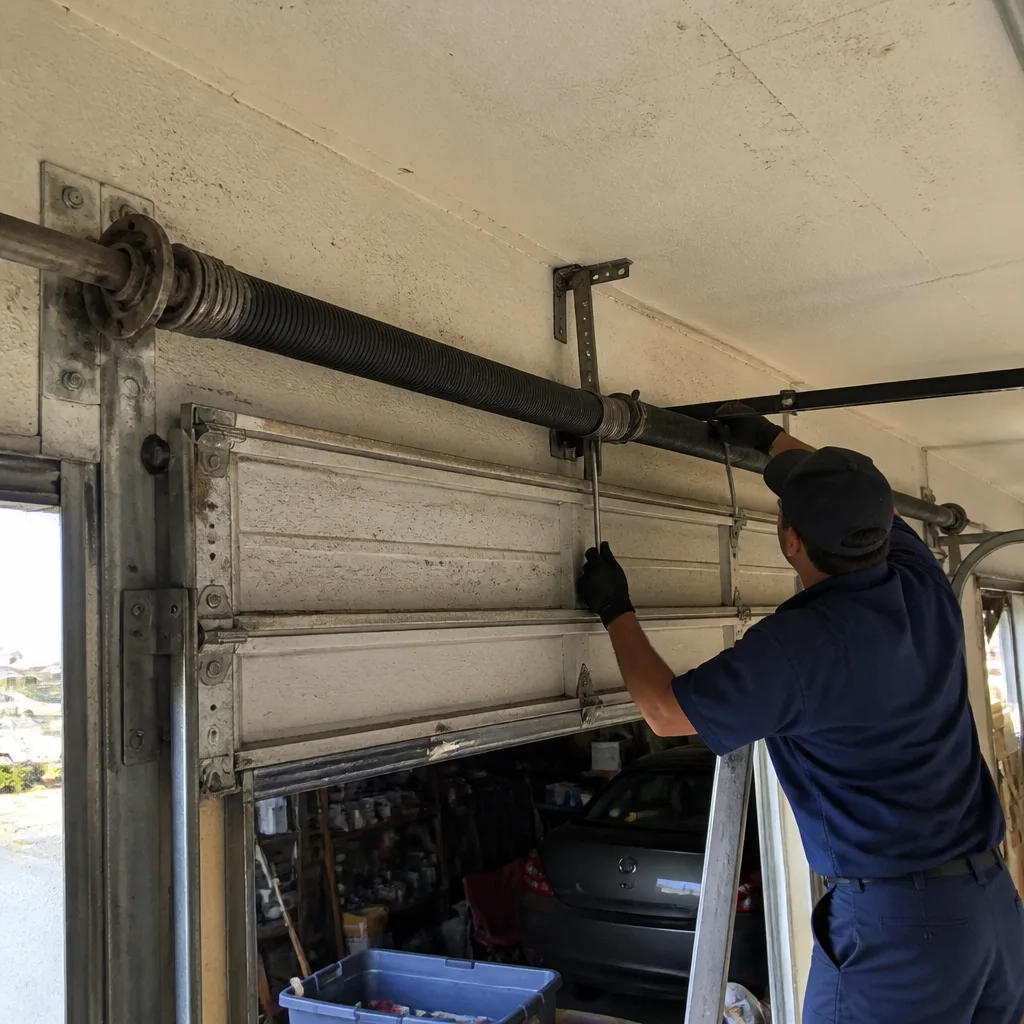 Before
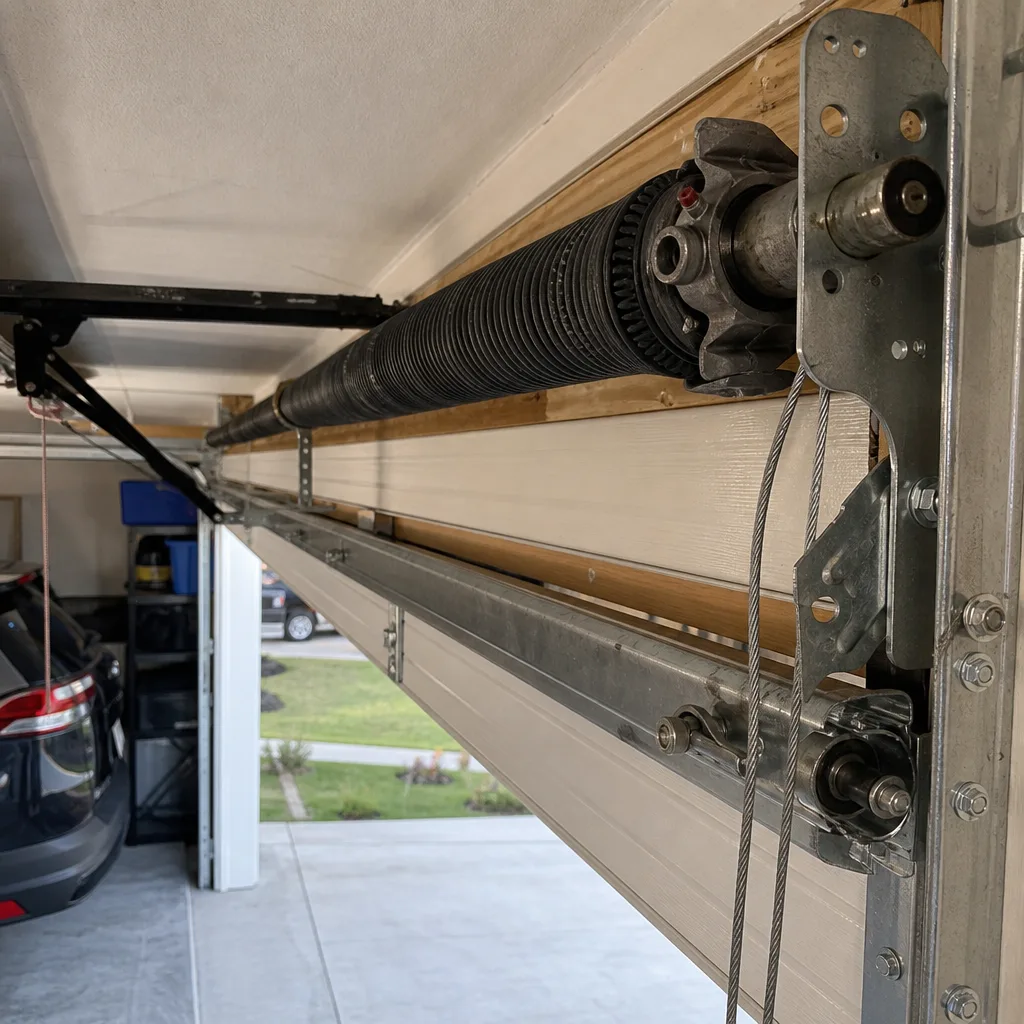 After
AfterGarage Door Warning Signs: A Texas City Homeowner’s Reference Guide
A garage door that hesitates for two seconds before opening looks the same whether the torsion spring is slightly out of balance or 72 hours from snapping. One needs a routine adjustment. The other can send a 150-pound door crashing down. In Texas City, where Gulf humidity accelerates rust and storm winds torque tracks out of alignment, the difference between “monitor it” and “stop using it now” isn’t always obvious to a homeowner standing in the driveway at 6 a.m. This guide separates the signals by severity, explains what coastal conditions do to specific components, and shows you how to document what you see so a technician can assess it before making the trip. For more context, see our The Complete Guide to Garage Door in Texas City.
Quick Answer
Garage door warning signs in Texas City fall into three tiers: stop using the door immediately if you see a frayed cable, a cracked torsion spring, or a door that won’t stay open halfway; schedule service within 30 days for slow response, new grinding noises, or sagging panels; monitor and photograph for minor seal wear or cosmetic rust. Gulf humidity and salt air accelerate failures that inland guides miss, so “surface rust” on a spring here often isn’t.
Table of Contents
- Severity-Tiered Warning Signs: Stop Now, Schedule Soon, or Monitor
- Rust Patterns on Torsion Springs: Cosmetic vs. Catastrophic
- After a Gulf Storm: Why “Sounds Different” Means Alignment, Not Lubrication
- Seal and Weatherstrip Failure in Texas City’s Humidity and Flood Zones
- How to Photograph a Suspected Problem for Remote Assessment
- Garage Door Opener Warning Signs: Electrical and Mechanical
- Panel, Track, and Hardware Red Flags
- Common Mistakes to Avoid
- When to Call a Professional
- Frequently Asked Questions
 Before
 After
AfterSeverity-Tiered Warning Signs: Stop Now, Schedule Soon, or Monitor
Most more guides & resources list symptoms alphabetically. That wastes your time. A squeaky roller and a snapped cable do not belong in the same paragraph. We sort by what you should do today, what you should do this month, and what you should watch.
Stop Using the Door Immediately
These conditions present injury risk or sudden total failure. Do not operate the door. Disconnect the opener if you can do so safely, and call for service.
- Door won’t stay open at the halfway point. Release the opener and lift manually. If it drifts down, the torsion spring has lost tension or failed entirely. The opener is now doing 100% of the holding work, and the motor or drive system will fail next. More critically, if the opener gives out, the door drops.
- Visible gap in the torsion spring. Look at the coil above the door. A clean separation between coils means the spring has broken. The door may still open if you have a two-spring system, but it’s running on one spring and the opener is overloaded.
- Frayed or unraveling lift cable. The cables that run vertically alongside the door wind and unwind on the drums. If strands are separating or the cable looks like a frayed rope, it can snap under load. A snapping cable carries enormous force.
- Door hangs crooked in the tracks. One side higher than the other means a cable has slipped off its drum or a spring is broken on one side. Operating it will jam the door in the tracks or cause it to fall.
- Loud bang from the garage, then door won’t open. That’s a torsion spring breaking. The sound is distinctive. Do not try to force the door.
Schedule Service Within 30 Days
These issues will worsen and eventually cause failure, but the door is safe to use with normal caution until a technician arrives.
- Slow or hesitant response from opener. The motor runs, but the door starts late or moves sluggishly. This can indicate a failing logic board, worn trolley carriage, or a spring that’s lost some tension and is forcing the opener to work harder. In Texas City’s heat, opener motors also thermally protect and slow down when overheating.
- New grinding or scraping noise. Metal-on-metal sound usually means a roller has worn flat, a track is bent, or the door is rubbing against the jamb. Not immediately dangerous, but it will damage the track and panels if ignored.
- Remote works intermittently. After ruling out weak batteries, this points to a failing logic board, misaligned safety sensors, or degraded wiring in the button circuit.
- Sagging bottom panel or visible delamination. Steel doors can rust from the inside out. Wood doors absorb humidity and warp. Either way, the panel’s structural integrity is compromised.
- Opener light blinks and door reverses. The safety sensors (photo eyes) are misaligned or obstructed. Clean the lenses and check alignment first. If the problem persists, the wiring or the sensors themselves need replacement.
Monitor and Photograph
These are early warnings. Document them and recheck monthly.
- Minor surface rust on tracks or hardware. Coastal air in Texas City means rust starts faster than inland, but surface oxidation on a track or hinge is cosmetic until it pits. Photograph it and compare in 60 days.
- Small gaps in bottom seal visible only from inside. Light or air infiltration. Not urgent unless water enters during heavy rain.
- Slight color fading or chalking on door finish. Purely cosmetic. Note it for eventual refinishing or replacement planning.
- Opener runs slightly louder than new. Chain or belt drive openers loosen over time. A rail support bracket may need tightening. Not a failure signal yet.
In our experience across Texas City neighborhoods from Bayou Vista to the north side toward I-45, the “stop now” calls spike in March and October. That’s when temperature swings stress metal components that have been corroding all summer or all winter. The homeowners who catch the “schedule soon” signals in February or September avoid the emergency.
Rust Patterns on Torsion Springs: Cosmetic vs. Catastrophic
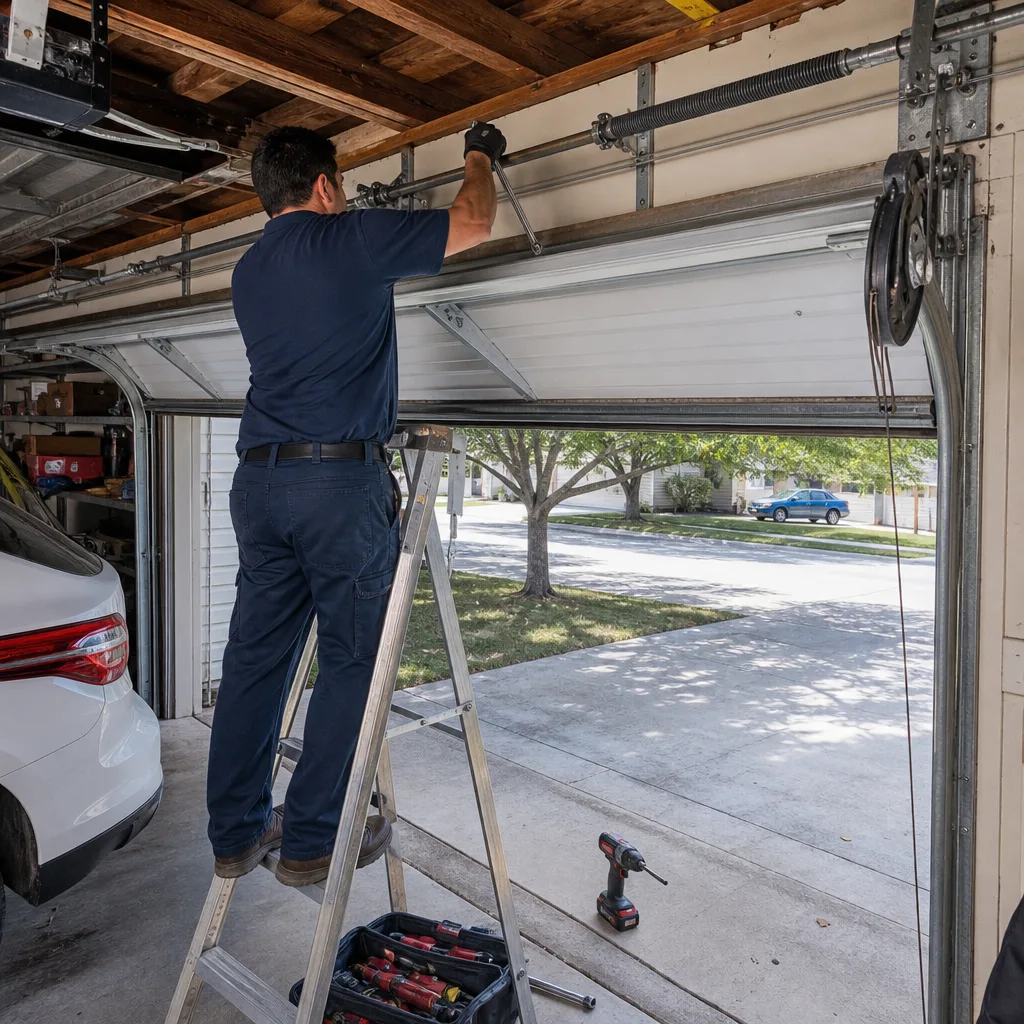
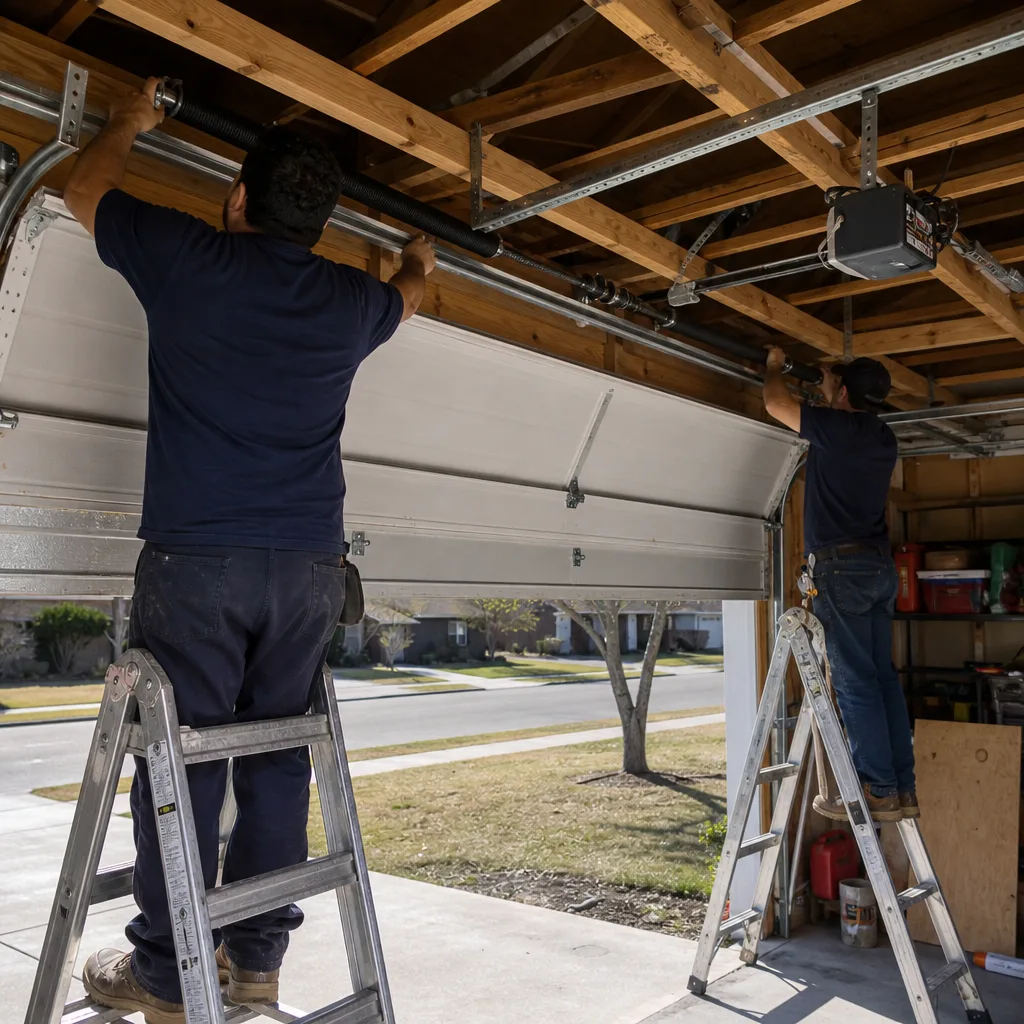
Torsion springs are the most dangerous component on a garage door system. They store mechanical energy equivalent to hundreds of pounds of force. When they fail, they can damage property and cause serious injury. Gulf Coast humidity makes rust assessment especially critical in Texas City, because what looks like “a little surface rust” inland is often active pitting here.
What Surface Oxidation Looks Like
Uniform reddish-brown discoloration across the coil surface, with no visible pitting. The wire diameter feels consistent if you run a finger across it (carefully, without displacing the spring). This is cosmetic. It forms when humid air contacts the spring’s oil coating. We see this on springs less than five years old in Texas City, especially in garages without climate control. It does not require replacement, though we photograph it during routine service for the documented record.
What Imminent-Failure Rust Looks Like
Look for three specific patterns:
- Pitting and flaking. The surface is not smooth. Small craters have formed, and rust flakes off when touched. This means the metal has lost cross-sectional area. The spring is weaker than specified and is cycling at higher stress.
- Concentrated rust bands. A dark, heavily corroded ring at a specific point on the coil, often where the spring contacts the winding cone or where condensation pools. This is stress-corrosion cracking in progress. The crack starts at the pit and propagates inward.
- Visible crack or “hairline” at the coil. Sometimes visible only when the spring is relaxed (door open). A fine line across the wire, often with rust bleeding from it. This spring has already cracked and is held together by residual tension. It can separate on the next cycle.
The critical difference: surface oxidation is even and shallow. Failure rust is localized, pitted, and often darker. If you’re uncertain, photograph it close-up with a reference object (coin or key) for scale and text it to a technician. At Servo Garage Doors Texas City home, we assess these photos at no charge because a misidentified spring is not worth the risk.
Spring replacement in Texas City typically runs $180-$340 for a standard residential torsion spring, including installation and safety inspection. We quote that flat, in writing, before touching anything. Clause 1 of The Haven Standard.
After a Gulf Storm: Why “Sounds Different” Means Alignment, Not Lubrication
This is the warning sign Texas City homeowners miss most often, because the advice they find online is written for dry climates.
After a tropical storm, hurricane remnant, or even a strong Gulf frontal system, a door that “works fine but sounds different” almost always has a track alignment problem, not a lubrication problem. The wind load on the door face, especially when the door is closed and the surface area is maximized, torques the vertical tracks. The mounting brackets that attach the tracks to the wall framing shift microscopically. The door still moves, but now it rubs at a new contact point, or the rollers bind slightly in the distorted track section.
The wrong response is to spray lubricant on the rollers and hope. That masks the sound temporarily while the door continues to damage itself. The correct response is to check three things:
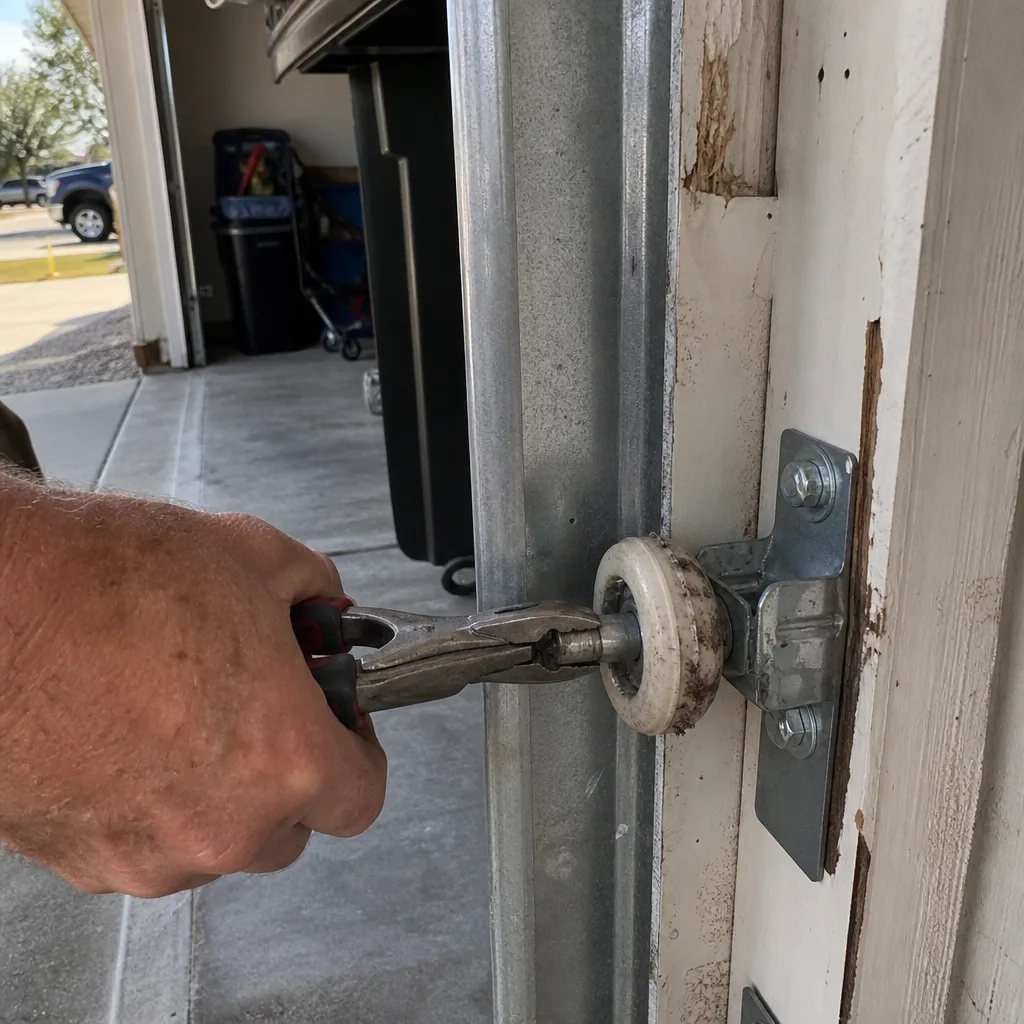
- Visual track inspection. Close the door and sight down each vertical track from top to bottom. It should be plumb and straight. Any bow, twist, or gap between track and wall indicates movement.
- Roller contact pattern. Open and close the door slowly, watching where rollers enter and exit the curved track section (the radius). Binding or hesitation at a specific point means that section has shifted.
- Bracket looseness. Wiggle the track brackets where they bolt to the wall. Any movement means the lag screws have pulled out of the framing or the bracket itself has bent.
In Texas City’s older neighborhoods, particularly homes built before 1990 with original framing, the wall structure itself may have flexed. We’ve seen track brackets tear through rotted or termite-damaged studs after storm loading. That’s not a lubrication issue. That’s a structural repair.
If your door sounds different after a storm, schedule an alignment inspection. Don’t wait for the opener to fail from the extra load. Garage Door Repair in Texas City covers track realignment, bracket reinforcement, and opener stress testing.
Seal and Weatherstrip Failure in Texas City’s Humidity and Flood Zones
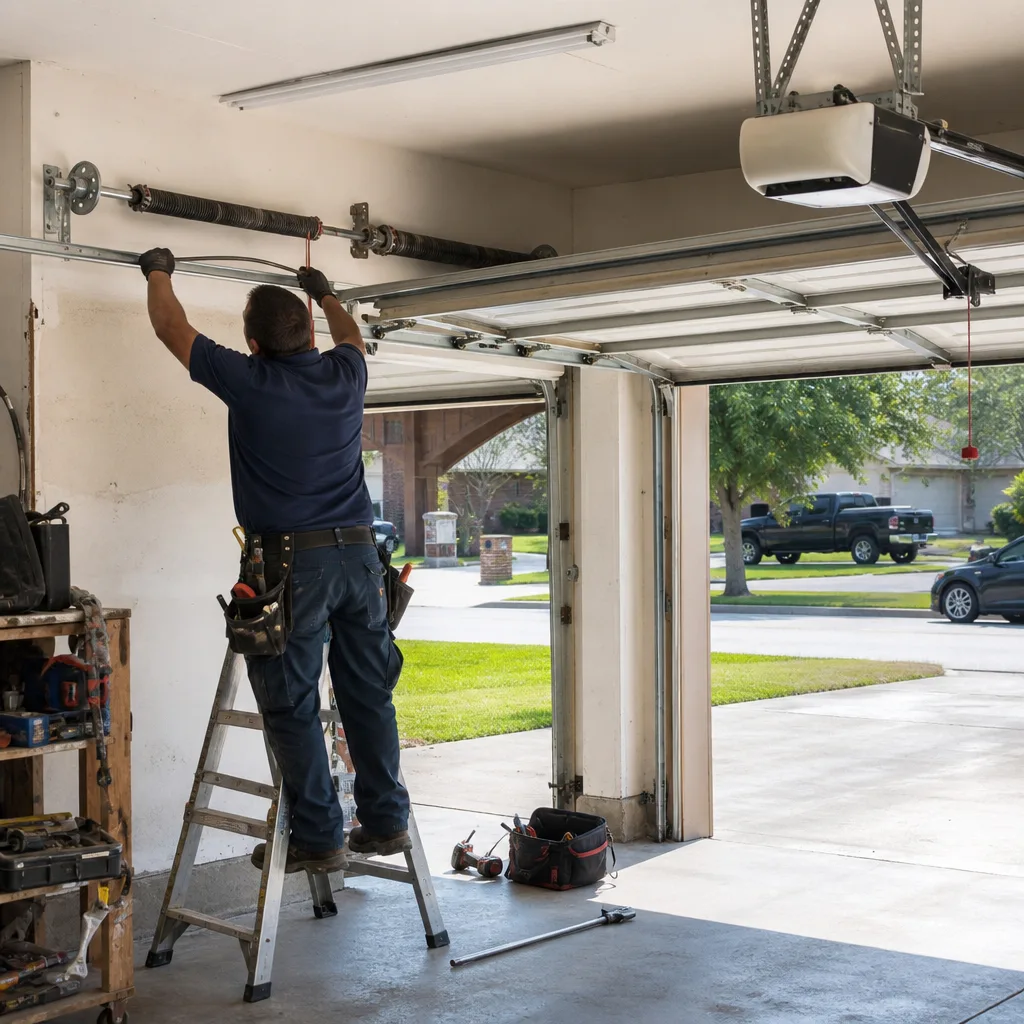
Garage door seals do two jobs: they block water, and they block air. In Texas City, both jobs matter intensely. The area’s flat topography and clay soils mean water sheets across driveways and pools at garage entries during heavy rain. Humidity stays above 70% for months in summer. Seal failure here has consequences that homeowners in drier climates don’t face.
Signs of Seal Failure Specific to This Climate
- Water line staining on the bottom panel interior. After heavy rain, check the inside face of the bottom door section. A horizontal water mark means the bottom seal is compressed, cracked, or no longer contacts the floor evenly. In flood-prone areas of Texas City near Moses Lake or the bayou systems, this can mean standing water entering the garage.
- White or gray mineral deposits on the concrete at the door line. That’s efflorescence from water evaporating and leaving salts. It means water is getting under the seal regularly, even if you don’t see puddles.
- Soft or crumbling rubber in the bottom seal retainer. The vinyl or rubber insert becomes tacky, then hard, then cracks. Humidity accelerates this. A seal that looks intact but feels stiff or glazed has lost its compression set and won’t seal against the floor.
- Side and top weatherstrip pulling away from the jamb. The adhesive fails in heat and humidity. Gaps let conditioned air escape and humid air enter, which rusts hardware and warps wood doors from the inside.
- Insect or rodent entry. Gaps at the seal corners are highways for pests seeking water and cooler air. If you’re seeing more than usual, the seal is the first place to check.
What Replacement Looks Like
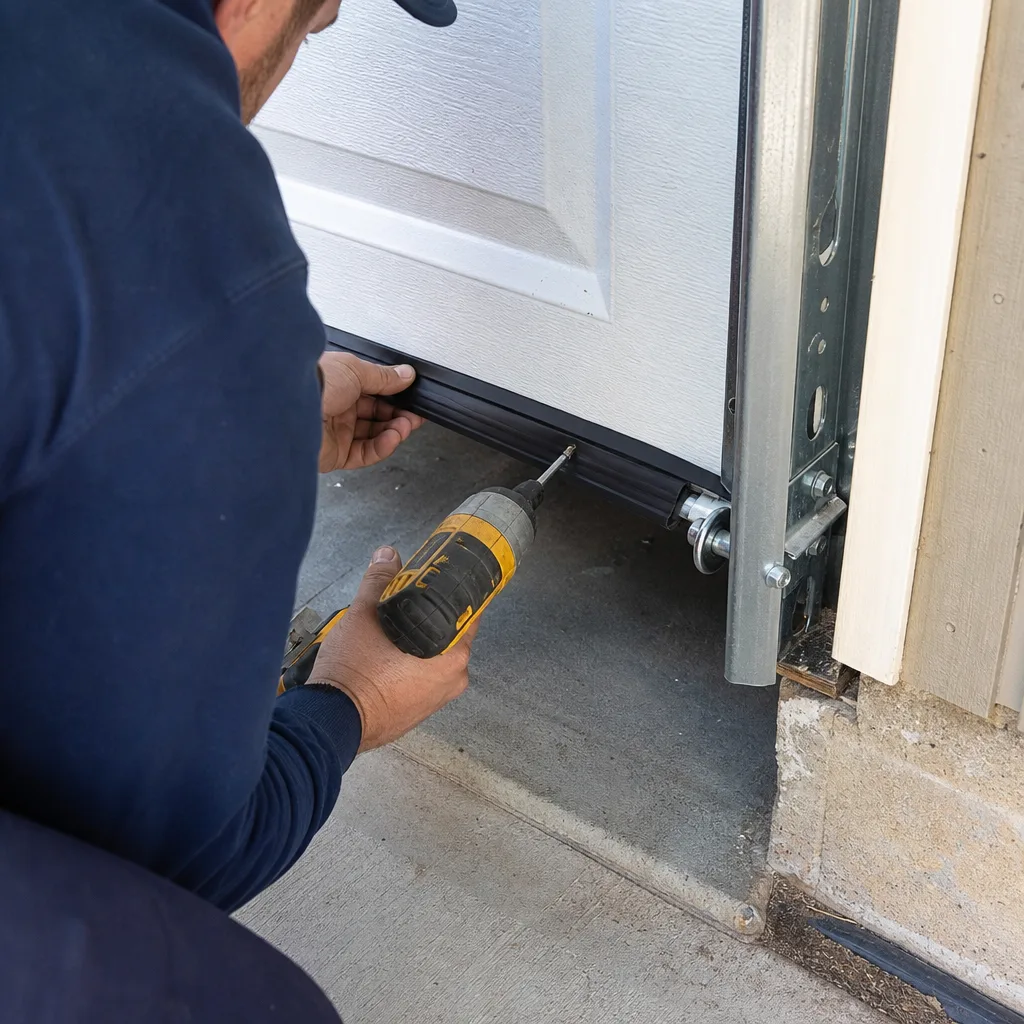
Bottom seal replacement is straightforward and typically costs $45-$85 installed, depending on seal type (bulb, bead, or T-style) and whether the retainer channel is damaged. Side and top weatherstripping runs $60-$120 for a standard single door. We photograph the existing seal condition, quote the replacement flat, and install it with the door in the closed position to verify contact pressure. The photo record shows you the before and after.
For homes in Texas City’s flood zones, we also assess whether the seal type is appropriate. Some bulb seals perform better on uneven concrete than standard T-seals. If your driveway has settled or heaved, a more robust seal or a threshold extension may be worth the incremental cost.
How to Photograph a Suspected Problem for Remote Assessment
One of the most practical ways to reduce your repair cost is to eliminate the diagnostic trip charge for a problem that turns out to be minor or misidentified. A clear photograph lets a technician assess severity and quote accurately before arriving. This is especially valuable in Texas City, where traffic patterns and distance can make same-day scheduling unpredictable.
We built our entire documentation system on this principle. Clause 4 of The Haven Standard requires our technicians to photograph the failed component before quoting replacement. You can use the same method to communicate with us before we dispatch.
Photography Guidelines by Component
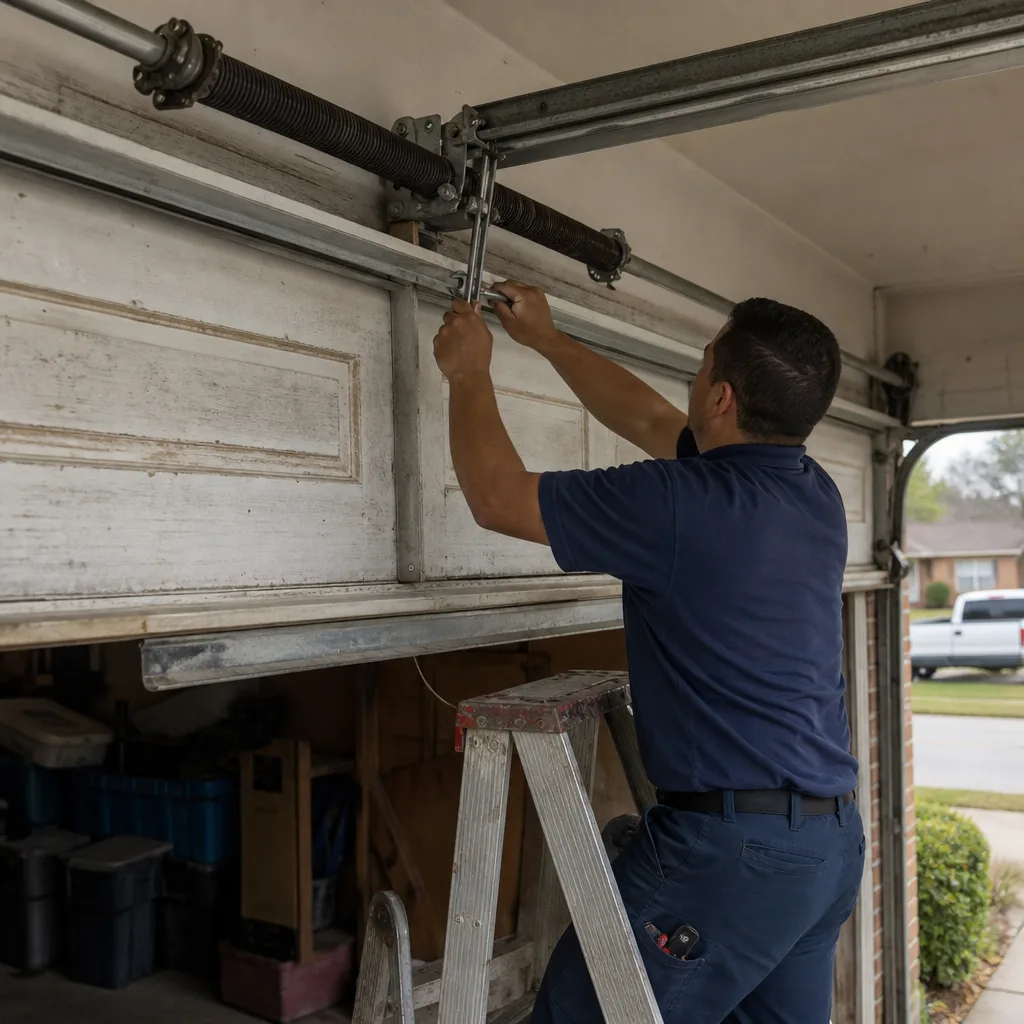
- Torsion spring: Stand on a sturdy step stool or ladder (not on a chair), position your phone parallel to the spring axis, and fill the frame with the coil. Include a reference object (quarter, key, or pen) lying on the spring or adjacent hardware. Take one photo of the full spring length and one close-up of any suspected rust or crack. Flash on, even in daylight, to show surface texture.
- Lift cable: Photograph the cable from the bottom bracket to the drum, with the door closed. Fraying is most visible where the cable wraps around the drum. Use flash to catch strand separation. If the cable has unwound from the drum, photograph that specifically.
- Track and rollers: With the door halfway open, photograph the roller in the track at the point where you hear noise or see binding. Include the track bracket and wall attachment in the frame so we can assess bracket condition.
- Bottom seal and panel: Door closed, camera on the floor, shooting along the seal line. Second photo from inside the garage, showing the bottom panel interior and any water staining.
- Opener unit: Photo of the manufacturer label (brand, model, date code) and a second of the rail/trolley area if the symptom is mechanical noise or movement issue.
What to Include in Your Message
Send the photos with this information: door approximate age, brand if known (Clopay, Amarr, Wayne Dalton, etc.), opener brand and model if visible, when the symptom started, and whether it’s constant or intermittent. With that, we can typically quote a range and dispatch with the correct parts, avoiding a return trip.
Our live phone coverage answers 24/7, including holidays. The person who answers can receive your photos by text and forward them directly to the scheduled technician. Named technician, on-the-way text, no callback window.
Garage Door Opener Warning Signs: Electrical and Mechanical
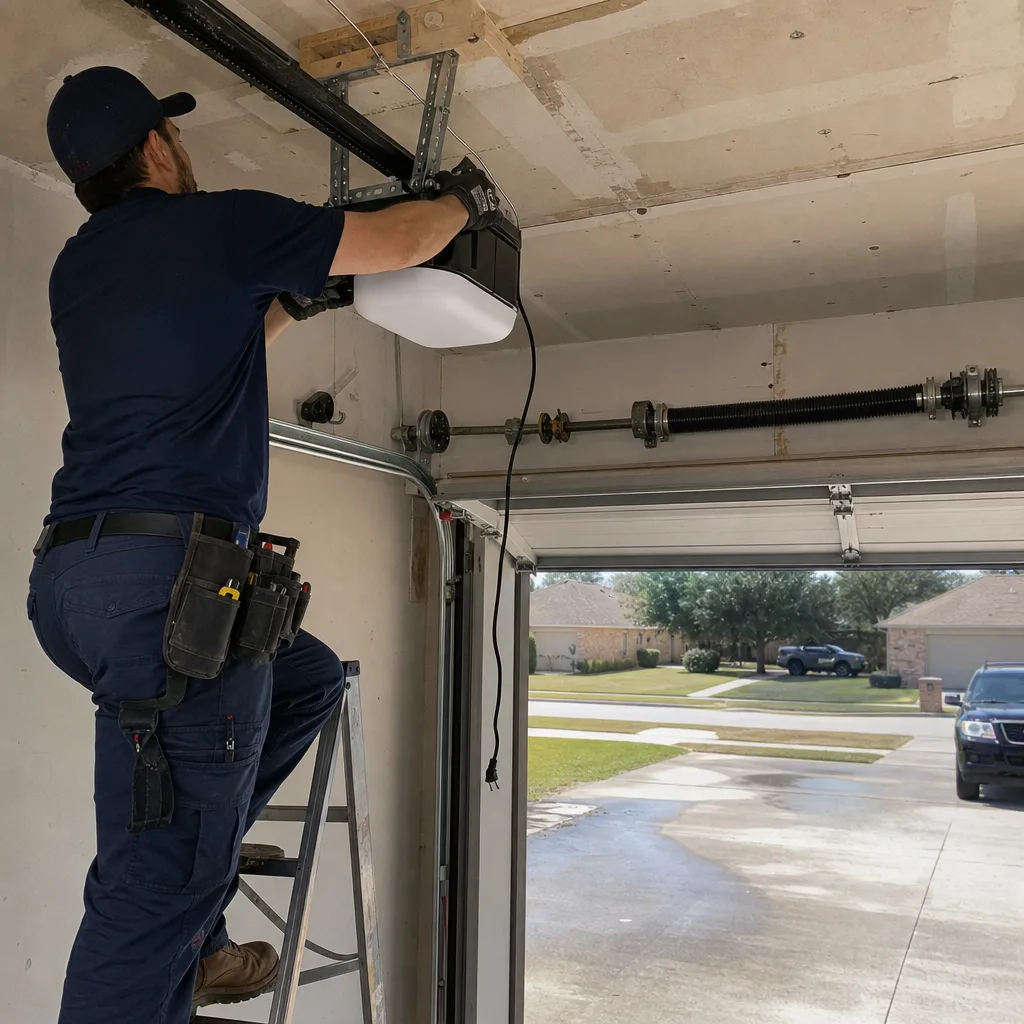
Opener failures give earlier warning than spring or cable failures, but the symptoms are easier to dismiss. A slow door is “just getting old.” A remote that needs two presses is “probably the battery.” These rationalizations cost homeowners in Texas City when the opener fails completely and the door is locked shut or open. If you’re planning ahead, read our How to Hire a Garage Door Contractor in Texas City: A Step-by-Step Guide.
Electrical Warning Signs
- Intermittent response to remote or wall button. After fresh batteries, this indicates a failing logic board or degraded wiring. The logic board is the computer that receives the signal and controls the motor. Heat and humidity in Texas City garages stress the capacitors and solder joints.
- Opener light flickers or dims during operation. Power supply issue, either in the unit’s transformer or the circuit serving the garage. Not an opener problem per se, but the voltage drop can damage the logic board over time.
- Opener resets to factory settings or loses travel limits. The limit switch memory is failing. The door may not open fully, may not close fully, or may reverse unexpectedly. This is a safety issue if the door doesn’t reverse on obstruction.
Mechanical Warning Signs
- Motor runs but door doesn’t move. The trolley carriage has disengaged or the drive gear (plastic or nylon) inside the opener has stripped. Common on chain-drive openers after years of overload from weak springs.
- Grinding noise from the opener head unit. The drive gear is failing or the motor bearings are worn. This sound is distinct from door-track noise because it comes from the ceiling-mounted unit.
- Door starts and stops repeatedly during a single cycle. The opener’s force setting is at maximum and the motor is overheating, or the door is binding and triggering the safety reverse. Either way, the system is compensating for a mechanical problem that needs correction.
Opener repair vs. replacement depends on age, brand parts availability, and whether the door mechanism itself is causing the overload. We service all major brands including Genie, LiftMaster, Chamberlain, and Craftsman. Garage Door Opener Repair & Installation in Texas City covers diagnostic, component-level repair, and full replacement with written upfront pricing for each option.
Typical opener repair ranges: $120-$280 for logic board, gear assembly, or limit switch replacement. Full opener replacement with installation: $380-$650 for a standard 1/2 HP chain or belt drive unit. We quote both paths when both are viable, with the written scope for each.
Panel, Track, and Hardware Red Flags
The visible structure of the door, the guidance system, and the connecting hardware degrade predictably in coastal conditions. Here’s what to watch.
Panel Issues
Steel doors in Texas City develop rust at the bottom interior seam first, where humidity condenses and drainage is poorest. Tap the bottom panel with a screwdriver handle. A dull thud means solid metal. A hollow or crunchy sound means rust has eaten through from the inside. This panel needs replacement; patching is temporary and unsafe.
Insulated steel doors with polyurethane cores can delaminate in heat. The steel face separates from the foam core, creating a visible bulge or waviness. The door loses structural rigidity and may bind in the tracks.
Wood doors, less common in newer Texas City construction but present in historic areas, absorb humidity and warp. Check for diagonal cracking at panel joints and for panels that no longer sit flat in the frame.
Track and Hardware
- Track dents or impact damage. Even minor dents from a bicycle handlebar or ladder can cause roller binding. The track must be straight within 1/4 inch over its length.
- Loose or missing track bolts. Vibration loosens hardware. A missing bolt at a track joint allows the track to spread, and the roller can pop out.
- Worn or cracked rollers. Steel rollers develop flat spots. Nylon rollers crack with age. Either causes noise and rough operation. The door should roll, not slide or grind.
- Hinge wear at the pin. The hinge connects door sections and carries the roller. A worn hinge pin allows section-to-section play, which torques the track and stresses the opener.
- Corroded or stripped lag screws in wall brackets. The bracket looks solid, but the screw no longer bites into the stud. This is common in older Texas City homes with original framing.
Panel replacement on a standard 16×7 door typically runs $180-$340 per panel, depending on insulation and gauge. Full door replacement becomes cost-effective when multiple panels are damaged or the door is over 15 years old. Garage Door Installation in Texas City includes measure, written quote, and removal of the existing door.
Common Mistakes to Avoid
- Spraying lubricant on a noisy door without inspecting first. Noise is a symptom, not the disease. Lubricant on a failing roller or bent track delays proper repair and can attract grit that accelerates wear. In Texas City’s dusty coastal environment, this is especially counterproductive.
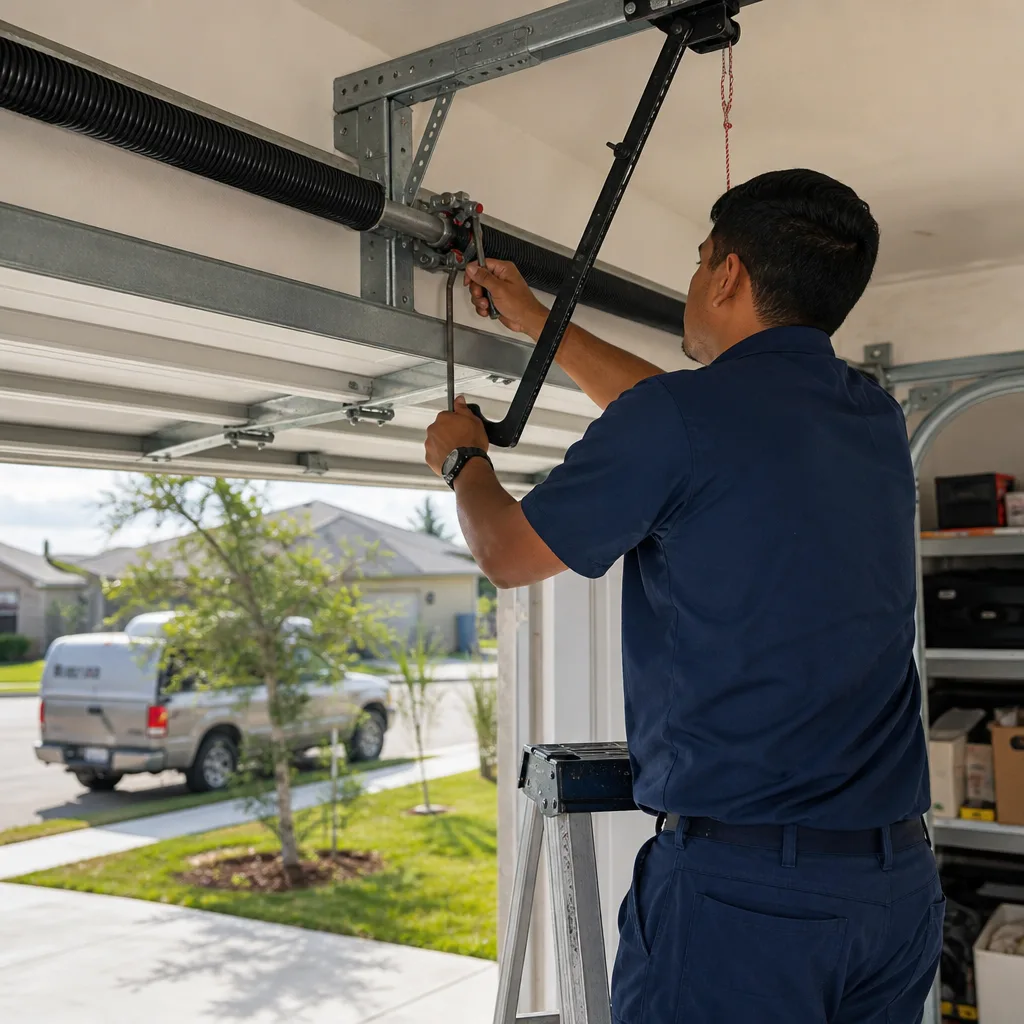
- Adjusting torsion spring tension yourself. These springs store lethal energy. The winding bars must be the correct size, inserted fully, and used with proper technique. Every year we see injuries from homeowners who watched a video and tried it. This is not a savings; it’s a gamble with serious injury.
- Ignoring “small” changes after a storm. A door that sounds slightly different or opens a half-second slower has been stressed. The cost of alignment inspection is minor compared to opener replacement or panel damage from continued operation.
- Assuming all rust is cosmetic. Texas City’s salt air and humidity produce rust patterns that progress faster than inland guides suggest. When in doubt, photograph and ask. The photo takes two minutes; a failed spring or cable can damage your car or worse.
- Replacing only one spring on a two-spring system. Springs are matched for cycle life. The old spring has more fatigue cycles than the new one. They will fail at different times, and the uneven loading damages the door and opener. We replace torsion springs in matched pairs, with the written scope stating so.
- Accepting a verbal estimate for major work. A flat, written price and written scope before work starts is your protection against scope creep and invoice shock. Clause 1 of The Haven Standard exists because “trust us” is not a business model. Demand the paper.
- Waiting for total failure to call. Emergency service costs more, and your schedule flexibility disappears. The “schedule within 30 days” warnings exist precisely to let you choose your timing and avoid the premium.
When to Call a Professional
Call when any “stop now” condition appears, when post-storm changes persist after 48 hours, or when you’re uncertain which tier a symptom belongs in. The cost of a service call is fixed and known; the cost of a door falling on a vehicle, or a spring snapping while someone is nearby, is not.
Servo Garage Doors Texas City offers free estimates in Texas City. We’ll assess what you’ve photographed, quote a flat written price before any work starts, and arrive with a documented photo record of what we find and what we do. No callback windows. No “call for a quote.” Just the evidence, the price, and the repair.
Call (409) 797-6585. A live person answers, 24/7, including holidays.
Frequently Asked Questions
Standard residential torsion spring replacement in Texas City typically costs $180-$340, including the spring, installation, and safety inspection of the full system. We replace springs in matched pairs on two-spring systems. The price is quoted flat and in writing before any work starts, per Clause 1 of The Haven Standard. Call (409) 797-6585 for an exact quote - estimates are free.
Sometimes. Look for localized rust pits, a dark concentrated rust band, or a hairline crack visible when the door is open and the spring is relaxed. These are the specific patterns that precede failure in Texas City’s humid coastal climate. Surface oxidation alone is not a predictor. If you see any of the three warning patterns, stop using the door and photograph the spring for technician assessment.
Wind load torques the vertical tracks microscopically out of alignment. The door still moves, but rollers bind at new contact points or rub against shifted track sections. This is an alignment problem, not a lubrication problem. Spraying lubricant masks the sound while the door continues to damage itself. Schedule a track inspection.
No. Our written price and written scope are agreed before any work starts. If we discover additional issues during repair, we document them, explain them, and quote them separately. You approve or decline. The original quoted work proceeds at the original price regardless. Clause 1 of The Haven Standard.
Yes. Our technicians stock torsion springs, cables, rollers, hinges, weatherstrip, and opener components for all major brands including Genie, Clopay, Amarr, and Wayne Dalton. For less common door configurations or specialty openers, we may need to source parts overnight. We tell you during scheduling if your system requires a parts order.
Clean the seal with soap and water, then inspect. If the rubber is still flexible, uncracked, and makes continuous contact with the floor when the door is closed, it’s fine. If it’s stiff, cracked, compressed flat, or has gaps at the corners, replace it. In Texas City’s humidity, a seal that looks intact but feels glazed or hard has lost its sealing ability and will admit water during heavy rain.
The Bottom Line
Garage door warning signs are only useful when sorted by what you must do today, what you should do this month, and what you should watch. In Texas City, Gulf humidity and storm exposure create failure signatures, especially in springs and tracks, that generic guides don’t capture. Surface rust here often isn’t. Post-storm noise is alignment, not lubrication. And a door that hesitates two seconds before opening needs diagnosis, not patience.
Document what you see. Photograph with scale references. Send it to a technician who can assess before dispatching. Get the flat written price before anyone touches a tool. That’s how you avoid emergency premiums, invoice shock, and the risk of a door that fails at the wrong moment.
We’ve made right over 18,000 garage doors since 2015, every one with a written price before work started and a documented photo record when the technician left. If you have a warning sign you’re unsure about, call us. We’ll look at your photos, tell you which tier it belongs in, and quote the repair flat if you need it.
Call (409) 797-6585. A live person answers, 24/7.
Written by Marcus Deller, Owner at Servo Garage Doors Texas City, serving Texas City since 2015.