
Last updated September 22, 2026
Full 25-point door and opener safety check with every visit - springs, cables, rollers, tracks, and your LiftMaster or Chamberlain opener included
You get a price before we start. It does not change when the truck arrives.
 Before
 After
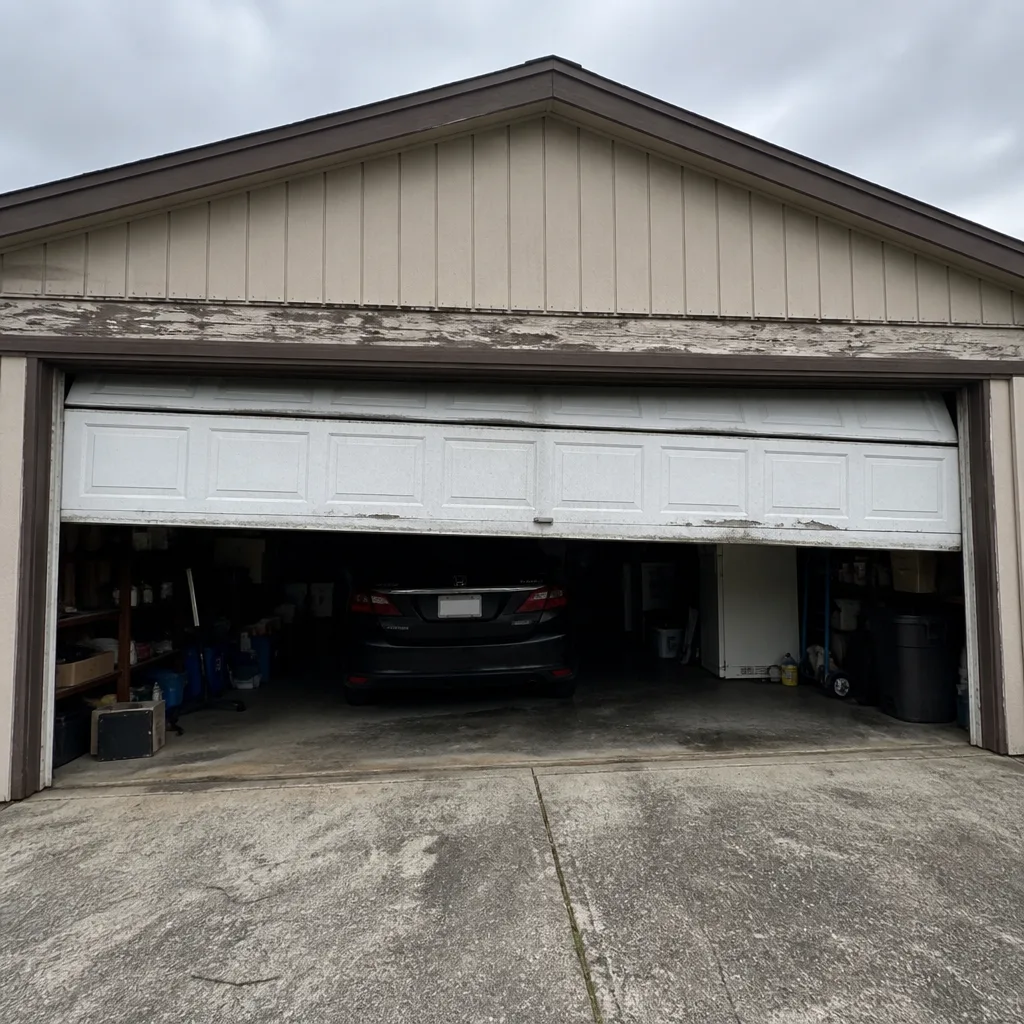 Before
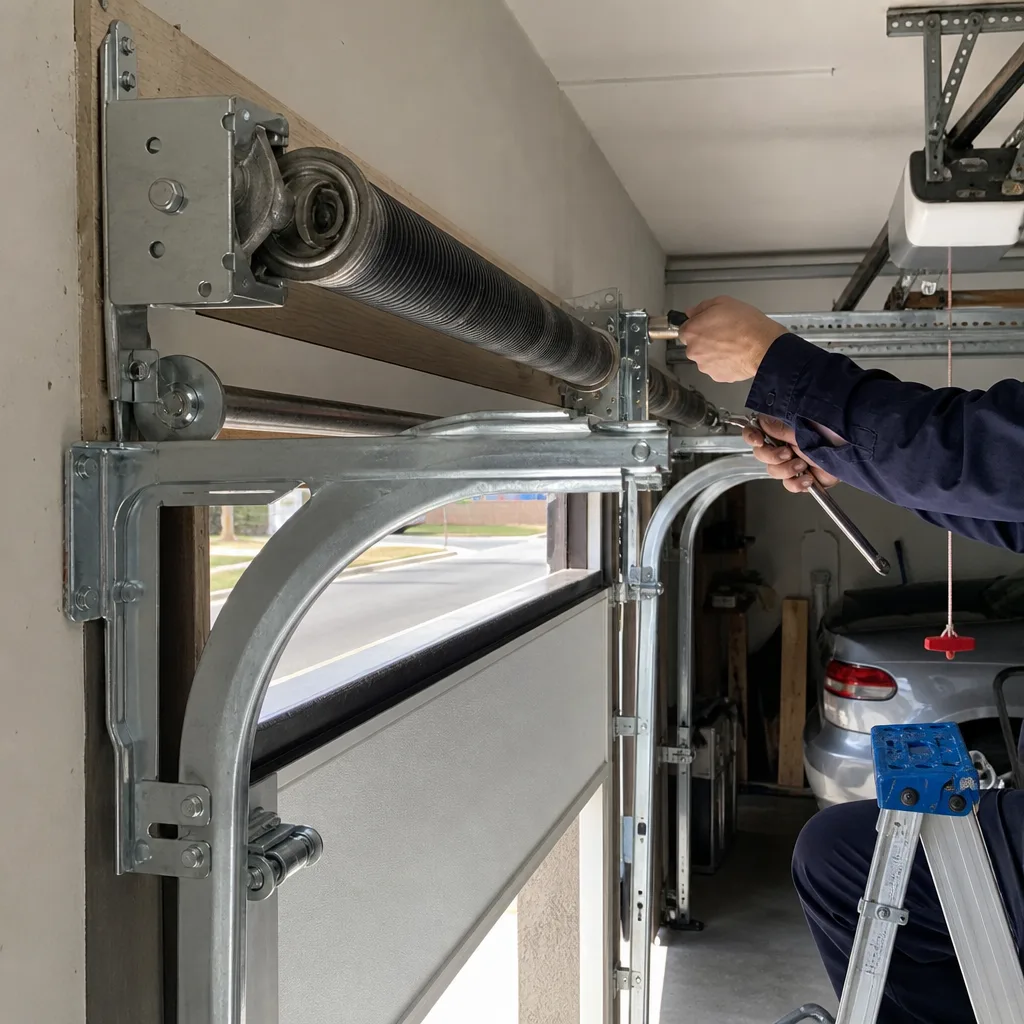 After
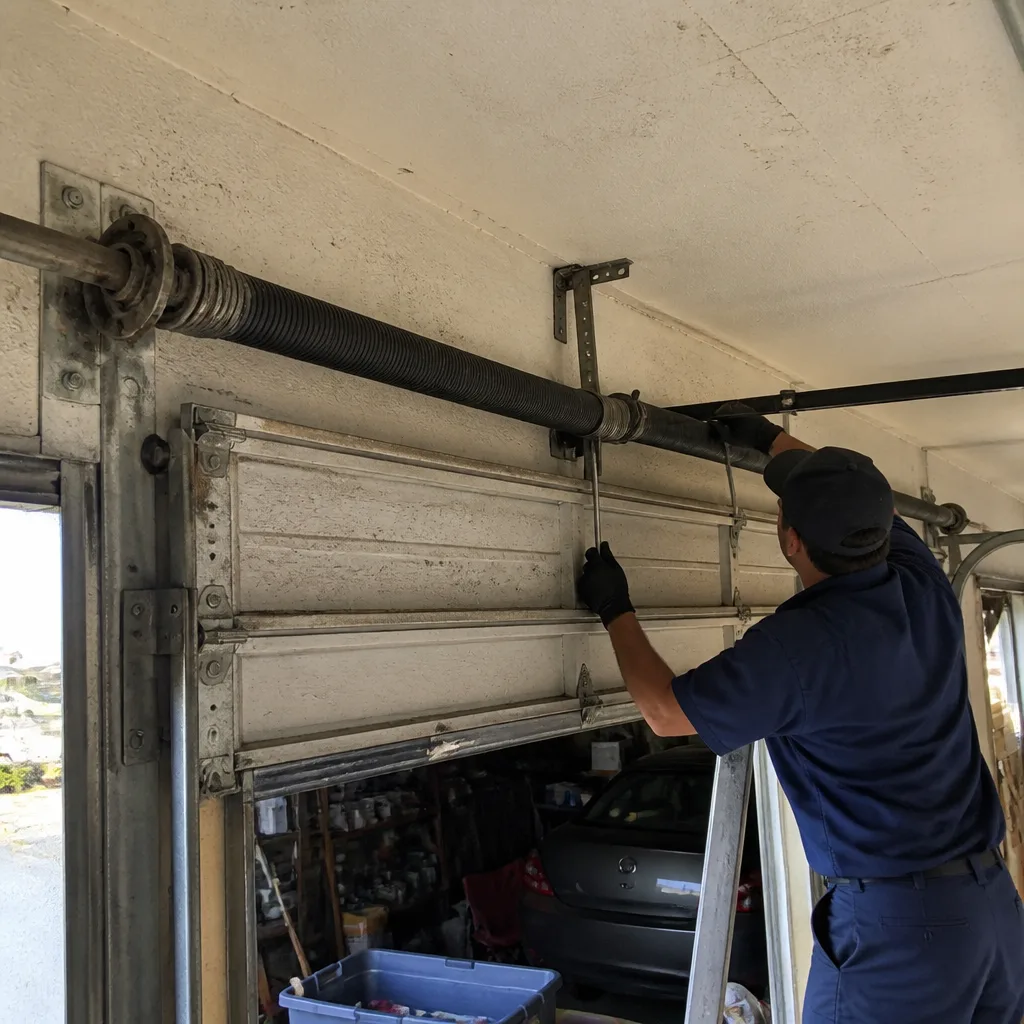 Before
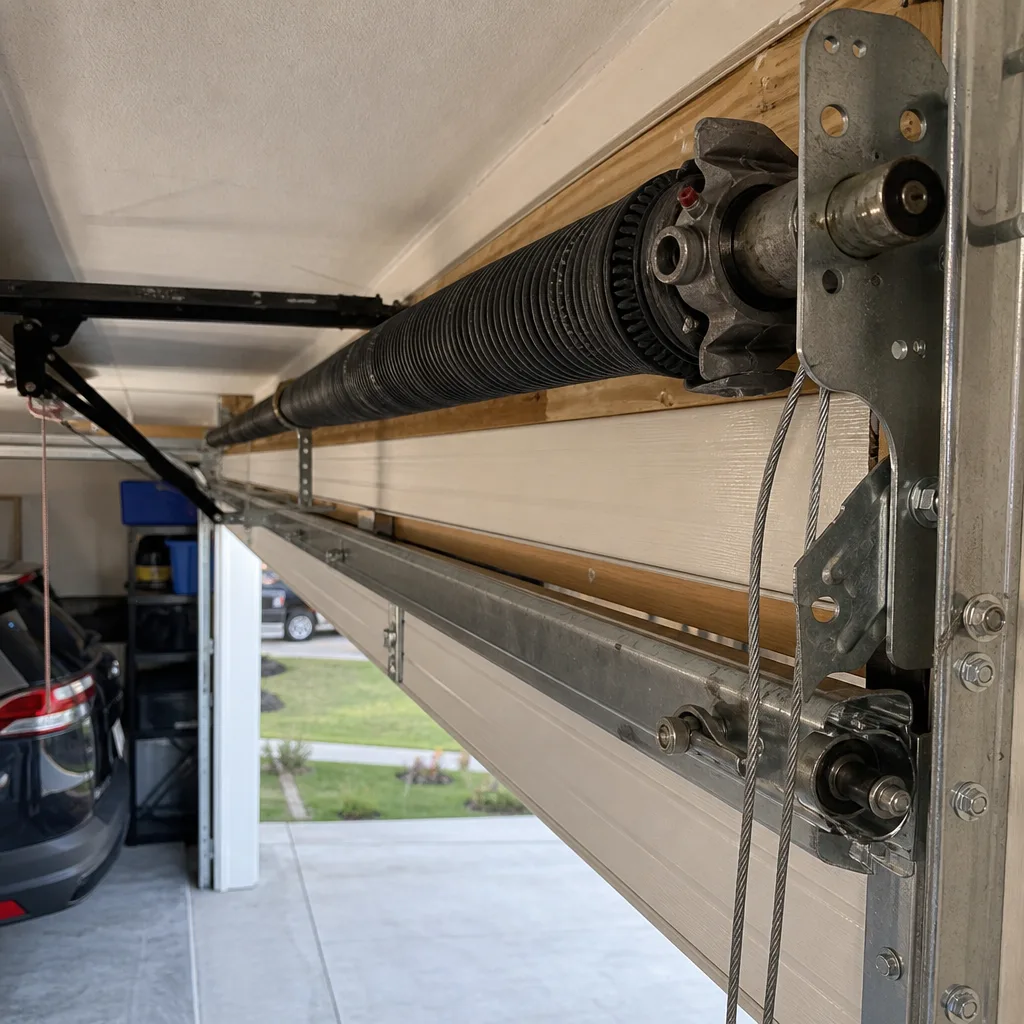 After
Seasonal Garage Door Care for Texas City: Year-Round Homeowner’s Guide
The optimal window for garage door lubrication and seal replacement in Texas City is a six-week stretch between mid-October and late November - after storm season, before the cold snaps that make rubber seals brittle. Most guides & resources tell you to do it in April. That advice works in Ohio. In Texas City, following a generic four-season calendar means you’re greasing tracks right before hurricane season deposits salt fog on them, or replacing weather seals when they’re already hardened by August heat. This guide maps maintenance to the actual rhythm of the Gulf Coast: hurricane prep, peak heat survival, and the narrow maintenance window that prevents both.
Quick Answer
Texas City homeowners should maintain garage doors on a three-season Gulf Coast calendar: pre-hurricane hardware inspection and battery backup testing in May, mid-storm-season corrosion check in August, comprehensive lubrication and seal replacement in late October through November, and winter snap prep for torsion spring tension in December. Skip the generic spring/fall schedule - salt fog, thermal expansion, and named storm exposure create failure patterns that a temperate-climate checklist misses entirely.
Table of Contents
- Pre-Hurricane Window: What to Inspect in May
- Mid-Storm Season: The August Corrosion Check
- Post-Season Service: The October-November Maintenance Window
- Winter Snap Prep: December Tension and Seal Check
- How Summer Heat Affects Torsion Spring Tension
- Salt Fog and Lubrication: Wet Season vs. Dry Season
- Post-Flood Inspection: The Track Task Most Skip
- Named Storm Prep: Homeowner vs. Technician Tasks
BeforeAfterPre-Hurricane Window: What to Inspect in May
By early May, the first tropical waves are forming off Cape Verde and hardware stores in Texas City start moving plywood. Your garage door needs its own pre-season inspection, and the timing matters: doing this in April wastes effort, waiting until June means you’re in line behind everyone else when a part fails.
Start with the battery backup. Texas City requires battery backup on garage door openers by municipal code - not state law, but local ordinance. If your opener dates from before 2019, it may not have one. Test it: unplug the opener, try the remote. If nothing happens, you’re not only out of compliance; you’re vulnerable when CenterPoint loses feeders during a storm. We install LiftMaster and Chamberlain openers with integrated battery backup, but the battery itself degrades in Gulf heat. Replace it every 2-3 years regardless of test results.
Next, the manual release. The red handle on the trolley carriage should pull smoothly and re-engage with a firm click. Salt fog corrodes this mechanism faster than inland owners expect. In the Bayou Vista and Tanglewood neighborhoods, where onshore flow is unobstructed, we’ve found releases seized solid by late August.
Check these three items before June 1:
- Track bolts and lag screws: The vertical tracks are anchored to the jamb with brackets; the horizontal tracks hang from ceiling supports. Torque every bolt to manufacturer’s spec - loose tracks are the first failure point in high wind.
- Weather seal condition: The rubber bulb at the bottom of the door should be pliable, not cracked. If it’s hardened, order replacement now; lead times stretch when storm warnings hit.
- Opener force settings: The limit switch and force adjustment dials are on the opener housing. A door that reverses too easily in May will fail completely when wind pressure loads the panels in August.
Document what you find. Photograph the seal, the bolt torque marks, the force setting positions. When a technician arrives in October, that baseline saves diagnostic time and confirms whether summer conditions shifted anything.
Mid-Storm Season: The August Corrosion Check
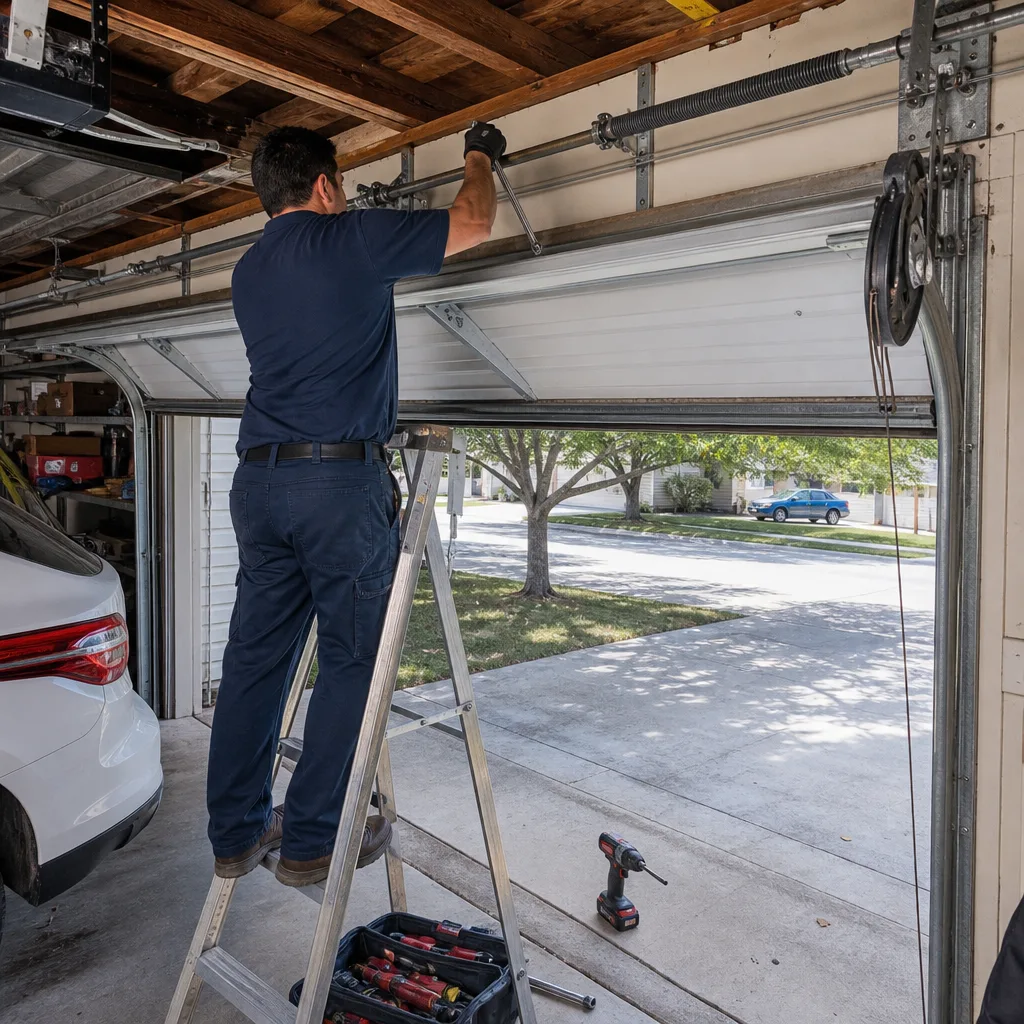
August in Texas City is not a maintenance month - it’s a survival check. The combination of 95-degree days, 80-percent humidity, and daily onshore flow creates corrosion conditions that would surprise someone from Dallas. We’ve opened track hardware in the Heights neighborhood and found fasteners reduced to orange dust.
The salt fog is the hidden factor. It doesn’t require a storm; steady southeast winds carry enough chloride to etch unprotected steel. Galvanized track resists this, but the zinc layer degrades. Once you see white rust (zinc oxide) turning to red rust (iron oxide), the protection is gone.
Do this visual inspection in early August, before peak storm frequency:
- Examine the bottom two feet of vertical track - splash and condensation collect here
- Check the bottom bracket, where the cable attaches to the door panel; this is the highest-stress, most-exposed fitting on the entire system
- Look at the torsion spring anchor bracket, mounted to the header above the door; if the paint is bubbling, corrosion is active underneath
- Inspect the opener rail for surface rust, especially on older Craftsman or Genie chain-drive units
If you find active corrosion, do not wire-brush and paint it yourself. The torsion spring system stores lethal energy - a wound spring can deliver 1,000+ foot-pounds of torque. Cleaning the anchor bracket requires releasing that tension. This is technician work, documented and photographed under Clause 4 of The Haven Standard.
What you can do: note the locations, photograph the progression, and schedule post-season service. In our experience, Texas City doors that show August corrosion without intervention need bracket replacement by November. Catching it early means ordering parts before supply chains tighten for winter.
Post-Season Service: The October-November Maintenance Window
This is the six-week window that defines Texas City garage door care, as detailed in The Complete Guide to Garage Door in Texas City. Mid-October through late November sits between hurricane season’s end and the first real cold front. The salt fog has diminished but not disappeared. The seals are still flexible from summer warmth. The hardware has survived its stress test.
We schedule more comprehensive service calls in these six weeks than the rest of the year combined. Here’s what belongs on the list:
- Full lubrication with lithium-based grease: Not WD-40 - that displaces water but evaporates. Use white lithium on the torsion spring, the rollers (nylon rollers get the shaft, not the wheel), the hinge pins, and the lock mechanism. In Texas City, we see homeowners who greased in April and wonder why the track is dry by September. The heat bakes it off. October application lasts through winter.
- Weather seal replacement: The bottom seal and any side seals should be swapped while still warm enough to seat properly. Cold rubber doesn’t compress into the retainer channel. We’ve replaced seals in January that the homeowner had bought in October - the delay cost them a proper fit.
- Torsion spring tension verification: After summer thermal cycles, the spring rate changes. A door that balanced at 10 pounds of lift force in May may need 15 pounds by October. The technician measures this with a scale and adjusts winding cones accordingly.
- Opener logic board inspection: Heat stress on the circuit board causes solder joint fatigue. We photograph any discoloration or capacitor bulging - Clause 4 documentation - and quote replacement before winter cold makes the failure intermittent and hard to diagnose.
The garage door repair in Texas City that prevents February emergencies happens in this window. A door that receives October service typically runs clean through the following August. One that skips it shows up in our January call log with “suddenly won’t close” - which is never sudden; it’s the accumulated effect of salt, heat, and deferred lubrication.
Winter Snap Prep: December Tension and Seal Check
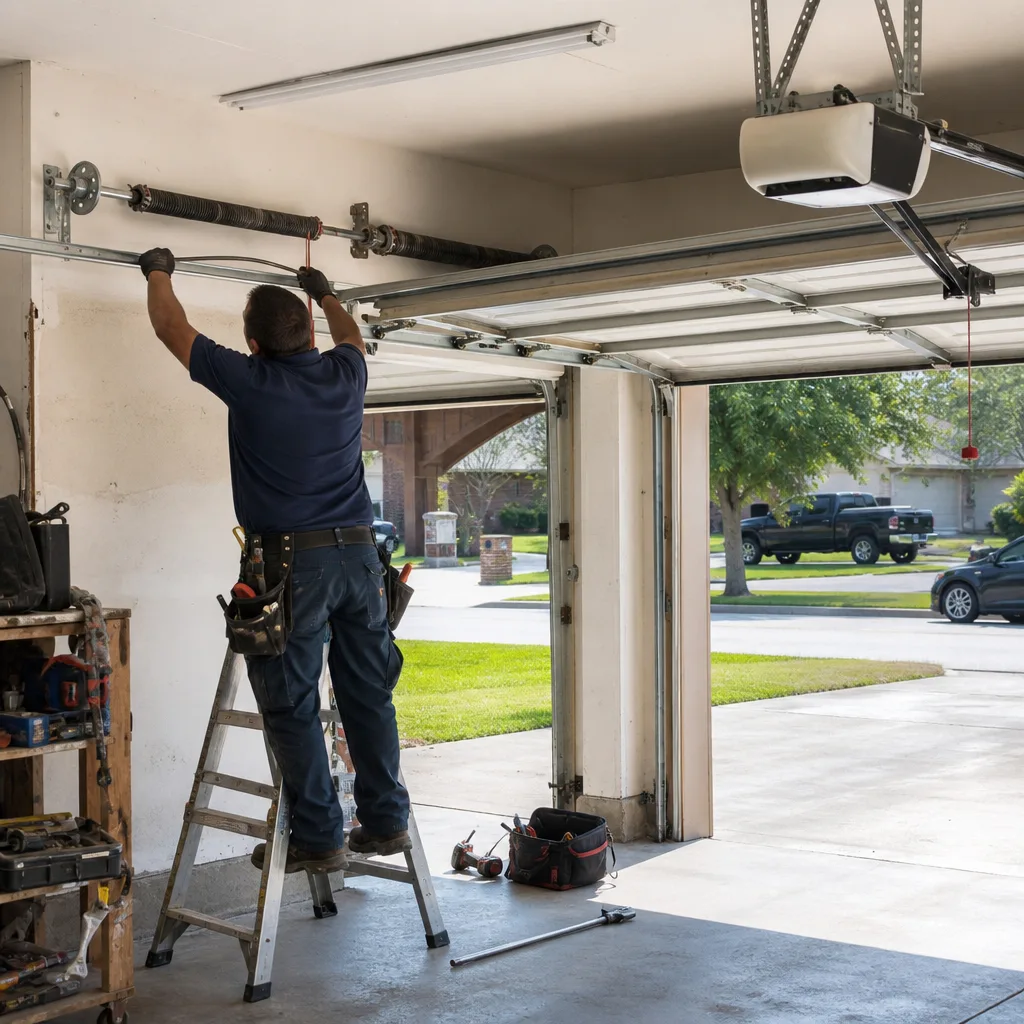
Texas City doesn’t have a winter. It has cold snaps. The first one usually arrives in December, drops temperatures 30 degrees in 12 hours, and catches garage doors mid-cycle.
The torsion spring is the primary concern. Steel contracts in cold, increasing spring tension. A properly balanced door in October can become over-tensioned by January, adding strain to the opener and cables. More commonly, we’ve seen the opposite: micro-fractures from summer fatigue propagate when the metal contracts, causing sudden failure on the first cold morning.
In the Bayridge and Emmett F. Lowry neighborhoods, where homes built 2015-2020 often have single-spring systems on double-wide doors, this is the failure pattern we document most. The spring was underspecified for the door weight, survived summer by overworking, and fractures when cold-shocked.
Do this in early December:
- Run the door through a full cycle and listen for new noises - grinding, popping, or uneven movement
- Check the weather seal for gaps; cold air infiltration raises heating bills and hardens the rubber further
- Test the photo-eye alignment; temperature shifts can loosen mounting brackets
- Verify the manual release one more time - if it was stiff in May and you didn’t address it, it may be frozen now
If the door sounds different, moves unevenly, or the opener labors, schedule service. Spring replacement in December is more expensive than adjustment in October, and emergency calls during a cold snap carry the same flat written price - but you’re waiting in a cold garage for the technician to arrive.
How Summer Heat Affects Torsion Spring Tension
This is the failure pattern generic guides miss entirely. A garage door that worked fine in April starts reversing mid-lift by July. The homeowner blames the opener. The real cause is thermal expansion of the torsion spring.
Steel expands approximately 0.0000065 inches per inch per degree Fahrenheit. A 20-degree temperature rise doesn’t sound significant, but applied to a 24-inch torsion spring with 10,000+ cycles of fatigue, the effect is measurable: the spring lengthens slightly, reducing its effective torque. The door becomes heavier to lift. The opener’s force sensor, calibrated in spring, interprets the increased load as an obstruction and reverses.
We’ve documented this in Texas City specifically because the thermal swing is extreme. A north-facing door in shade behaves differently from a west-facing door in direct afternoon sun. The sun-heated door panel expands, the track heats and elongates, and the spring - already warm from ambient temperature - approaches its fatigue limit faster.
The symptoms are specific:
- Door reverses at the same point in the travel, consistently
- Manual lift feels heavier than remembered
- Opener rail flexes visibly during operation
- Cable shows uneven winding on the drum
Do not increase opener force to compensate. The force adjustment is a safety limit, not a performance setting. Raising it masks the underlying spring degradation and risks crushing an obstruction. The correct response is spring tension measurement and adjustment - or replacement if the spring has exceeded its cycle rating. We quote this work with a written flat price before touching the winding cones, per Clause 1 of The Haven Standard.
Doors with Clopay or Amarr insulated steel panels handle this better; the insulation moderates panel expansion. Uninsulated single-layer doors, common on older Texas City homes and some new construction spec builds, show the problem most acutely.
Salt Fog and Lubrication: Wet Season vs. Dry Season
The Gulf of Mexico is 15 miles southeast of downtown Texas City. Onshore flow carries aerosolized salt that deposits on every exposed surface. The concentration varies seasonally, and that variation should drive your lubrication schedule.
Wet season (May-October): Higher humidity keeps salt deposits activated. The chloride ions remain in solution, accelerating electrochemical corrosion. Lubrication applied during this period gets washed out faster - not by rain directly, though that’s a factor, but by the constant film of moisture on metal surfaces. We’ve disassembled hinges in September that were “lubricated” in June and found the grease emulsified into a gray sludge.
Dry season (November-April): Lower humidity means salt deposits crystallize. This is actually more dangerous for moving parts - crystallized salt is abrasive. Rollers grind through their stems. Hinge pins develop slop. The noise starts in January and becomes a failure by March.
The lubrication strategy follows from this:
| Season | Product | Application Points | Frequency |
|---|---|---|---|
| May-October | Heavy lithium grease with corrosion inhibitor | Spring, hinges, roller shafts, lock | Minimal - spot-check only |
| November-April | Same, plus dry Teflon spray for internal roller bearings | All above, plus track interior wipe | Full application in October-November window |
Never use graphite on garage door components in Texas City. Graphite and salt create a galvanic cell that accelerates corrosion of dissimilar metals - specifically the zinc-coated steel rollers running in aluminum track. We’ve replaced track systems where this combination was used for years.
Post-Flood Inspection: The Track Task Most Skip
When water enters a garage in Texas City - from storm surge, bayou backup, or sustained rainfall overwhelming drainage - the immediate concern is the opener, the electrical, the stored items. The track alignment gets forgotten until the door jams weeks later.
Here’s why it matters. The bottom bracket sits in the lowest point of the track system. Floodwater submerges it, deposits silt, and when it recedes, the bracket may have shifted micrometers in the softened jamb mounting. More critically, the track itself can warp if the bottom section was under pressure from floating debris or if the concrete footing heaved with saturation.
After any garage flooding, check these three things before running the door:
- Visual track plumb: Stand inside the garage, door closed, and sight down each vertical track. It should disappear into a straight line. Any bow or twist is visible this way.
- Bottom bracket bolt torque: The lag screws into the jamb may have loosened if the wood swelled and contracted. Do not over-torque - softwood jambs strip easily - but verify they’re snug.
- Roller alignment in the bottom two hinges: Remove any debris, then manually lift the door six inches and let it settle. It should sit level. If one side drops, the cable drum or bottom bracket has shifted.
If the track is visibly bent, do not attempt to bend it back. Cold-rolled steel track work-hardens and fractures. Replacement is the correct repair, quoted in writing before work starts. The garage door installation in Texas City that follows flood damage often includes track replacement even when the door panels survived - the hidden damage is in the mounting structure.
We document flood inspections with photographs of the water line, the bracket condition, and the track alignment measurement. This becomes part of the homeowner’s insurance documentation and their personal maintenance record.
Named Storm Prep: Homeowner vs. Technician Tasks
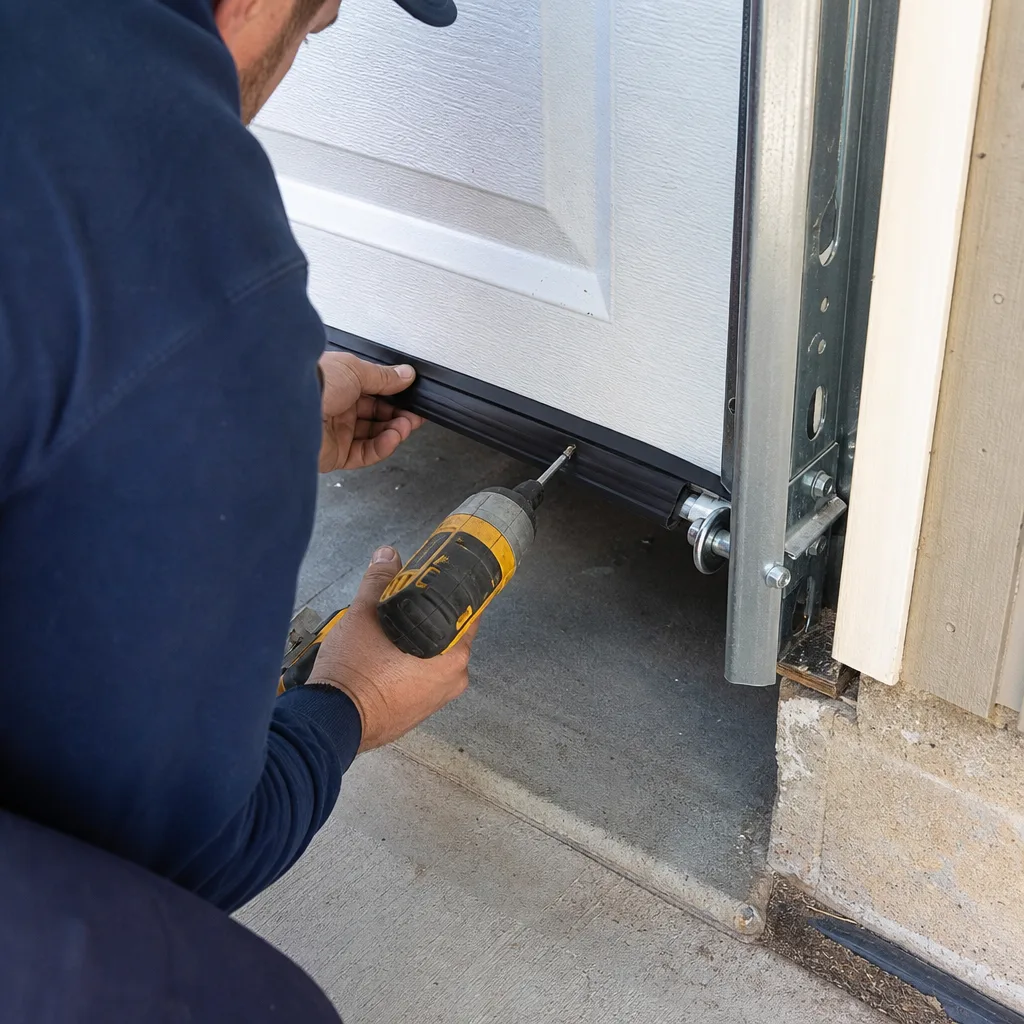
When the National Hurricane Center issues a cone that includes Texas City, you have a finite window - typically 72 hours, often less - to prepare. Garage doors are a known failure point in residential wind damage; a compromised door allows pressure equalization that can lift the roof. Here’s what you can do, and what requires professional preparation that should have happened in May.
Homeowner tasks (do these when the watch is issued):
- Clear the garage of projectiles - bikes, tools, trash cans that could impact the door from inside
- Verify the manual release works; if power fails, you need to operate the door by hand
- Close and lock the door; the lock engages the track and provides redundancy if the opener fails
- Brace the door from inside with a 2×4 if you have a bracing kit; do not improvise with random lumber that could become a projectile
- Photograph the closed, locked, braced door for insurance documentation
Technician tasks (must be done before watch season):
- Wind load rating verification - many pre-2000 doors in older Texas City neighborhoods are not rated for current code
- Reinforcement strut installation on wide doors - prevents panel flex that triggers failure
- Track-to-jamb anchorage inspection - the point where wind load transfers to the structure
- Opener battery backup test and replacement if marginal
Do not attempt to install wind reinforcement during a watch. The hardware requires specific placement and torque; improper installation creates a false sense of security. If your door is not wind-rated and a major hurricane is approaching, the safest choice is parking vehicles outside and using the garage for storage - a failed door is more dangerous than no door.
After the storm passes, run the door manually before reconnecting power. Floodwater may have entered the opener housing. The garage door opener repair and installation in Texas City that follows a named storm often involves replacement of units that were submerged - not repairable, and unsafe to energize.
Common Mistakes to Avoid
- Lubricating in April because a generic guide said so. That grease bakes off by July and attracts salt fog through storm season. The October-November window is correct for Texas City.
- Ignoring the manual release until the power fails. Test it quarterly. A seized release during an outage means you’re cutting the trolley or leaving the door open.
- Using WD-40 as a lubricant. It’s a water displacer, not a lubricant. It evaporates and leaves metal unprotected against salt fog.
- Adjusting opener force to compensate for a heavy door. This overrides safety limits. The door is heavy because the spring needs service, not because the opener is weak.
- Skipping post-flood track inspection. Silt deposition and footing heave misalign tracks gradually. The failure appears “sudden” weeks later when a roller binds.
- Assuming a new house has a wind-rated door. Texas City adopted enhanced wind provisions after Ike, but enforcement varied by builder and year. Verify the label.
- Waiting for a noise to call. By the time a torsion spring squeaks audibly, it’s already lost significant cycle life. The October service window catches it before acoustic warning.
When to Call a Professional
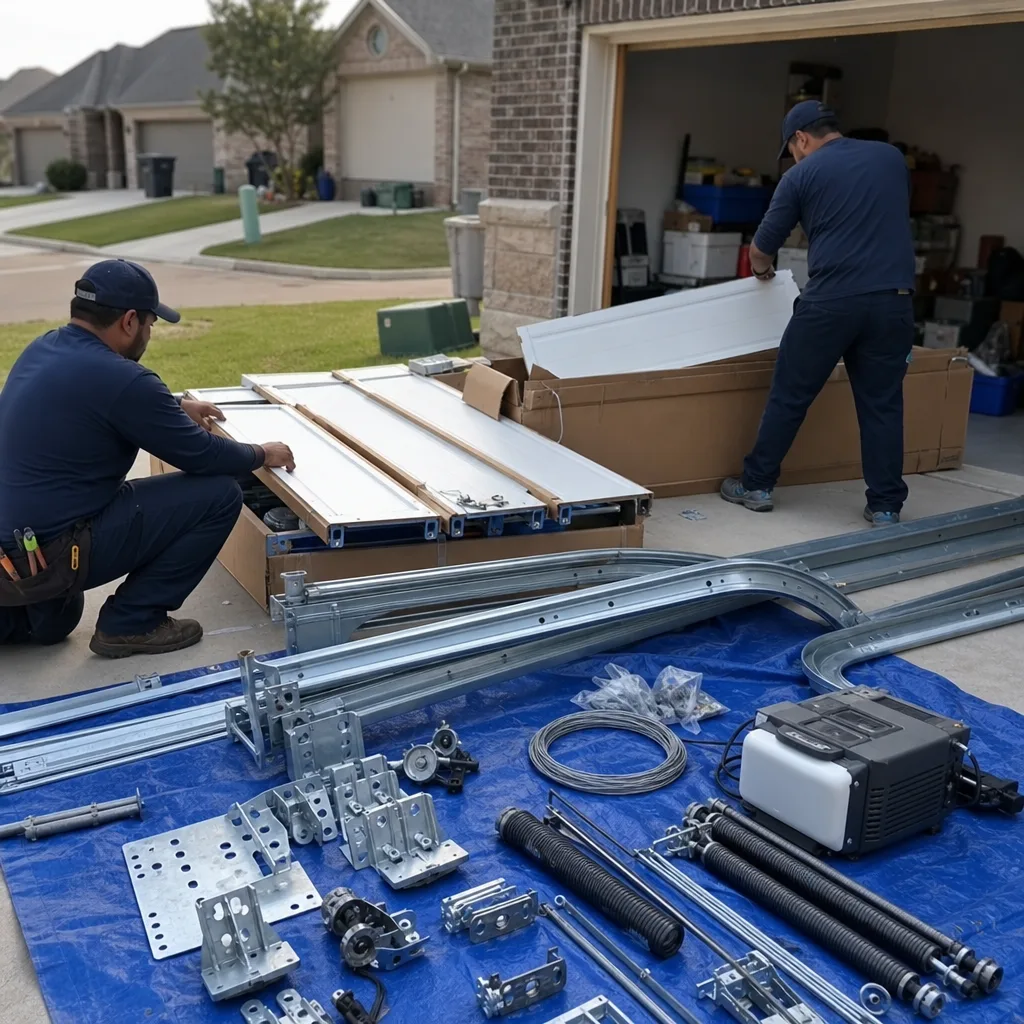
Some maintenance is homeowner work - see our DIY vs Professional Garage Door: The Texas City Homeowner’s Decision Guide. Some requires training, tooling, and documentation that protects both parties. Call a technician when you encounter: active corrosion on torsion spring hardware; any door that reverses inconsistently or at varying heights; visible track bend or twist; post-flooding operation before inspection; or any work involving the spring system, which stores lethal energy even when the door is open.
Servo Garage Doors Texas City offers free estimates in Texas City - call (409) 797-6585. Every visit includes a documented photo record of findings and completed work, a flat written price before any work starts, and the 365-Day Done Right Promise backed by The Haven Standard. Emergency calls are answered by a live person, 24 hours a day, with a named technician and an on-the-way text.
Frequently Asked Questions
Once per year, in the October-November window after storm season and before cold snaps. The heat and salt fog of summer degrade lubricant faster than inland climates, so mid-year applications rarely last. Call (409) 797-6585 for an exact quote on professional lubrication service - estimates are free.
Thermal expansion of the torsion spring reduces its effective torque, making the door heavier. The opener’s force sensor interprets the increased load as an obstruction. Do not increase force settings; have the spring tension measured and adjusted by a technician.
Homeowners can clear projectiles, test the manual release, close and lock the door, and install pre-purchased bracing. Wind load verification, reinforcement strut installation, and track anchorage inspection require professional equipment and should be done in May, not during a watch.
Comprehensive seasonal service typically runs $150-$280 depending on door size, opener type, and whether seal replacement is included. For full pricing details, see our Garage Door Cost Breakdown: The Texas City Homeowner’s Reference for 2026. We deliver a flat, written price before any work starts - Clause 1 of The Haven Standard - with no change once the technician arrives. Call (409) 797-6585 for your specific quote.
Do not run the opener until the electrical components are inspected. Check track alignment visually, verify bottom bracket bolt torque, and test manual lift for level settling. Schedule professional inspection for opener housing, track measurement, and documentation for insurance.
Yes. The chloride concentration in Texas City’s onshore flow accelerates corrosion of unprotected steel by a factor of 5-10 compared to inland Dallas-Fort Worth. Galvanized track, regular lithium lubrication, and prompt replacement of compromised hardware are necessary, not optional.
The Bottom Line
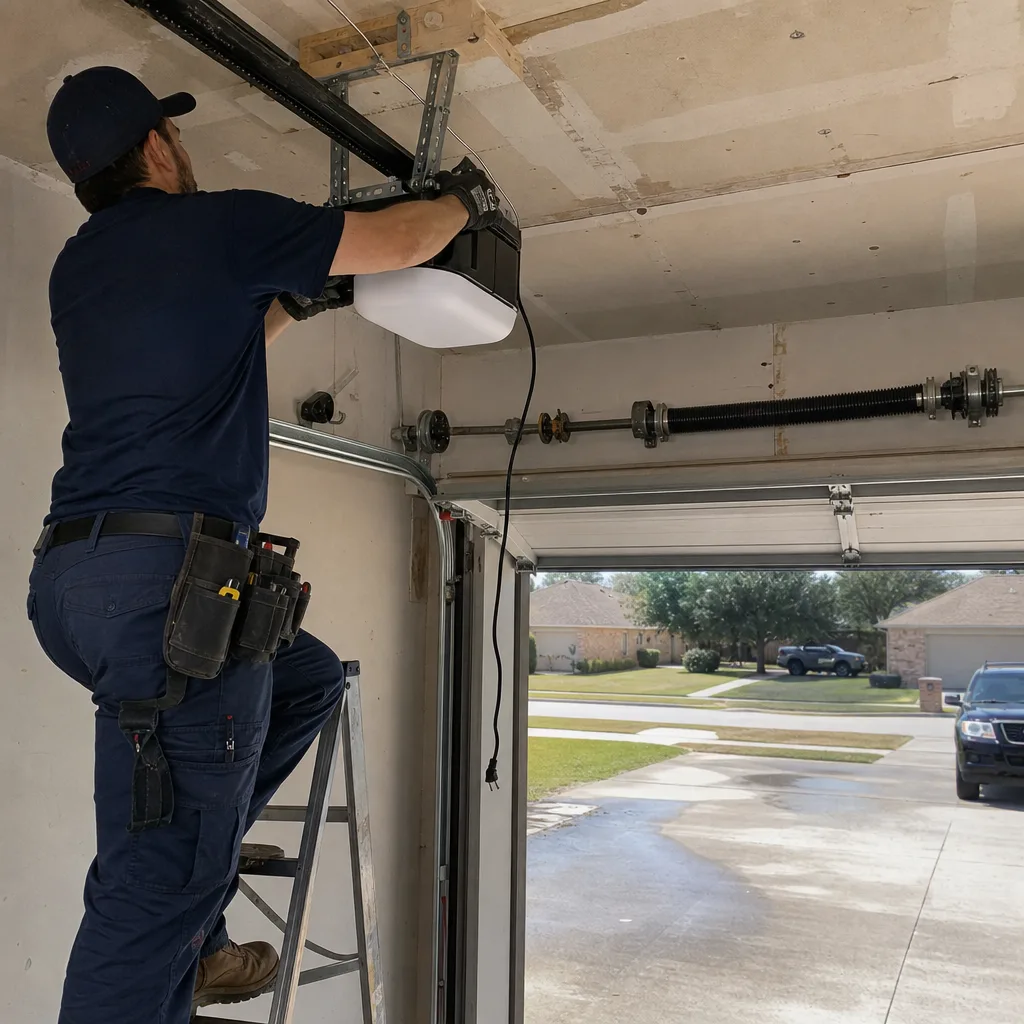
Texas City’s garage doors face a specific stress profile: salt fog from Gulf onshore flow, thermal expansion from extreme summer heat, named storm wind loading, and cold-snap contraction on fatigued springs. A generic maintenance calendar misses all of it. The effective schedule is May pre-hurricane inspection, August corrosion check, October-November comprehensive service, and December tension verification. Do the work in the right window, document what you find, and know which tasks require professional equipment and training. The door that receives this rhythm of care typically runs 15-20 years without major failure. The one that doesn’t shows up in our call log with predictable seasonality.
Written by Marcus Deller, Owner at Servo Garage Doors Texas City, serving Texas City since 2015.