
Last updated September 22, 2026
Full 25-point door and opener safety check with every visit - springs, cables, rollers, tracks, and your LiftMaster or Chamberlain opener included
You get a price before we start. It does not change when the truck arrives.
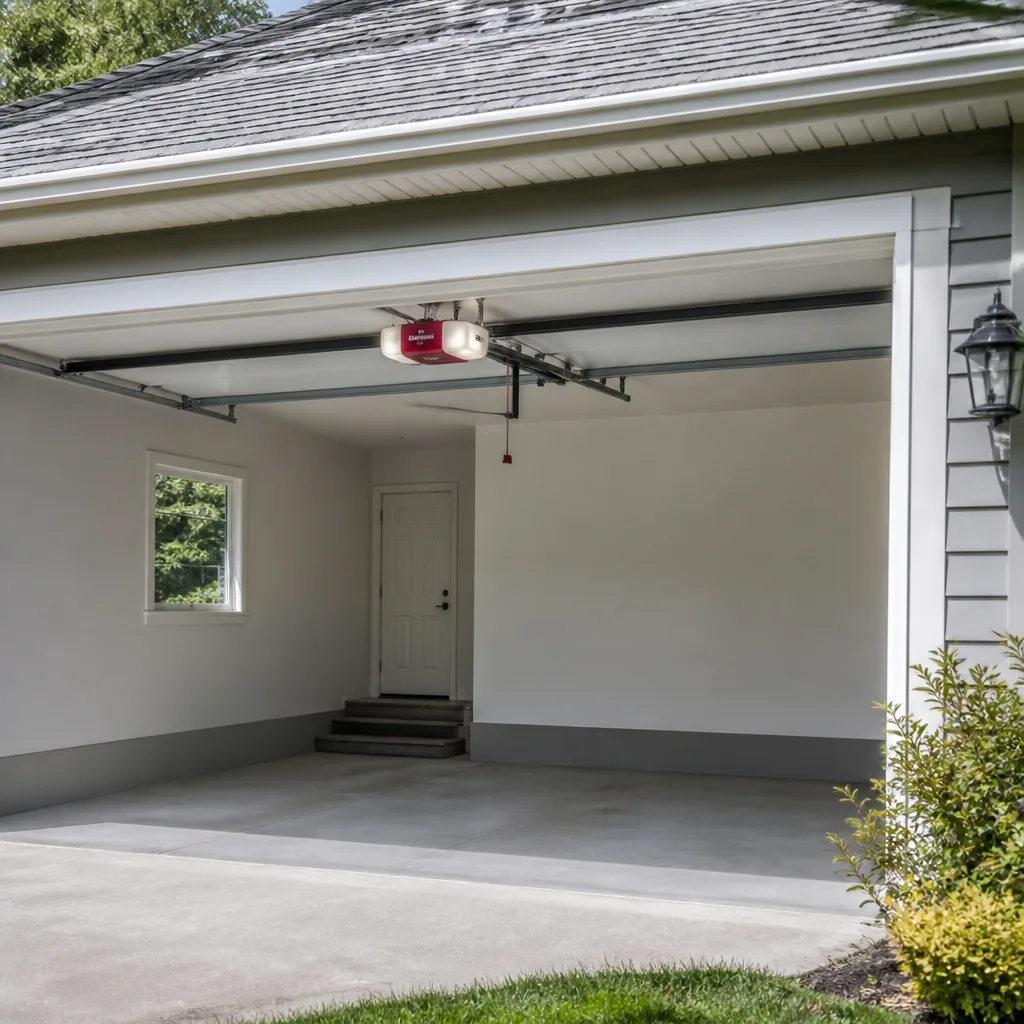
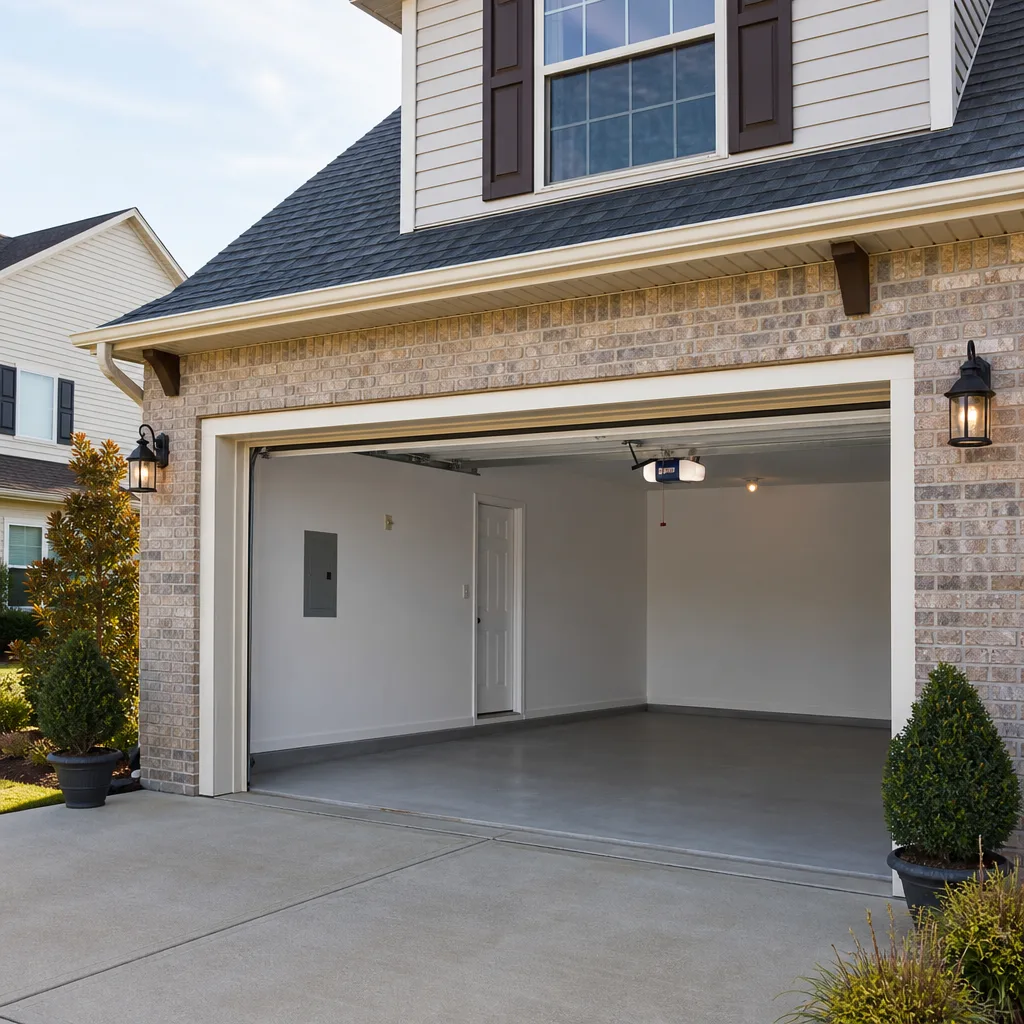
 Before
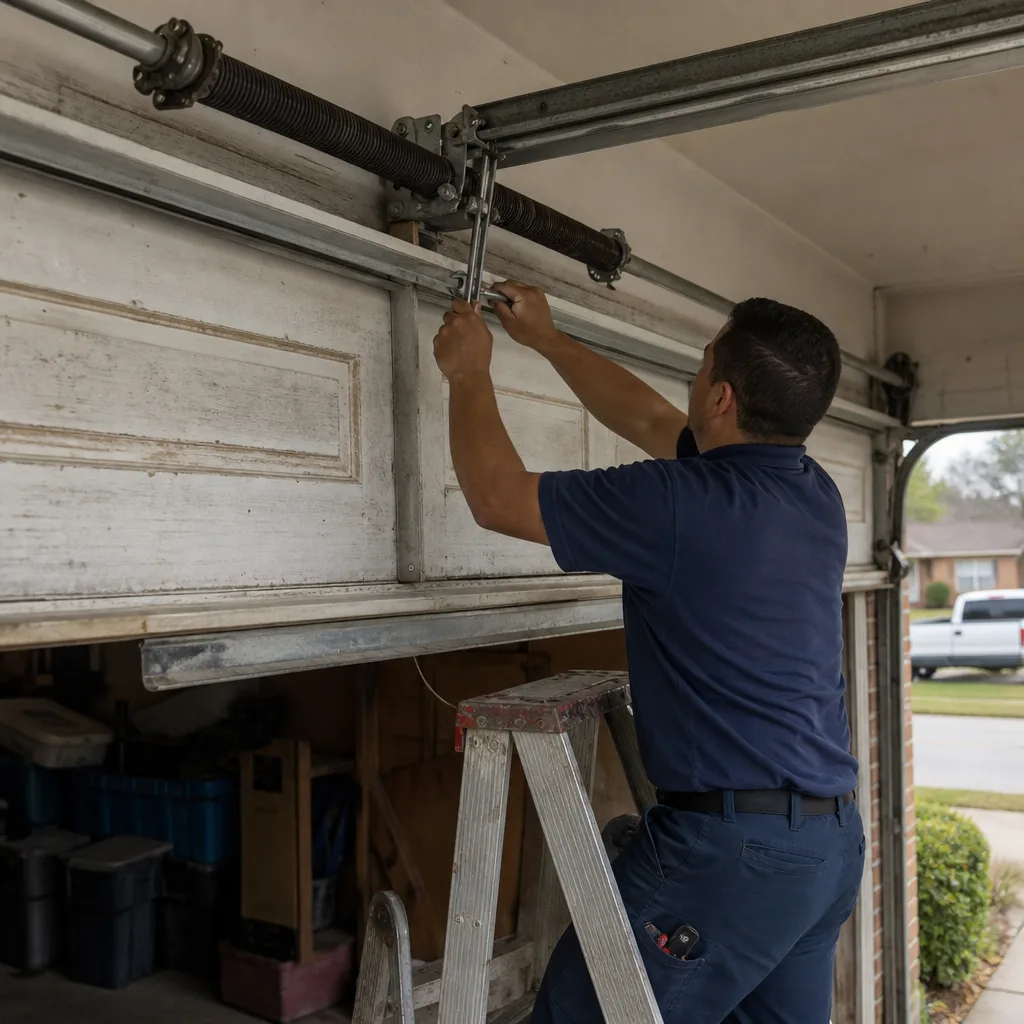
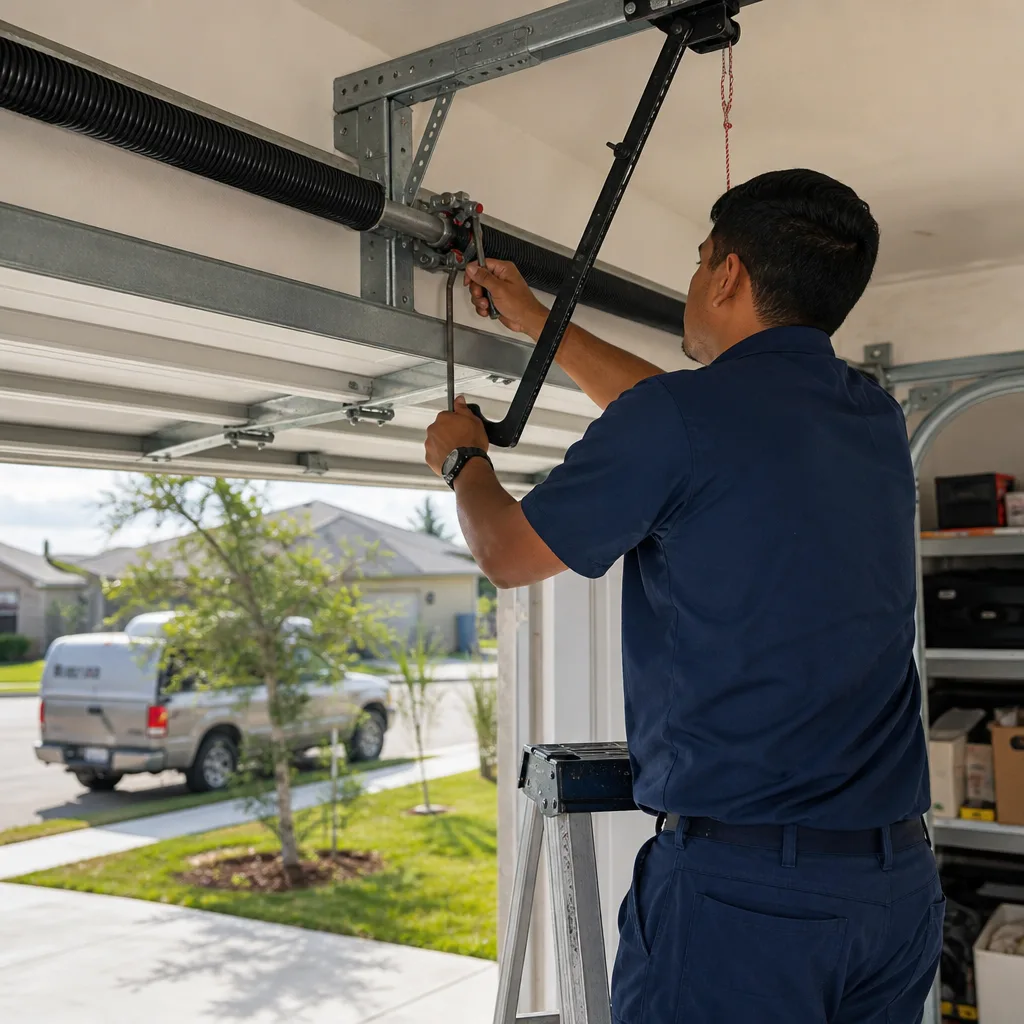 After
After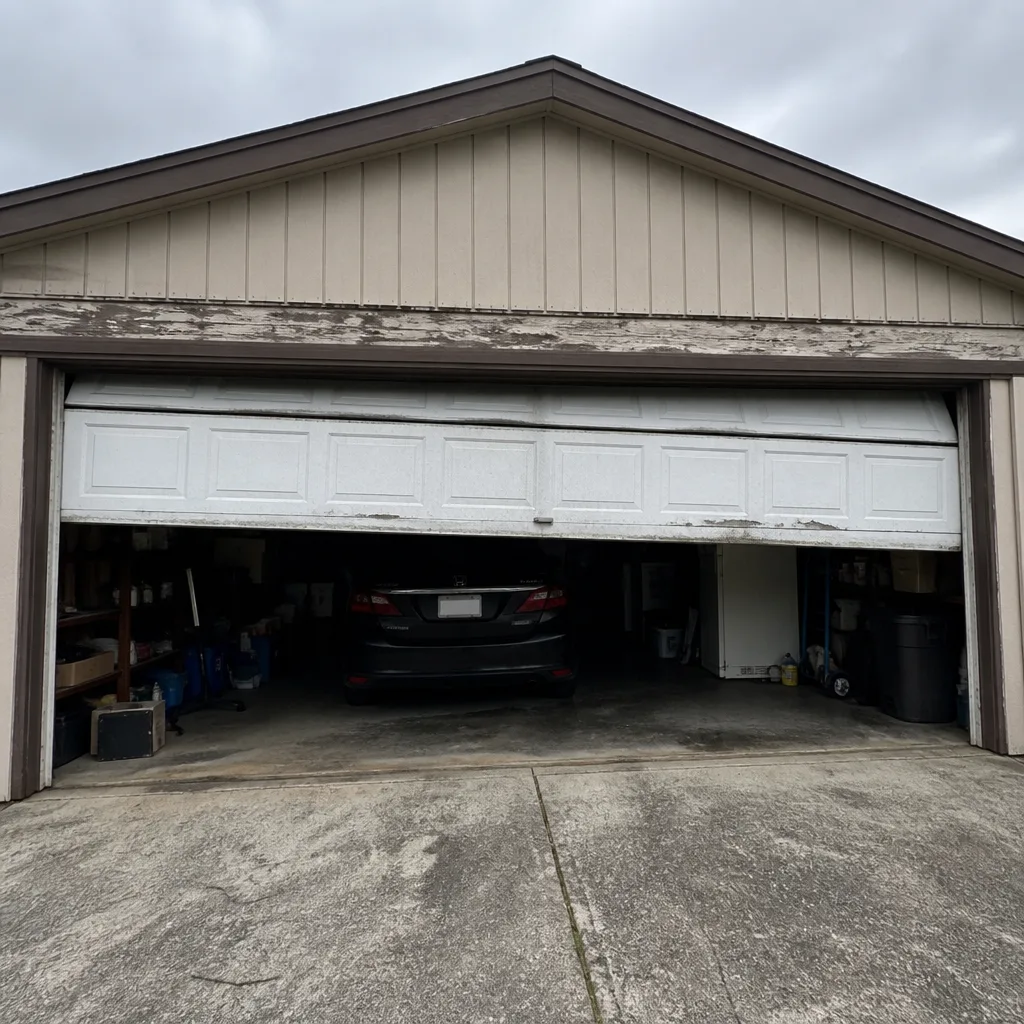 Before
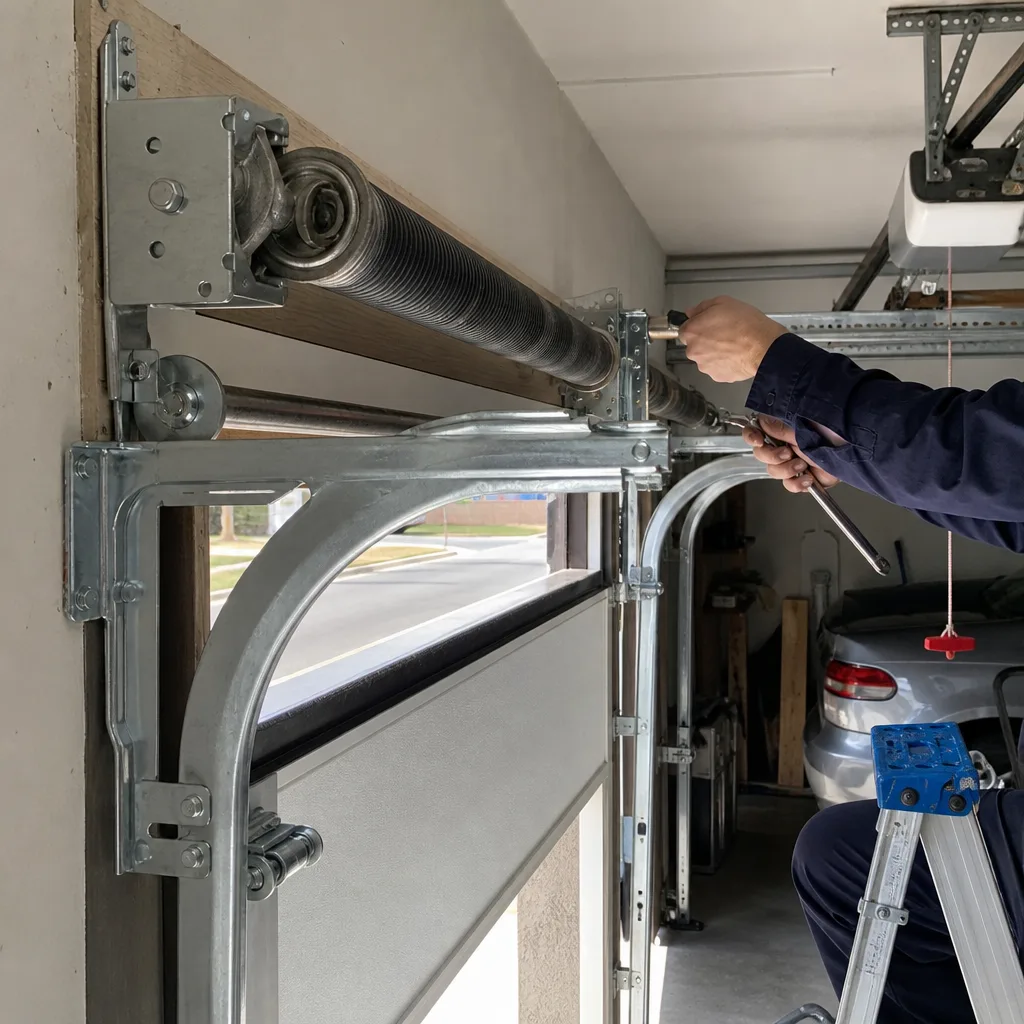 After
After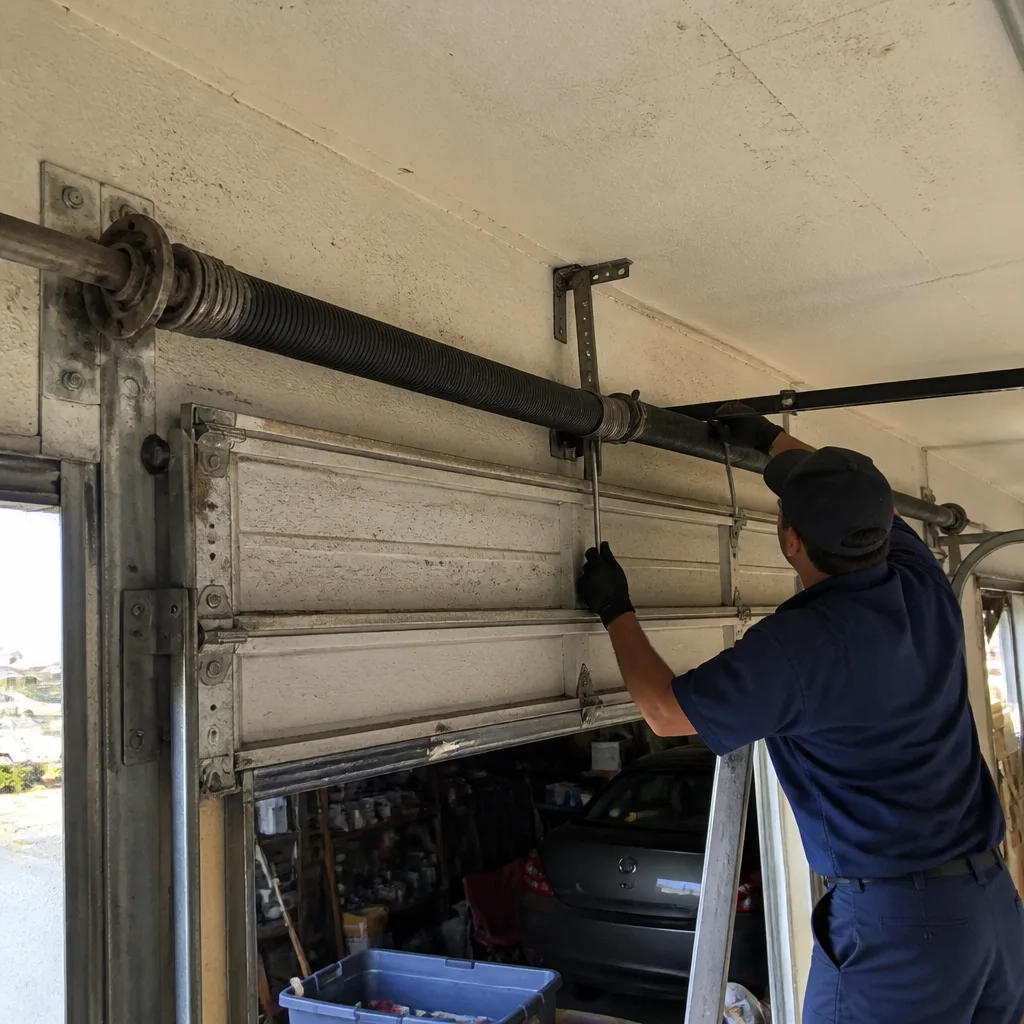 Before
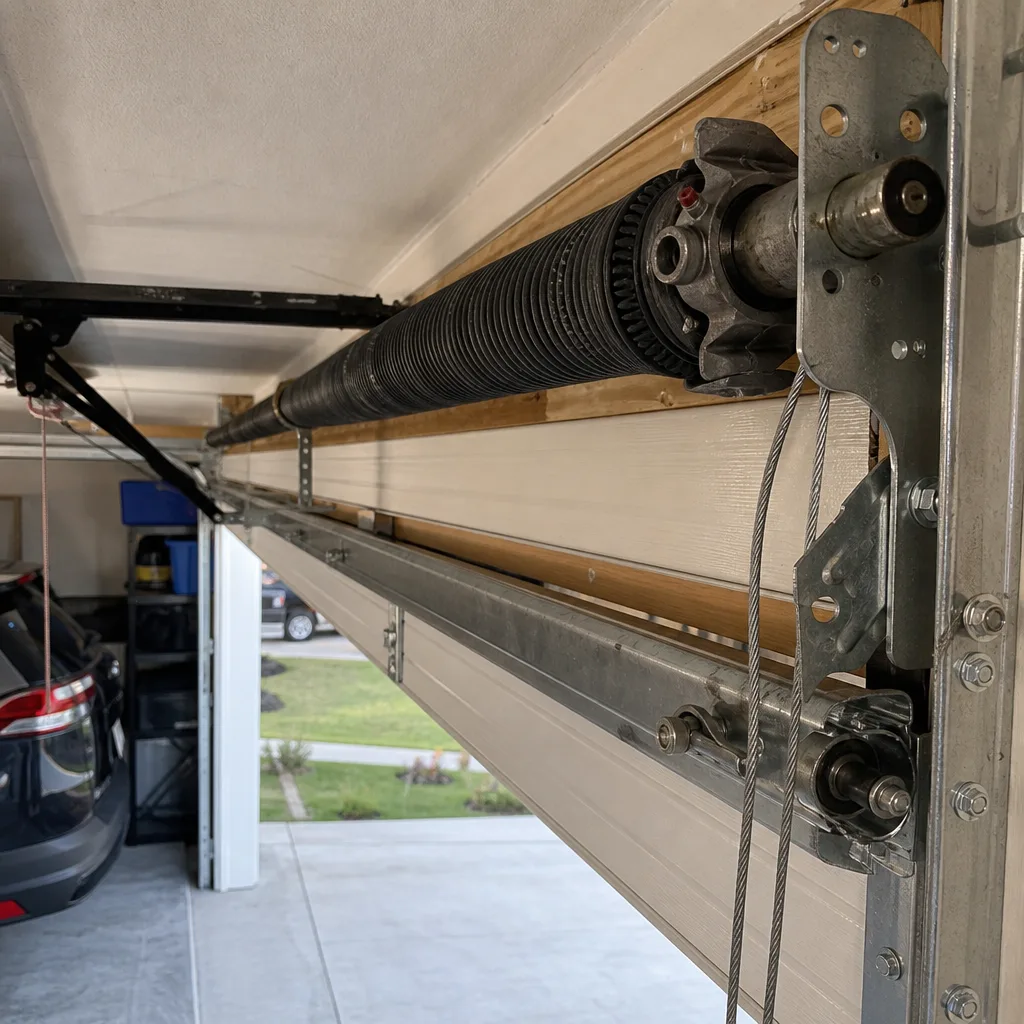 After
AfterThe Complete Guide to Garage Door in Texas City
The 24-gauge steel door that holds up fine in Dallas will show surface rust on a Texas City home within 18 months. We’ve seen it repeatedly in neighborhoods from Bayou Vista to Moses Lake - the salt-laden Gulf air accelerates corrosion faster than most homeowners expect, and the radiant heat bouncing off South Texas concrete slabs cooks torsion springs well before their rated cycle life. This guide explains how to select, maintain, and repair garage doors specifically for Texas City’s coastal conditions, not for a national average that ignores humidity, wind-load codes, and salt-air degradation. For more guides & resources on protecting your home, see our full library.
Quick Answer
A garage door in Texas City needs to withstand salt-laden Gulf air, 100°F slab heat, and hurricane-season wind loads mandated by Galveston County’s coastal building zone. Material selection, wind-load rating, and salt-resistant finishes matter more here than in inland Texas markets, and maintenance intervals should be shorter due to accelerated corrosion and thermal stress on springs and seals.
Table of Contents
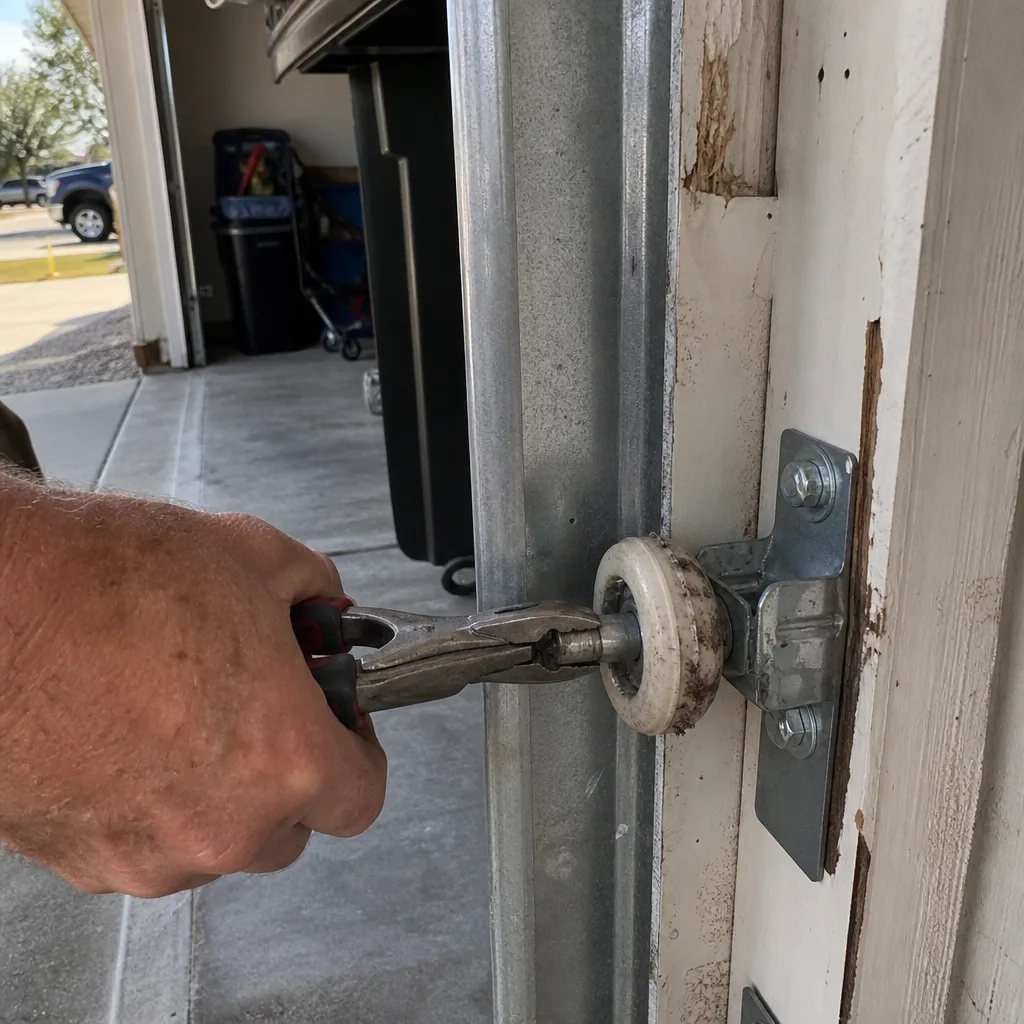
- How Gulf Coast Conditions Affect Garage Doors in Texas City
- Material Selection: Steel, Aluminum, and Composite for Coastal Survival
- Wind-Load Requirements and Building Codes in Galveston County
- How Radiant Heat Shortens Spring and Seal Lifespan
- Aesthetics vs. Storm Survival: Component-Level Differences
- What a Written Price-First Quote Should Itemize for Texas City
- A Realistic Maintenance Schedule for Texas City Homes
- Garage Door Opener Selection for Coastal Conditions
 Before
 After
AfterHow Gulf Coast Conditions Affect Garage Doors in Texas City
Texas City sits on the northwest shore of Galveston Bay, roughly 10 miles from the Gulf of Mexico. That proximity creates a specific set of stressors no inland guide addresses adequately.
Salt air corrosion. The prevailing southeasterly winds carry aerosolized salt inland, depositing chloride ions on metal surfaces. In our experience across Texas City neighborhoods - from the historic homes near 6th Street North to newer construction in The Reserve - unprotected steel hardware shows surface rust within 12 to 18 months. Galvanized steel with a G60 coating resists this longer than standard G30, but neither is permanent without additional protection.
Humidity cycling. Relative humidity in Texas City regularly exceeds 85% during summer mornings, then drops sharply under afternoon sun. This cycle drives condensation inside track systems and on torsion spring coils, accelerating pitting corrosion that weakens wire over time.
Wind exposure. The flat coastal plain offers little windbreak. A standard 7-foot by 16-foot garage door presents roughly 112 square feet of sail area. During tropical storm conditions, pressure differentials across that surface generate forces measured in thousands of pounds. A door not rated for the local wind zone becomes a structural liability, not just a maintenance issue.
Thermal stress. South Texas concrete slabs absorb and reradiate heat. We’ve measured slab surface temperatures above 140°F in direct July sun. That heat rises into the garage, elevating ambient temperatures around the torsion spring assembly and opener motor. Springs fatigue faster. Logic boards in openers fail earlier. Rubber bottom seals harden and crack.
These conditions mean a garage door spec’d for Austin or Houston’s inner loop is under-engineered for Texas City. The difference shows up in warranty claims, premature failures, and - during severe weather - structural damage.
Material Selection: Steel, Aluminum, and Composite for Coastal Survival
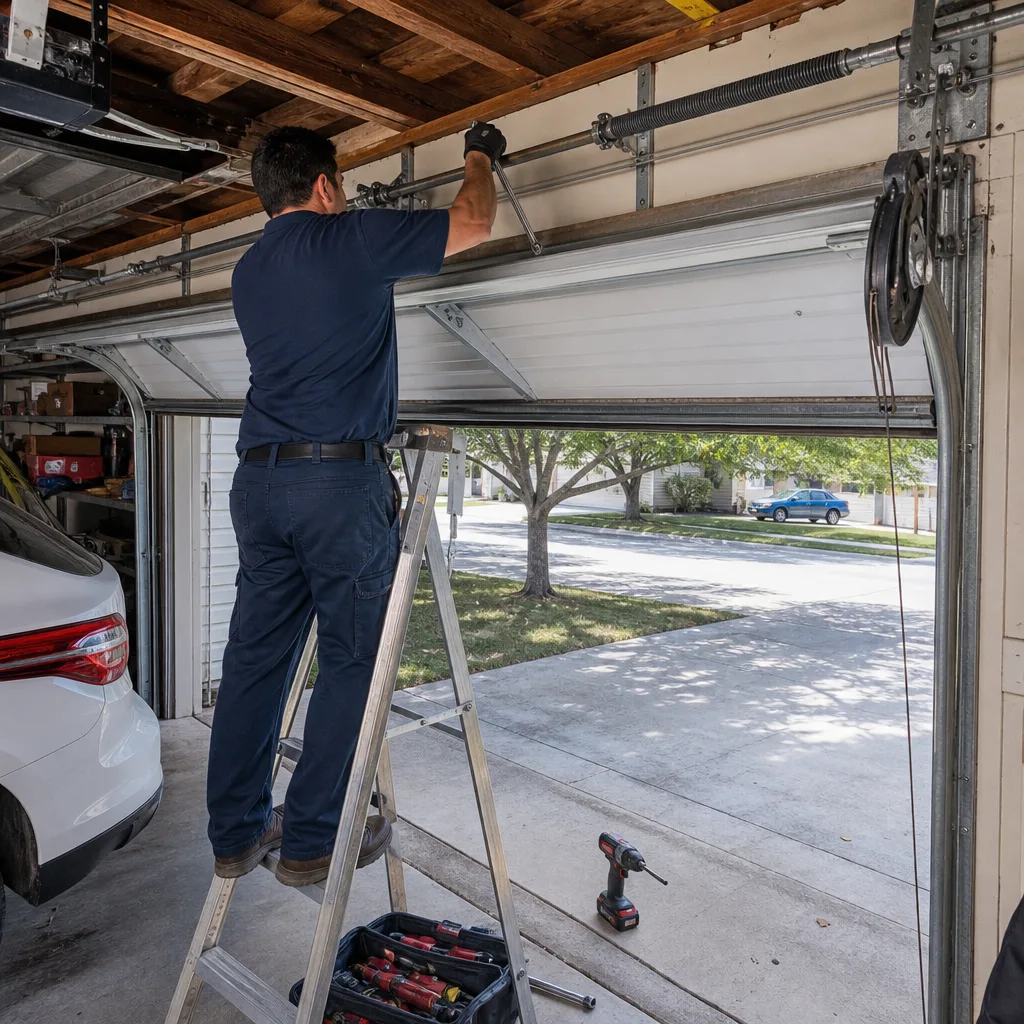
The material you choose for a garage door in Texas City determines whether you’re replacing it in 8 years or 20. Here’s how the common options perform under local conditions.
Galvanized Steel (Most Common)
Steel doors dominate the market because they’re affordable and insulate well. For Texas City, the critical spec is the galvanization coating weight and the paint system over it.
- G30 galvanized (standard on budget doors): 0.30 ounces of zinc per square foot. We’ve seen surface rust appear on G30 track hardware in Texas City within 14 months.
- G60 galvanized (mid-grade and up): Double the zinc coating. Extends corrosion resistance to 4-6 years before maintenance is needed, based on our field records.
- G90 galvanized (premium): Best corrosion resistance in steel. Worth the upgrade for homes within 3 miles of the bay.
- Paint system: A baked-on polyester or fluoropolymer topcoat over primer is essential. Factory-applied systems outperform field-painted finishes by a wide margin in salt-air exposure.
Steel gauge also matters. 24-gauge is standard for single-layer doors. 25-gauge is thinner and dents more easily - we don’t recommend it for wind-load doors that need structural rigidity. For insulated steel doors, the facing sheets are typically 26 or 27 gauge over polyurethane core; the core provides stiffness, not the facing.
Aluminum
Aluminum doesn’t rust, which makes it attractive for coastal applications. However, it has tradeoffs:
- Lower strength-to-weight ratio means aluminum doors need thicker sections or more internal bracing to meet wind-load requirements
- More susceptible to denting from impact
- Generally costs 30-50% more than comparable steel doors
- Anodized or powder-coated finishes hold up well; raw aluminum develops a chalky oxide film that looks aged
We specify aluminum primarily for full-view or contemporary designs where the aesthetic demands it, and always with reinforced frames for wind load.
Composite and Fiberglass
Composite doors - typically fiberglass skins over steel or aluminum frames - offer the best corrosion resistance. The fiberglass surface is inert to salt air. Downsides include:
- Higher cost, often 40-60% above steel
- Color fading in intense UV exposure (South Texas sun is harsh)
- Limited style options compared to steel panel designs
For Texas City homes in direct coastal exposure, particularly south-facing doors, composite is worth considering despite the premium. We’ve tracked Clopay and Amarr composite lines in local installations since 2018; both show minimal degradation at 6-year marks.
Our Recommendation
For most Texas City homes, we specify G60 or G90 galvanized steel with a factory fluoropolymer finish, upgraded to salt-resistant hardware package. The upgrade typically adds $200-$400 to door cost and pays for itself in extended service life. For homes within 2 miles of the water, or any home where the door faces prevailing winds directly, we discuss aluminum or composite alternatives during measurement.
Wind-Load Requirements and Building Codes in Galveston County
This is where generic garage door advice becomes actively harmful - and where our DIY vs Professional Garage Door: The Texas City Homeowner’s Decision Guide becomes especially relevant. Texas City falls within Galveston County’s coastal building zone, which adopts wind-load requirements stricter than inland Texas jurisdictions.
The Regulatory Framework
Texas City operates under the International Residential Code with local amendments, and Galveston County enforces Texas Department of Insurance (TDI) windstorm requirements for properties in designated catastrophe areas. For garage doors, this translates to specific performance standards:
- Wind speed rating: Design wind speeds for Texas City are 140 mph (3-second gust) per ASCE 7-16 maps. This is Category 3 hurricane equivalent.
- Pressure rating: The door assembly must withstand both positive pressure (wind pushing against the door) and negative pressure (suction pulling it outward). A 16-foot wide by 7-foot tall door in a 140 mph zone typically needs to resist 20-25 psf design pressure, depending on exposure category and building height.
- Missile impact: In some zones, large missile impact resistance (9-pound 2×4 at 34 mph) is required for doors facing within specific angles of the coastline.
Miami-Dade and TDI Approval
A garage door installed in Texas City should carry either Miami-Dade County product approval or Texas Department of Insurance evaluation. These aren’t marketing labels - they’re certifications that the specific door model, with specific hardware, passed laboratory testing for pressure cycling and debris impact.
We verify this on every installation. The approval sticker or label is affixed to the door or track system. If you’re evaluating a quote, ask to see the product approval number and verify it on the TDI or Miami-Dade database. A door “rated for high winds” without specific approval documentation is not code-compliant.
What Non-Compliant Installation Looks Like
We’ve been called to Texas City homes after storms where the garage door failed and allowed wind pressure into the garage. In two cases, that pressure contributed to roof uplift and structural damage. In both cases, the original installer had used:
- A standard 20-gauge track instead of reinforced 14-gauge wind-load track
- Standard rollers instead of heavy-duty ball-bearing rollers rated for cyclic loading
- No wind locks or reinforcement struts on the door sections
- A standard torsion spring assembly without wind-rated spring anchors
The door looked identical to a compliant one. The components were not. This is why we photograph and document the installed hardware - Clause 4 of The Haven Standard - so the customer has evidence of what was actually delivered.
Permit Requirements
Garage door replacement in Texas City requires a building permit when the door size changes or when wind-load rated replacement is mandated by code. See our Garage Door Permits, Codes & Inspections in TX: What You Need to Know for full details. The permit application includes the product approval number, installation details, and contractor license. We handle permit submission as part of our installation scope; the cost is itemized in the written quote.
How Radiant Heat Shortens Spring and Seal Lifespan
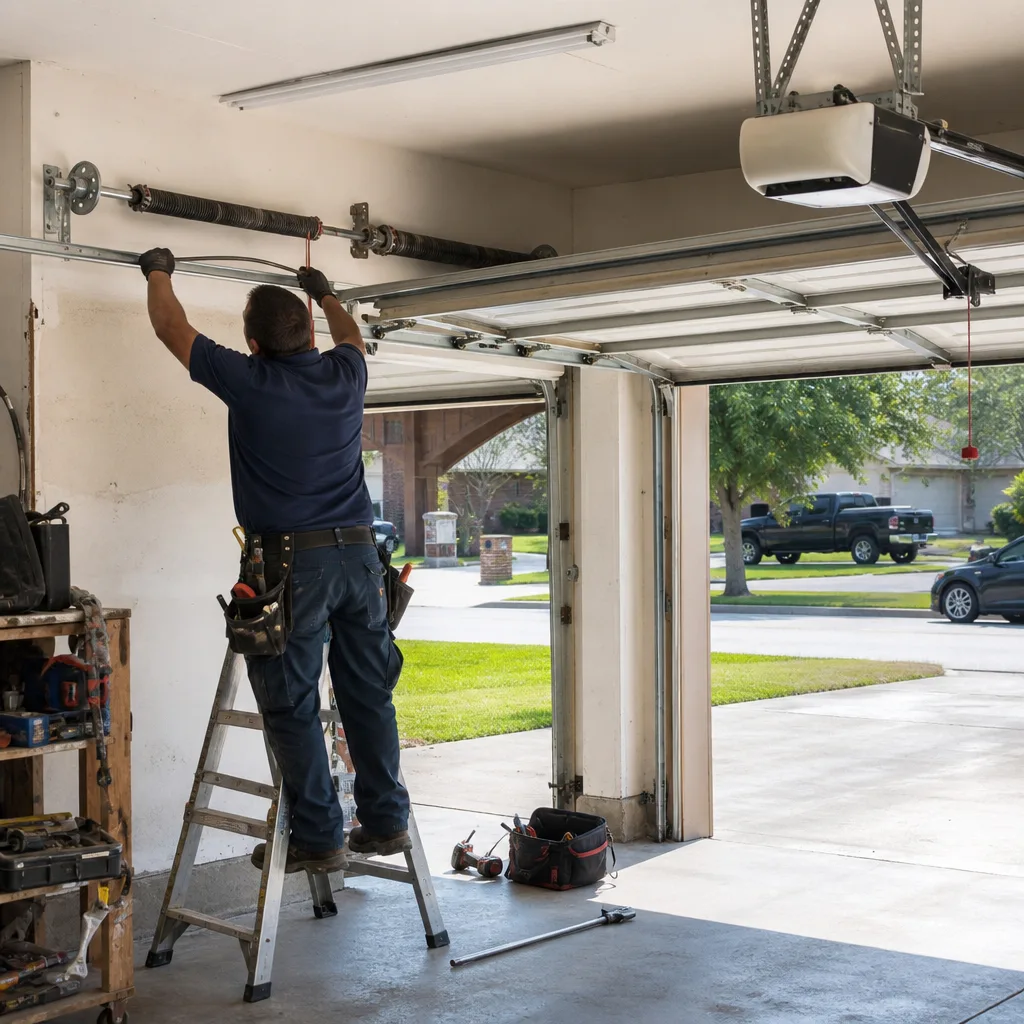
This is the maintenance issue we see most often in Texas City, and it’s rarely discussed in generic garage door guides.
The Thermal Environment
South Texas concrete slabs absorb solar radiation all day and reradiate it as long-wave infrared. In a typical attached garage in Texas City, ambient summer temperatures run 15-25°F above outdoor air temperature. We’ve recorded garage interior temperatures of 118°F in July.
Torsion springs are rated for cycle life at standard ambient temperature, typically 70°F. Elevated temperatures accelerate metal fatigue through two mechanisms:
- Thermal expansion: The spring wire expands slightly, altering coil tension and stress distribution
- Creep deformation: Sustained stress at temperature causes gradual plastic deformation, reducing the spring’s ability to store elastic energy
A standard 10,000-cycle torsion spring in a cool climate might last 8-12 years. In Texas City’s thermal environment, we see functional life closer to 5-7 years for standard springs. Upgraded springs with higher cycle ratings (15,000 or 20,000 cycles) or powder-coated finishes that reflect radiant heat extend this meaningfully.
Bottom Seals and Weatherstripping
Rubber and vinyl compounds harden and crack faster in heat. A standard PVC bottom seal in Texas City typically needs replacement every 2-3 years, compared to 4-5 years in cooler climates. We specify EPDM rubber seals for Texas City installations - the material costs more but maintains flexibility to 180°F and resists UV degradation.
Opener Electronics
The logic board in a garage door opener is the computer that controls operation. It’s mounted in the motor unit, typically at ceiling height where heat accumulates. We’ve replaced logic boards in openers less than 4 years old where thermal stress was the clear failure mode. Openers with thermal management features - metal heat sinks on the board, vented housings - perform better. Some garage door opener repair & installation in Texas City calls we receive are preventable with better initial specification.
Mitigation Strategies
- Insulate the garage door: Polyurethane or polystyrene core doors reduce heat transfer into the garage. R-value of 12+ is achievable with polyurethane.
- Improve ventilation: Passive ridge vents or powered attic ventilators reduce peak temperatures.
- Specify high-cycle springs: The incremental cost is modest; the extended service life is significant.
- Use heat-resistant seal materials: EPDM or silicone rather than PVC.
- Consider opener placement: Mounting the opener to minimize direct heat exposure, where garage geometry allows.
Aesthetics vs. Storm Survival: Component-Level Differences
Every garage door has two specifications: the one that sells it, and the one that determines whether it survives a named storm. In Texas City, the gap between these matters more than in most markets.
The Door Sections
Aesthetically, buyers focus on panel design - raised ranch, carriage house, flush, or contemporary. Structurally, what matters is:
- Steel thickness: 24-gauge facing for single-layer; 26 or 27 gauge over core for insulated
- Internal reinforcement: Wind-load doors need steel struts or reinforcement bars across the full width of each section. These are visible on the interior face - they add weight and slightly reduce headroom clearance, but they’re non-negotiable for pressure rating.
- Section connection: Hinges at panel joints must be heavy-gauge steel, not stamped aluminum, to transfer wind loads across sections without tearing out.
The Track System
Standard residential track is 2-inch by 2-inch angle, 16 or 18 gauge. Wind-load track in Texas City is typically 2-inch by 2-inch by 14 gauge, with additional wall brackets and jamb brackets at closer spacing. The heavier track resists lateral bowing under pressure differential. We’ve seen standard track deform permanently in pressure tests that wind-load track handles without issue.
Hardware Package
The difference between a door that looks right and one that’s built right is often in hardware details:
| Component | Standard Spec | Texas City Wind-Load Spec |
|---|---|---|
| Track | 16-18 gauge | 14 gauge with reinforced brackets |
| Rollers | 2-inch nylon, 7-ball | 2-inch steel, 11-ball bearing |
| Hinges | 18 gauge stamped | 14 gauge, galvanized |
| Spring system | Standard 10K cycle | 15K-20K cycle, powder-coated |
| Wind locks | None | Required, engage track under pressure |
| Header bracket | Standard angle | Reinforced, lag-bolted to framing |
When we quote garage door installation in Texas City, these specifications are itemized in the written scope. The customer sees what they’re getting before we start - Clause 1 of The Haven Standard. No surprises, no substitutions without documentation.
Real-World Performance
We documented a 2022 installation in the Bayou Vista area of Texas City, 0.8 miles from the bay. The homeowner chose a Clopay wind-load door with full reinforcement package after their previous standard door failed during Hurricane Nicholas in 2021. During the 2023 tropical season, the door experienced sustained tropical storm-force winds without damage. The photo record from that installation - showing the reinforcement struts, wind locks, and 14-gauge track - is available for review; it’s the kind of documentation we provide on every job.
What a Written Price-First Quote Should Itemize for Texas City
“Call for a quote” contradicts how we operate. Every garage door repair in Texas City and installation quote we deliver is flat, written, and itemized before any work begins. Here’s what a Texas City homeowner should expect to see specified.
Door Assembly
- Manufacturer and model number
- Size (width x height)
- Construction type (single-layer, double-layer, or triple-layer/insulated)
- Steel gauge or material (aluminum, composite)
- Panel style and color/finish
- R-value (for insulated doors)
- Window configuration, if any, with impact rating if applicable
Wind-Load Components
- Design wind speed and pressure rating
- Miami-Dade or TDI approval number
- Track gauge and reinforcement details
- Wind lock specification
- Spring cycle rating
Hardware and Accessories
- Roller type and quantity
- Hinge gauge
- Lift handle and step plate
- Bottom seal material (EPDM specified for Texas City)
- Weatherstripping for jambs and header
Opener (if included)
- Manufacturer, model, and horsepower
- Drive type (belt, chain, screw, or direct)
- Smart features and compatibility
- Battery backup (recommended for hurricane preparedness)
Installation Scope
- Removal and disposal of existing door
- Track and hardware installation
- Spring balance and safety testing
- Opener installation and programming
- Permit acquisition and inspection scheduling
Pricing Structure
The total should be a single number, with line items showing how it’s built. No hourly rates. No “materials plus” open-ended formulas. The price we quote is the price on the invoice - Clause 1 of The Haven Standard. If we find unexpected structural damage during removal (rotted framing, for example), we document it with photographs, explain the additional scope, and quote that separately before proceeding. The customer approves every dollar.
Documentation Delivered
Upon completion, the customer receives:
- Written invoice matching the quoted price
- Photo record of installation (Clause 4)
- Manufacturer warranty documents
- 365-Day Done Right Promise terms
- Maintenance schedule recommendation
A Realistic Maintenance Schedule for Texas City Homes
Generic maintenance advice suggests annual service. For Texas City’s conditions, that’s insufficient. Here’s the schedule we recommend based on 18,000+ service records since 2015.
Every 6 Months (Spring and Fall)
- Visual inspection of all hardware: Check rollers, hinges, cables, and springs for rust, wear, or deformation. Look specifically for salt corrosion on track brackets and spring anchors.
- Lubrication: Apply silicone-based lubricant to rollers, hinges, and spring coils. Avoid WD-40 - it attracts dust and dries to a gummy residue. We use a specific garage door lubricant with Teflon additive.
- Balance test: Disconnect the opener and lift the door manually. It should move smoothly and stay open at waist height. If it drifts down or feels heavy, the spring tension needs adjustment.
- Reversal test: With opener connected, place a 2×4 flat on the floor under the door path. The door should reverse on contact. Test photoelectric sensors by breaking the beam with an object - door should reverse immediately.
- Seal inspection: Check bottom seal and jamb weatherstripping for cracking, hardening, or gaps. Replace EPDM seals when surface cracking appears - don’t wait for daylight to show underneath.
Annually
- Professional inspection: A trained technician checks cable wear, spring cycle count, track alignment, and opener force settings. We measure spring wire diameter and compare to original spec - thinning indicates replacement need.
- Hardware torque check: Vibration loosens bolts and lag screws. We check and retorque all fasteners to specification.
- Opener logic board inspection: Look for capacitor bulging, heat discoloration, or corrosion on terminals - early indicators of pending failure.
After Named Storms or Tropical Systems
- Immediate visual inspection: Check for dented panels, bent track, or displaced rollers.
- Operational test: Run full open-close cycles listening for unusual noise or binding.
- Professional assessment if any damage is suspected: Wind-load doors can sustain hidden stress fractures in reinforcement struts or spring anchors. We document these with photographs if found.
Spring Replacement Timing
Standard springs: plan replacement at 5-7 years in Texas City conditions. High-cycle springs: 8-12 years. We track cycle count during service visits and advise replacement before failure - a broken spring under load can damage the door or cause injury.
Safety note: Torsion springs store substantial mechanical energy. A standard 2-car door spring holds enough force to cause serious injury or death if released improperly. Spring adjustment or replacement should only be performed by trained technicians with proper winding bars and safety equipment. We do not recommend DIY spring work under any circumstances.
Garage Door Opener Selection for Coastal Conditions
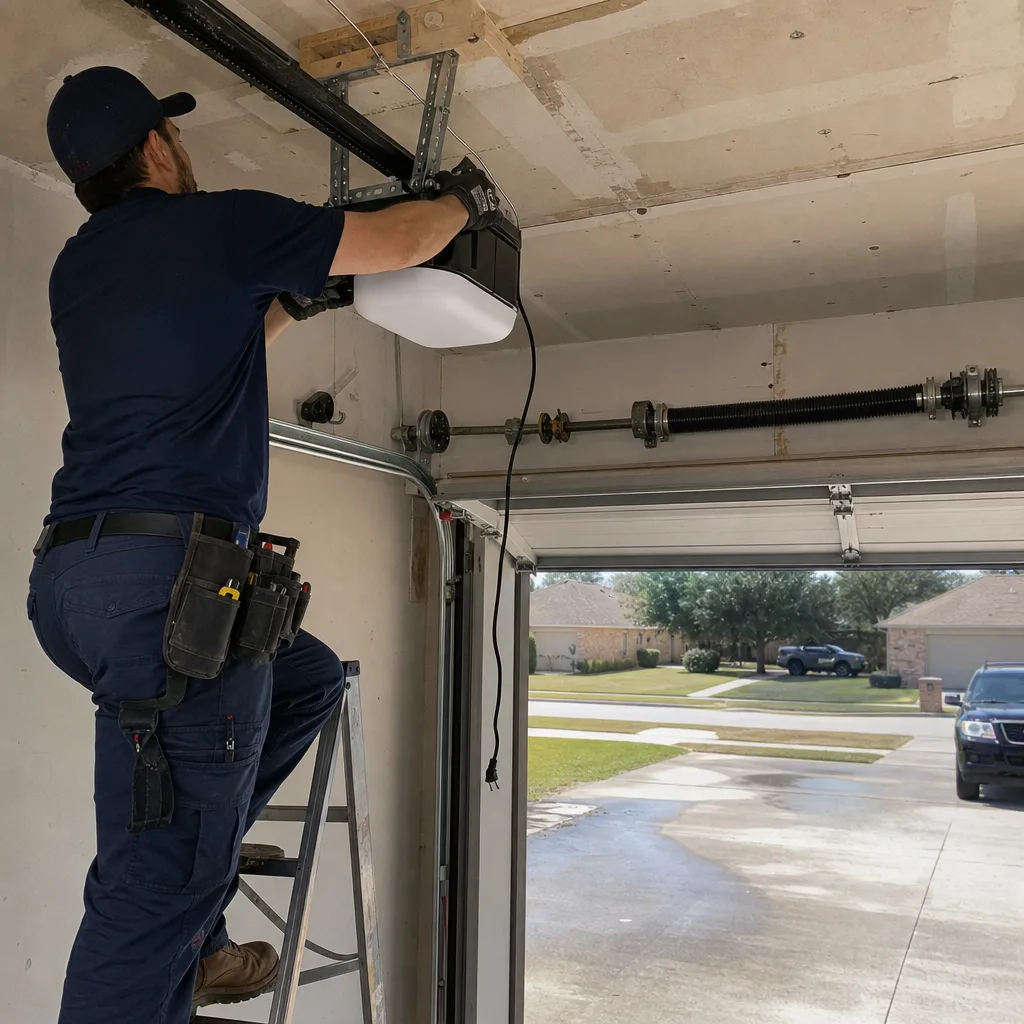
The opener is often an afterthought in door selection. In Texas City’s heat and humidity, it shouldn’t be.
Drive Type Considerations
- Belt drive: Quietest operation. The rubber belt resists corrosion but can degrade in sustained heat. We specify reinforced belts for Texas City installations.
- Chain drive: Most durable and cost-effective. The metal chain requires periodic lubrication but handles heat well. Noise is acceptable for detached garages.
- Screw drive: Fewer moving parts, but the plastic carriage components can become brittle in heat. We rarely specify these for Texas City.
- Direct drive (jackshaft): Motor travels with the door on a fixed chain. Compact, reliable, and the motor housing is easier to shield from radiant heat. Excellent for high-lift or limited-headroom applications.
Features Worth Specifying
- Battery backup: Required by California code and increasingly adopted elsewhere. In Texas City, it’s hurricane preparedness - power outages are common during storms, and you need to secure your garage.
- Smart connectivity: WiFi-enabled openers allow remote monitoring and operation. Useful for verifying closure when evacuating or checking status from work.
- Integrated camera: Some Genie and LiftMaster models include camera and lighting. The camera provides visual confirmation of door status and records activity.
- Thermal management: Look for metal heat sinks on the logic board and vented motor housings. These details aren’t marketed heavily but matter for longevity in hot climates.
Brand Performance in Local Conditions
We service all major brands, so our perspective is based on repair frequency, not sales commission. In Texas City’s conditions:
- LiftMaster and Chamberlain (same parent company): Strong reliability, good parts availability. MyQ smart platform is stable. We see fewer heat-related logic board failures in their newer belt-drive models with improved thermal design.
- Genie: Excellent value, particularly the ChainLift and SilentMax lines. The Aladdin Connect smart system is competitive. We’ve had good results with their screw-drive units in temperature-controlled garages.
- Craftsman: Solid mid-market option, often rebranded Chamberlain internals. Parts availability can lag newer Chamberlain models.
We don’t push any brand exclusively. The right opener depends on door weight, headroom, usage frequency, and smart-home integration needs. We specify after measurement, not before.
Common Mistakes to Avoid
- Choosing a door without verifying wind-load approval. A “hurricane-rated” marketing claim means nothing without a Miami-Dade or TDI approval number you can verify. We’ve replaced doors sold on this vague language that failed to meet local code.
- Ignoring the hardware package in favor of panel style. The prettiest carriage-house design fails the same as a flat panel if the track, springs, and wind locks are underspecified. Insist on component details in writing.
- Installing a standard door in a converted garage or addition without permit review. Texas City’s building department requires wind-load compliance on all new and replacement doors. Unpermitted work becomes a disclosure issue at sale and an insurance problem after damage.
- Using interior-grade lubricants or WD-40 on moving parts. These attract Gulf Coast dust and salt, accelerating wear. Use only garage-door-specific lubricants.
- Delaying spring replacement until failure. A broken torsion spring can slam a door shut unpredictably, damage panels, or injure someone nearby. Replace on cycle count or visible wear, not after catastrophic failure.
- Neglecting post-storm inspection. Even if the door operated normally during a tropical system, stress fractures in reinforcement components may not show immediately. Professional inspection after named storms catches hidden damage.
When to Call a Professional
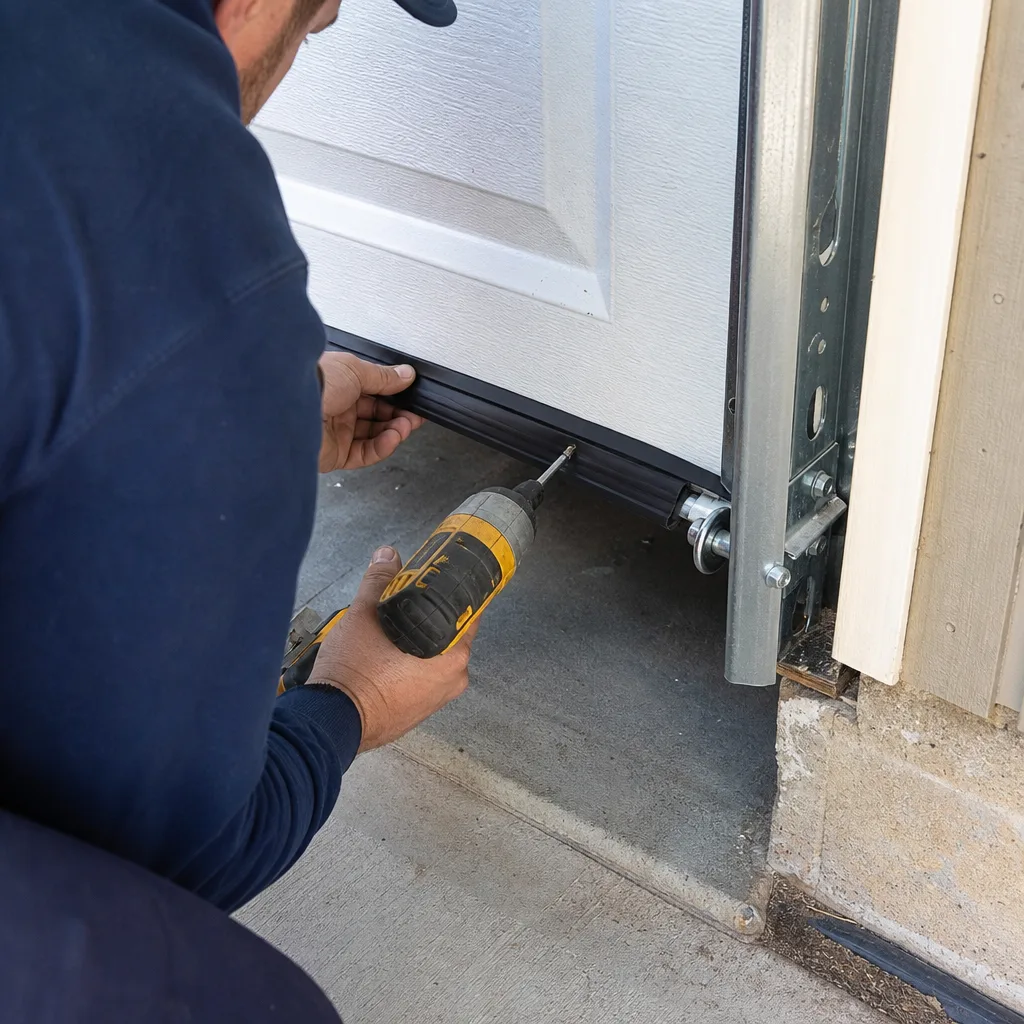
Some situations require trained technician response, not homeowner troubleshooting.
Call for professional service if: the door is off its tracks or cables are detached; a torsion spring is broken or shows visible gap in the coil; the opener motor runs but door doesn’t move (indicates stripped trolley carriage or broken coupler); there is visible damage to door panels, track, or hardware after a storm; the door reverses intermittently or won’t stay closed; you smell burning from the opener motor; or you’re planning replacement and need wind-load specification guidance.
Servo Garage Doors Texas City offers free estimates in Texas City - call (409) 797-6585. Every estimate includes measurement, wind-load assessment, and a flat written price before any commitment. We also provide free second opinions on any written estimate from another company; bring the paperwork, no coupon required.
Frequently Asked Questions
A properly specified and maintained garage door lasts 15-25 years in Texas City, but material selection matters significantly. G60 or G90 galvanized steel with quality finish lasts 15-20 years; aluminum or composite extends toward 25. Without salt-resistant hardware and regular maintenance, we’ve seen standard steel doors require major component replacement at 8-10 years. The 365-Day Done Right Promise covers installation and initial performance; manufacturer warranties on the door itself typically run 10 years to lifetime depending on series.
Standard single-car steel door replacement in Texas City typically ranges $1,200-$2,200 installed, including removal and basic opener reconnection. Double-car insulated steel with wind-load rating runs $2,400-$4,500 depending on R-value, window configuration, and hardware grade. Aluminum or composite doors add 30-60% to these ranges. Every quote we deliver itemizes door, track, hardware, opener (if included), permit, and labor as separate line items with a single total - no hidden costs, no post-installation add-ons. Call (409) 797-6585 for an exact quote; estimates are free.
Yes, if the replacement involves a different size door or if the existing door is not wind-load rated to current code. Texas City’s building department requires permits for garage door replacements to verify compliance with Galveston County wind-load requirements. We handle permit application, submission, and inspection scheduling as part of our installation scope. The permit cost is itemized in your written quote.
A standard torsion spring is rated for 10,000 open-close cycles. A high-cycle spring is rated for 15,000 or 20,000 cycles, using thicker wire or different wire grade. In Texas City’s heat, the practical difference is 5-7 years versus 8-12 years of service life. The cost difference is typically $150-$300 per spring pair. We recommend high-cycle springs for all Texas City installations - the payback is clear.
We don’t recommend it. Wind-load door installation requires precise spring tension calculation, track alignment to within 1/8 inch, and proper engagement of wind-lock mechanisms. Incorrect installation voids the product approval and creates liability exposure. More critically, torsion spring handling without proper tools and training causes serious injury annually. Our technicians are background-checked, uniformed, and trained specifically on wind-load systems; the license number is on every quote and invoice.
Look for a Miami-Dade County product approval sticker or Texas Department of Insurance evaluation label on the door or track system. It will list a specific approval number, design pressure rating, and manufacturer. If there’s no sticker, or if the sticker references a standard residential rating only, the door is likely not wind-load compliant for Texas City’s zone. We verify this during free estimates and document our findings with photographs.
The Bottom Line
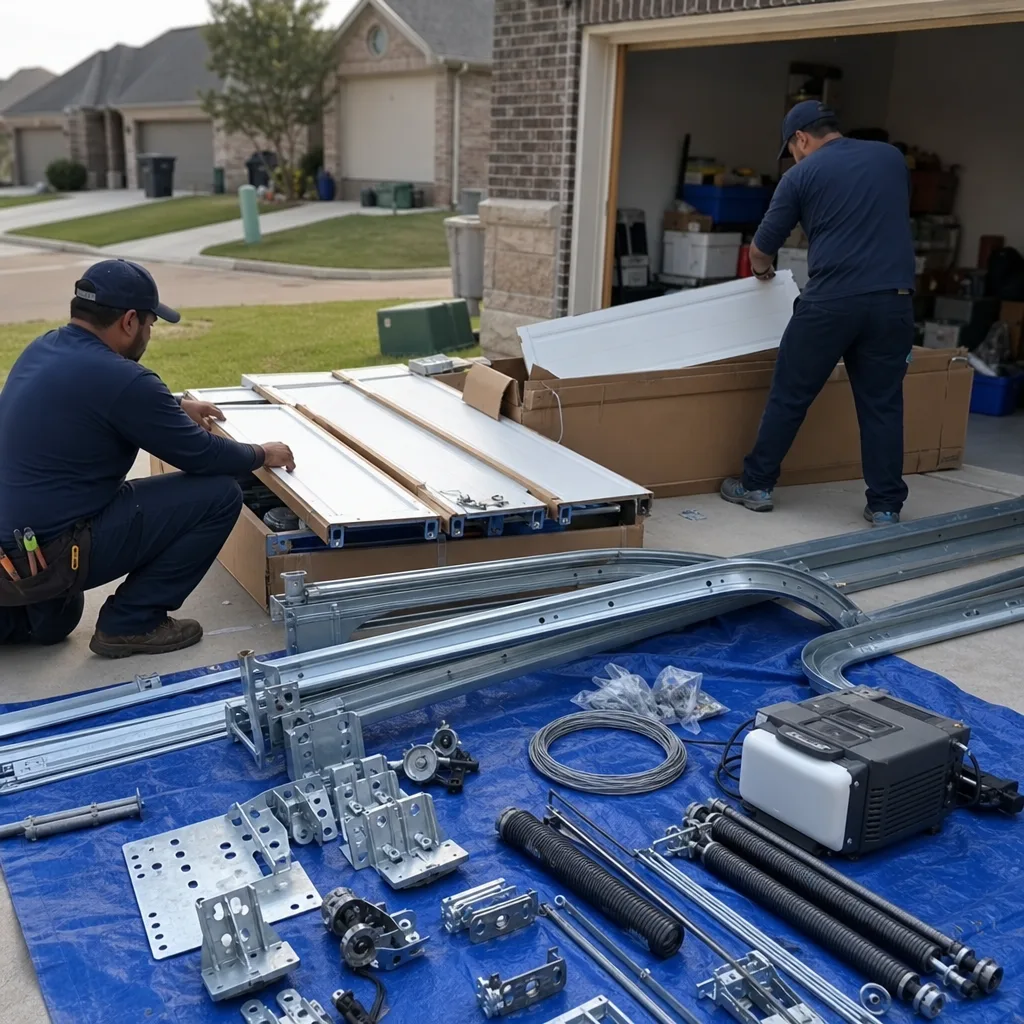
A garage door in Texas City faces salt air, intense radiant heat, and hurricane-force wind requirements that make inland specification advice inadequate at best and harmful at worst. The right door is G60 or G90 galvanized steel with wind-load approval, installed with reinforced track and hardware, on a realistic maintenance schedule. The right installer delivers a written, itemized price before work starts and documents what was found and what was done. Anything less leaves you exposed - to corrosion, to storm damage, or to invoice surprises.
We’ve made 18,000+ garage doors right since 2015, every one with a written price first and a photo record at completion. If you’re evaluating options for repair, replacement, or new installation in Texas City, start with a free estimate that shows you exactly what you’re getting. Call (409) 797-6585 - a live person answers, 24/7, including holidays. We’ll schedule measurement, deliver your flat written quote, and let the documentation do the persuading.
Written by Marcus Deller, Owner at Servo Garage Doors Texas City, serving Texas City since 2015.